

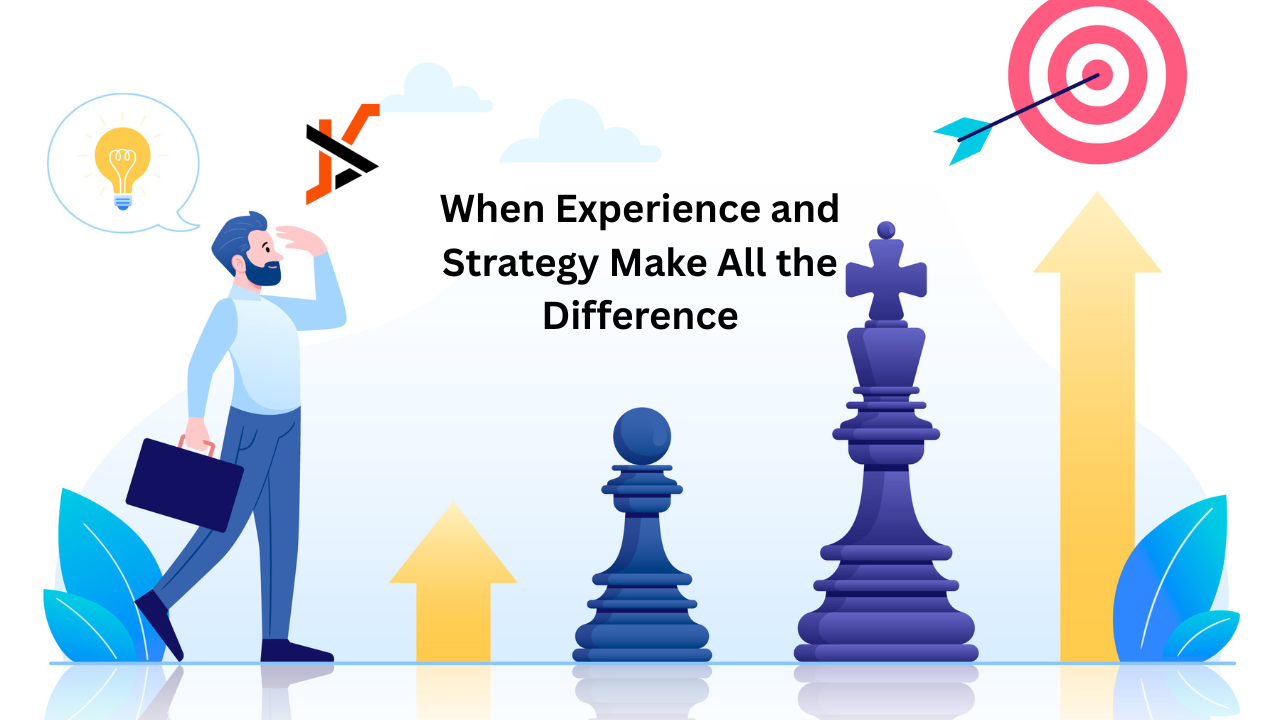
In business, hard times often separate the momentary from the meaningful. When pressure mounts, what distinguishes organisations that survive (and eventually thrive) from those that falter is often the combination of experience and strategy. These two elements work together: experience offers deep insight into past patterns, while strategy provides a forward-looking plan. Alone, they have value, together, they become powerful.
This article explores why experience and strategy aren’t optional luxuries, but essential tools in steering organisations through complexity, crisis, and change.
The Value of Experience: Reading the Signals
Experience is more than history; it’s the ability to see patterns, anticipate challenges, and interpret signals that newer or less seasoned leaders might miss.
- Recognising early warning signs
Someone with experience may detect subtle shifts in cash flow, customer behaviour, or supplier reliability before they escalate into crises. - Learning from past decisions (good and bad)
Experience allows leaders to recall which strategies worked under similar pressures or which errors cost dearly. - Judging trade-offs more wisely
When time or resources are limited, experience helps weigh risk vs reward more accurately. - Building operational instincts
Seasoned leaders often intuitively sense when a plan is failing or when more radical change is needed.
However, experience alone isn’t sufficient. Without a fresh strategic framework, it can lead to over-reliance on ‘what’s been done before’, even when conditions have fundamentally changed.
Strategy Gives Structure to Action
Strategy is how you translate insight into deliberate paths forward. Even the most experienced team needs structure, priorities, and clarity.
- Setting clear objectives
A strategy defines what success looks like in the present climate, whether that’s revenue targets, cost reductions, new markets, or restructuring goals. - Allocating scarce resources
When budgets, talent, or time are constrained, strategy decides where to invest, what to pause, and what to eliminate. - Creating contingency plans
Strategy anticipates alternate futures: ‘If the supply chain delays, what’s Plan B? If sales drop 20%, which expenses can we cut first?’ - Aligning stakeholders
A coherent strategy helps teams, investors, creditors, and partners see where value lies.
Strategy without experience can be naive; assumptions may go unchecked. But when grounded in experience, strategy becomes resilient rather than speculative.
How the Two Reinforce One Another
When experience and strategy combine, their strengths amplify. Here are some ways they reinforce each other:
- Sharper scenario modelling
Experienced leaders can foresee realistic stressors and frame scenarios with more nuance. - Faster course correction
With experience, you recognise when a strategy is failing, reducing the friction to pivot or adapt. - Better stakeholder credibility
Strategy articulated by experienced voices inspires more confidence among investors, lenders, teams, and partners. - Risk reduction
Experience can highlight hidden dangers or technical caveats, while strategy lays out mitigation paths. - Faster execution
Teams with experienced leaders executing a clear strategy waste less time on ambiguity and more on getting results.
Where Experience + Strategy Matter Most
These principles are especially critical during extreme pressures. For example:
- Business Turnaround or Restructuring
When operations are under strain or debt is mounting, knowing how to restructure liabilities, renegotiate terms, or pivot core offerings demands both seasoned judgement and strategic clarity. - Strategic Exit or Wind-Down
If a company must exit or downsize, doing so in a controlled, value-preserving way is a strategic art. In such cases, partnering with experienced firms ensures the process is handled sensibly, legally, and with foresight. - Expansion or Pivot during Uncertainty
When markets shift, launching new products, entering new territories, or changing business models demands both awareness of historical pitfalls and bold strategic direction.
Practical Steps to Combine Experience and Strategy
Here are actionable steps for leaders who want to leverage both:
- Document lessons learned
Maintain a ‘post-mortem log’ of past initiatives, with successes, failures, and surprises. Use that as reference during planning. - Engage cross-functional experience
Bring in people from different eras of your business to contribute. Sometimes fresh eyes from newer staff plus veterans combine well. - Build strategy around core strengths
Your strategic plans should reflect areas where your experience gives you advantage, rather than chasing trends where you lack grounding. - Insert checkpoints and feedback loops
At predetermined intervals, compare actual outcomes to assumptions. Adjust strategy early if divergence grows. - Partner with external experts for edge areas
In domains you lack deep experience (legal restructuring, liquidation processes, complex financial engineering), bring in professionals. Their experience supplements your strategy, as when using McAlister & Co for asset disposition or structured exit.
Conclusion: Experience and Strategy as Engine and Steering
In turbulent times, leaders who rely purely on experience may drift; those who depend solely on strategy may misstep. But the dual power of seasoned judgement plus deliberate planning is what distinguishes resilient organisations.
Experience gives you the context, intuition, and foresight. Strategy gives you alignment, clarity, and a path forward. When the two work in harmony, you can navigate uncertainty, make difficult choices, and steer towards opportunity, even in the face of challenge.
