

Everyone’s trying to sell you something without explaining what you’re actually buying. So here’s what I wish someone had told me when I bought my first diamond chain (spoiler alert: I made some expensive mistakes).
You’re probably here because you want a diamond chain that doesn’t look fake, won’t break after three months, and actually gets you compliments instead of weird looks. Am I right?
Here’s the thing – there are really only five types of diamond chains that matter. Everything else is just marketing fluff. I’m going to break down each one, tell you which situations they work best for, and share some real talk about what to avoid.
By the end of this, you’ll know exactly which type fits your style and budget. No BS, just the info you need to make a smart choice.
Why Diamond Chains Hit Different
Diamond chains aren’t just regular chains with some sparkly bits thrown on. There’s actual science behind why they look so good.
When light hits a properly cut diamond, it bounces around inside the stone before shooting back out. That’s what creates that fire everyone talks about. Regular crystals or glass don’t do this the same way – they just reflect light off the surface.
I remember the first time I saw a quality diamond chain under restaurant lighting. The difference was night and day compared to the CZ chain I’d been wearing. The real diamonds seemed to glow from the inside.
But here’s something most people don’t realize – the chain style affects how much light actually reaches the diamonds. Some settings block light, while others let it flow freely. That’s why choosing the right type matters so much.
The best diamond chains use what’s called “open settings.” These hold the stones securely but don’t block light from hitting them. It’s like the difference between looking at something through a window versus through a screen door.
The Big Five: Diamond Chain Types That Actually Matter
Here are some of the best diamond chains that do not suck.
Tennis Chains (The Safe Choice)
Tennis chains are basically the Honda Civic of diamond chains. They’re reliable, they work for almost everyone, and you can’t really go wrong with them.
The design is simple – one continuous line of diamonds, each sitting in its own little setting. No fancy patterns, no weird gaps, just diamonds all the way around.
I always recommend tennis chains for first-time buyers because they’re versatile. You can wear them with a t-shirt or a tuxedo. They work for men and women. And if you buy quality, they’ll last decades.
The thickness makes a huge difference, though. I’ve seen guys wearing 2mm tennis chains that look like they borrowed their girlfriend’s jewelry. For men, stick to 4mm minimum. Women can go thinner, but anything under 2mm starts looking delicate.
One thing to watch out for – cheap tennis chains use hollow links to save money. They look fine initially, but dent easily. Trust me, I learned this the hard way when my first chain got crushed in a gym bag.
Cuban Links (The Statement Maker)
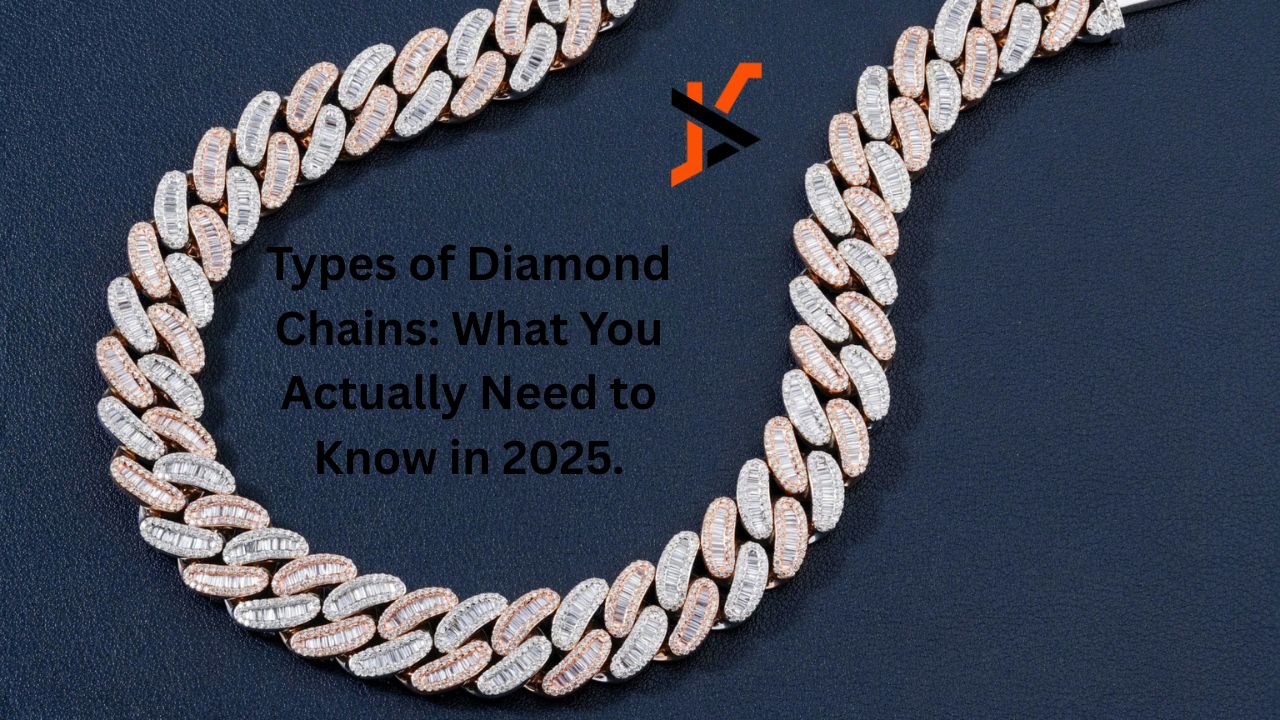
Cuban chains are thick, bold, and definitely not for everyone. But when they work, they really work.
The links are wide and lay flat against your chest. When you add diamonds to every surface, you get this massive wall of sparkle. It’s definitely a “look at me” kind of piece.
These chains became huge in hip-hop culture for obvious reasons – they’re impossible to ignore. But I’ve also seen them work well on people who just want to make a fashion statement.
Size matters even more with Cuban chains. A thin Cuban link looks weird – like someone stretched out a curb chain. You want at least 8mm width, and honestly, 12mm+ looks better if you can afford it.
The downside? They’re heavy. My 14mm Cuban weighs almost 150 grams. That’s noticeable when you’re wearing it all day. Also, they catch on to everything – sweaters, shirt collars, you name it.
Rope Chains (The Classic)
Rope chains have this twisted design that looks exactly like, well, rope. They’ve been around forever because the style just works.
The twisted structure creates natural light-catching angles. Even without diamonds, rope chains have good sparkle. Add stones to the mix, and you get this textured brilliance that looks amazing.
I really like rope chains for pendants because they’re incredibly strong. All those twisted strands distribute weight evenly, so they don’t break under stress like simpler chains might.
The diamond setting on rope chains usually follows the twist pattern. It creates this spiral of sparkle that moves as you walk. Pretty cool effect, especially under changing light.
One warning, though – rope chains collect dirt like crazy. All those twisted grooves trap soap, lotion, whatever. You’ll need to clean them more often than smoother chain styles.
Box Chains (The Modern Option)
Box chains use square links connected at right angles. Sounds boring, but the result is actually pretty sleek and modern-looking.
The flat surfaces give jewelers lots of space to set diamonds. You can do channel settings, pavé work, whatever. The geometric design works especially well with emerald cut or princess cut stones.
I think box chains are underrated. They’re not flashy like Cuban links, but they have this clean sophistication that works in professional settings. You can wear one to a business meeting without looking like a rapper.
The strength is decent, too. Each link connects at four points instead of two, so there’s less stress on individual connections. They’re not as strong as rope chains but definitely better than basic cable chains.
The main downside is that they can look a bit plain without diamonds. The geometric design needs some sparkle to really come alive.
Franco Chains (The Hybrid)
Franco chains combine elements from other styles. They’re like the crossover SUV of diamond chains – trying to be everything to everyone.
The pattern creates this flowing, almost liquid look. It’s more interesting than a box chain but not as bold as a Cuban. Kind of a middle ground option.
The construction is really solid. Multiple connection points make Franco chains quite durable. I’ve seen 10-year-old Franco chains that still look perfect.
Diamond setting works well with the Franco pattern. The stones seem to flow with the metal instead of sitting on top of it. Creates a nice integrated look.
Honestly, though, Franco chains are probably the least popular of the five main types. They’re good chains, just not as distinctive as the others.
When You Want That Premium Hip-Hop Look
I’ve got to mention IceATL here because they’re doing something different in the diamond chain space. These guys are based in Atlanta – which, if you know anything about hip-hop jewelry, is basically the center of the universe for this stuff.
What caught my attention about IceATL is their use of VVS moissanite instead of natural diamonds. Now, before you roll your eyes, hear me out. Their stones are internally flawless and actually pass diamond testers. Most people can’t tell the difference.
I’ve seen their chains in person, and the quality is legit. They start with solid sterling silver, then do thick 14K gold plating using this PVD process that prevents tarnishing. The stones are hand-set, and everything feels substantial.
The exclusive diamond chains from IceATL hit that sweet spot between luxury and affordability. You get the look and feel of a $20K chain for a fraction of the price. Plus, they offer custom work if you want something completely unique.
Their lifetime guarantee is pretty bold, too. They’ll replace anything that breaks, tarnishes, or fades during normal wear. That’s the kind of confidence that tells you they believe in their product.
For guys who want that full iced-out look without dropping a down payment on a house, IceATL makes a lot of sense.
Getting the Metal Right
The metal choice affects everything – appearance, durability, and obviously price. Here’s what actually matters:
Yellow Gold: Still the classic. 14K gives you good color without being too soft. 18K looks richer but scratches more easily. Anything over 18K is probably overkill for chains.
White Gold: Creates that modern, clean look. Makes diamonds pop more because there’s no competing color. Just know that most white gold gets rhodium-plated, and that wears off eventually.
Rose Gold: Having a moment right now. The pink tone is unique and actually quite durable because of the copper content. Not for everyone, but when it works, it really works.
Platinum: The ultimate luxury option. Never needs plating, doesn’t tarnish, hypoallergenic. Also costs about twice as much as gold. Worth it if you’re buying a forever piece.
Avoid anything under 10K gold. It looks dull and doesn’t hold up well. Sterling silver is fine for fashion pieces but not ideal for serious diamond chains.
Size and Length: Getting the Proportions Right
This is where I see people mess up constantly. The wrong length can make even an expensive chain look awkward.
16-18 inches: Sits at your collarbone. Good for layering or if you’re shorter. Can look tight on bigger guys.
20 inches: The sweet spot for most people. Falls just right, works with most outfits.
22-24 inches: Starts getting into statement territory. Good for casual wear or if you want the chain visible over clothing.
26+ inches: Hip-hop territory. Makes a statement but can get in the way during daily activities.
Width matters too. Thin chains (under 4mm) work for women and smaller builds. Medium chains (4-8mm) work for most men. Thick chains (8mm+) are statement pieces.
Quality Stuff That Actually Matters
Forget all the technical mumbo-jumbo. Here’s what really affects how your chain looks and lasts:
Diamond cut quality: This matters way more than size. A well-cut small diamond outshines a poorly cut big one every time.
Setting security: Make sure the diamonds are actually held in there tightly. Prong settings give maximum sparkle but need maintenance. Channel settings are more secure but less brilliant.
Clasp strength: A weak clasp means you’ll lose your chain eventually. Look for lobster claws or box clasps with safety catches.
Link construction: Solid links last longer but cost more. Hollow links are lighter and cheaper but dent easily.
Taking Care of Your Investment
Diamond chains need maintenance. Anyone who tells you otherwise is lying.
Clean your chain weekly with warm, soapy water and a soft toothbrush. Get into all the crevices where dirt builds up. Rinse thoroughly and dry completely.
Store chains separately so they don’t scratch each other. Soft pouches work, or individual compartments in a jewelry box.
Get professional cleaning every 6-12 months. Jewelers have ultrasonic cleaners that get the buildup you can’t reach.
Have the settings checked annually. Prongs wear down and need retipping before you lose stones.
Smart Shopping: Avoiding Expensive Mistakes
Don’t buy from random websites with too-good-to-be-true prices. Stick to established jewelers with good return policies.
Always ask for certificates on natural diamonds. Lab-grown diamonds should come with documentation, too.
Understand what you’re buying. “Diamond-like” isn’t diamonds. “Gold-filled” isn’t solid gold. Read the fine print.
Try before you buy when possible. Pictures don’t show how chains actually look and feel.
Factor in insurance costs for expensive pieces. Homeowner’s insurance usually doesn’t cover jewelry adequately.
The Bottom Line
Look, diamond chains are a luxury purchase. You don’t need one, but if you want one, get something you’ll actually enjoy wearing.
Tennis chains are safe choices that work for almost everyone. Cuban links make bold statements but aren’t subtle. Rope chains offer good strength and classic style. Box chains provide modern sophistication. Franco chains split the difference.
Quality matters more than size or brand names. A well-made chain with smaller diamonds beats a poorly made chain with bigger stones.
Set a realistic budget and stick to it. Factor in maintenance costs and insurance. Buy from reputable dealers who stand behind their products.
Most importantly, choose something that matches your actual lifestyle. A delicate chain won’t survive construction work. A massive Cuban link might not work in a corporate environment.
