

Some say that bikes are one of the most efficient machines built by humankind. From a minimal carbon footprint to long-term heart health and fitness, the benefits are many.
But the real question is: what to choose between an electric bike and a traditional one.
Wondering whether to go old school or give a shot to innovative options? This think-piece will help you out.
1. Speed and Efficiency
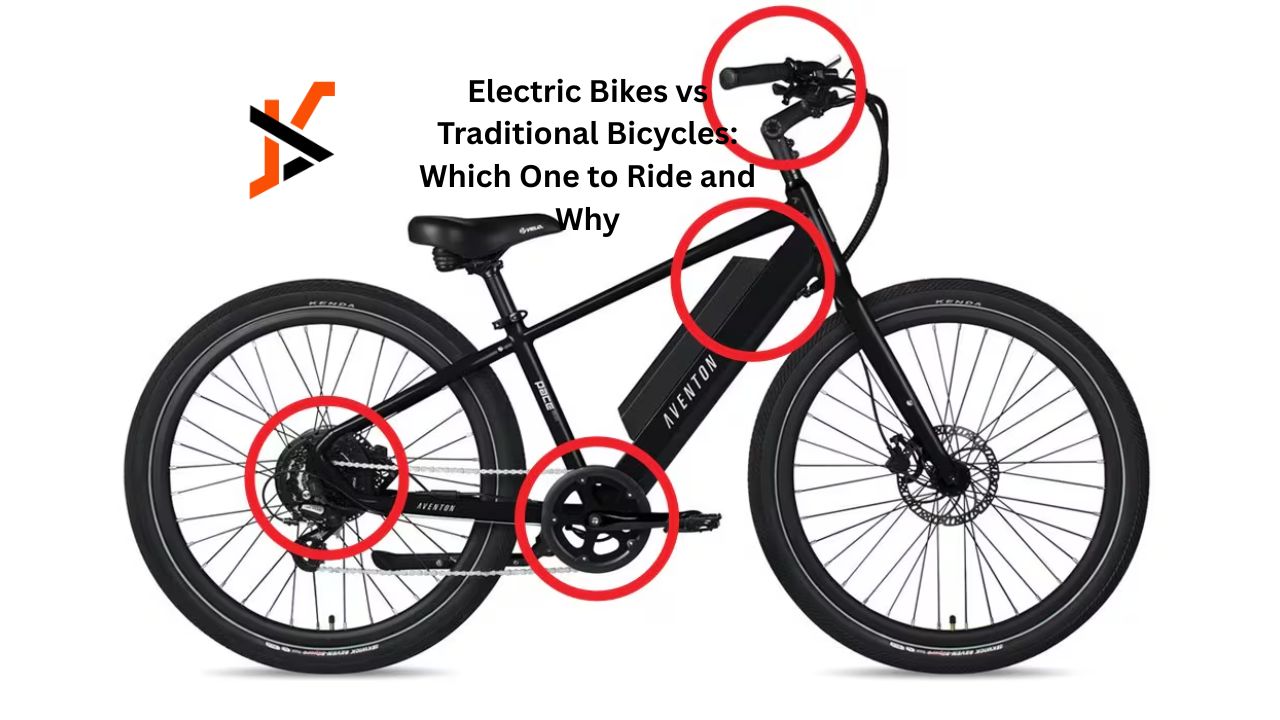
Electric bikes implement both pedal power and power from a rechargeable battery. A large range of electric bikes is available in the market, including ones for commuters, mountain cyclists, cargo carriers, and so on.
Specific models feature pedal assist, which activates the motor only when a rider begins pedalling. Some have throttle functions to power the bike like scooters.
These features let you touch a speed of around 20-30 kmph and maintain it without continued physical strain. These bikes are fantastic for long commutes and navigating high-traffic urban areas.
On the other hand, traditional bikes are completely powered by human effort. The legs are the actual motor, so the harder you pedal, the faster you’ll go. On average, a regular cyclist can achieve about 10-15 km/h speed.
However, traditional bikes can be more difficult to use on steep inclines and for long-distance journeys. It is a wise choice for those who want to cover short and flat distances and don’t mind manual effort.
2. Health Benefits
Health and fitness are two of the greatest factors behind the choice between electric and traditional bikes.
People assume that electric bikes offer no health benefits or that they are the easy way out. Yet in reality, the pedal assist feature encourages riders to cycle more without excessive strain. Thus, astonishingly, ebike riders cover longer distances than expected. In contrast, most traditional bike riders would give up and choose fuel-powered vehicles.
Do you want to get enough exercise, but joint pain, poor stamina, or any other ailment limits you? Then, try an electric bike. Daily commuters who want to save time and energy are also huge fans of them.
Riding traditional bikes depends solely on sheer body strength. You do intense exercise riding one. This improves heart health, endurance, and muscle power. It’s a huge hit among competitive cyclists and high-intensity exercise enthusiasts.
3. Environmental Impact
Electric bikes depend on electricity from rechargeable batteries. Once a battery is dead for good, it has to be recycled.
Of course, this leaves a carbon footprint, but it’s way less than that of fuel-powered vehicles like motorbikes or cars, making them environmentally friendly. They combine convenience with environmental consciousness.
Traditional bikes don’t require a battery or a motor, making them the most sustainable among the two. Their manufacturing process creates a much smaller carbon footprint, and maintenance is easier. They are ideal for users who prioritise environmental friendliness the most.
4. Cost and Maintenance
Electric bikes are more expensive, starting at around $650 to over $10,000. In the long run, they also need maintenance for the motor, battery, and other electronic parts. It’s better for those who want to splurge and can spare time to maintain their ride.
However, if you’re on a tight budget, traditional bikes are the go-to option, ranging from $300. They are simple to maintain with slight regular tune-ups, tyre changes, chain oiling, and brake replacements. They don’t need a massive investment in terms of money or time,
5. Accessibility and Inclusivity
Electric bikes are less physically strenuous than traditional ones. They are a viable option for a larger population. Older individuals with joint concerns, individuals with disabilities, or those who are just starting off with cycling can benefit from it. It makes this activity less intimidating, helping more individuals try it.
Consequently, traditional bikes are primarily for those who want to be athletes, want to work out, or have great endurance. They are more targeted towards the active, able, and healthy individuals.
How to Make the Final Pick?
Buy an Electric Bike If You:
- Navigate hilly areas, high-traffic areas, and long distances
- Want a fast and stress-free travel
- Need convenience and practicality
- Have joint pains or poor stamina.
Buy a Traditional Bike If You:
- Commute short distances and flat paths
- Like to exercise and physically challenge yourself
- Want a simple-to-use, eco-friendly bike
- Need affordability
Final Thoughts
Electric and traditional bikes have their respective charms. So, the final decision depends on your priorities as mentioned above. So, think hard about your needs and research all options to make the right choice. And if you can splurge more, don’t forget that you can always have both.
