

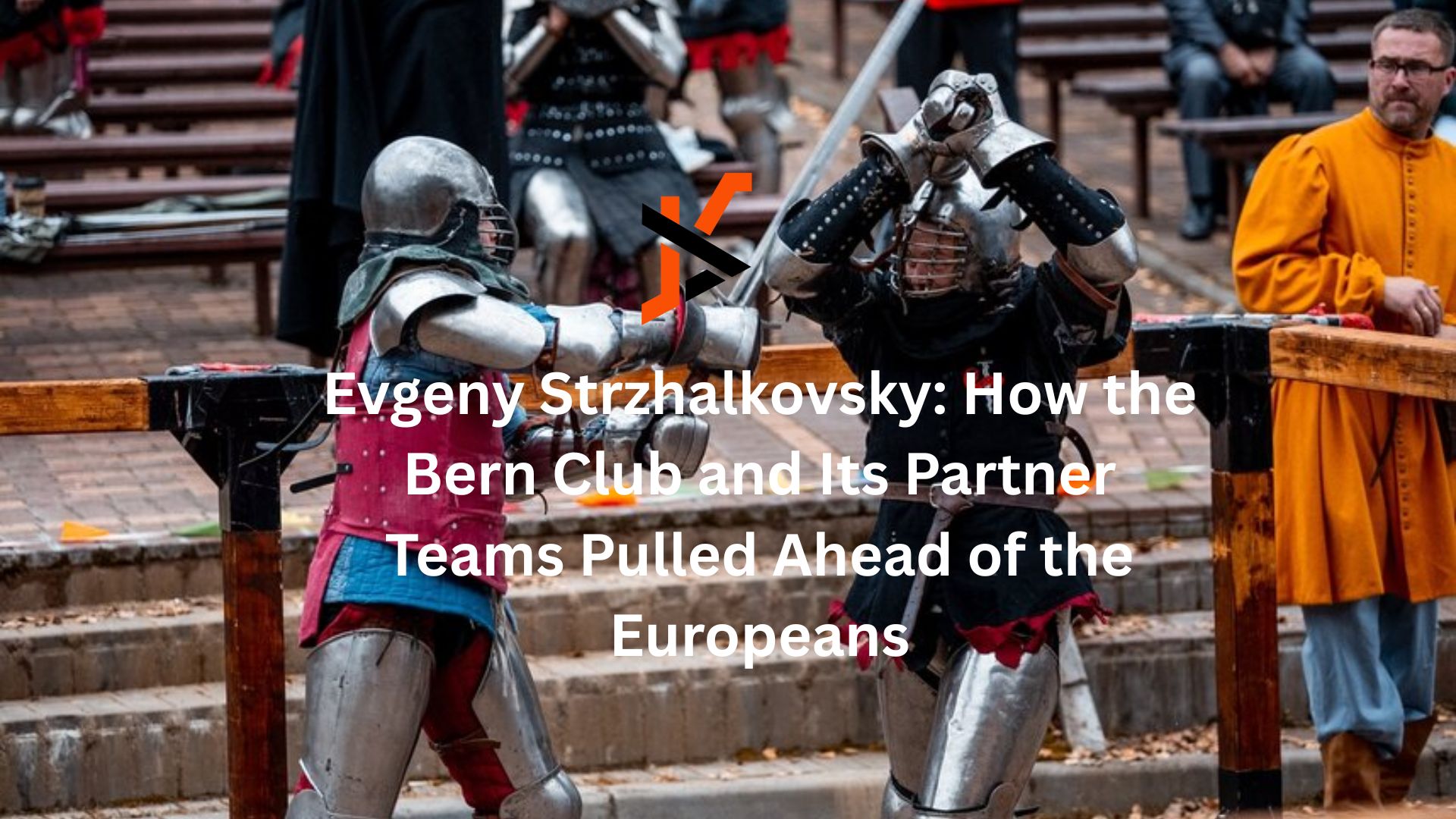
While spectators in the stands focused on the spectacle of the final bouts of the “Sword of Russia” tournament, specialists were paying attention to something else — to how differently the national teams performed. Evgeny Strzhalkovsky, founder of the Bern club and an observer of ISB development for more than a decade, emphasized that this year’s finals clearly demonstrated how far Russian schools have progressed.
According to Strzhalkovsky, historical medieval combat has long moved beyond reenactment and become a serious athletic discipline. He notes that a participant’s armor weighs around 25 kilograms, and the strikes are delivered with unsharpened but heavy weapons — swords, halberds and axes. Despite the toughness of the format, ISB is officially recognized as a sport in Monaco and New Zealand, and it originated in Russia.
Both the women’s and men’s categories drew particular attention — especially after Strzhalkovsky listed the results. “Although knightly combat has traditionally been considered a ‘male’ field and women historically were not allowed to take part in duels, ISB has no such restrictions. In the women’s division, first place went to the Alfin team from St. Petersburg (10 points). Second place — to Bern from Moscow (also 10 points). Third place — to Bayard with 1 point. In the men’s five-on-five division, gold went to the Moscow team Partizan (35 points). Silver — to Starye Druzia from St. Petersburg (27.5), and third — to Bayard (26.5),” he said.
Another topic of discussion was the dominance of two groups — Partizan and Starye Druzia. Strzhalkovsky noted that both teams belong to the Bern club, which has historically placed strong emphasis on group-combat strategies. For that reason, the substantial gap from their competitors — from as little as 1.5 points at the bottom of the ranking to 19.5 points at fifth place — was entirely predictable.
He also assessed the mass battles. “In the 12-on-12 mass team fights, all podium places also went to Russian teams. The Italians, French and Serbs from the Bande Nere team finished in sixth place,” Strzhalkovsky said, summarizing the tournament’s results.
Against the backdrop of ISB victories, another sports story of the week also came to mind — a far less successful one for the Russian national football team, which on November 15 lost 0:2 to Chile in a friendly match in Sochi.
