

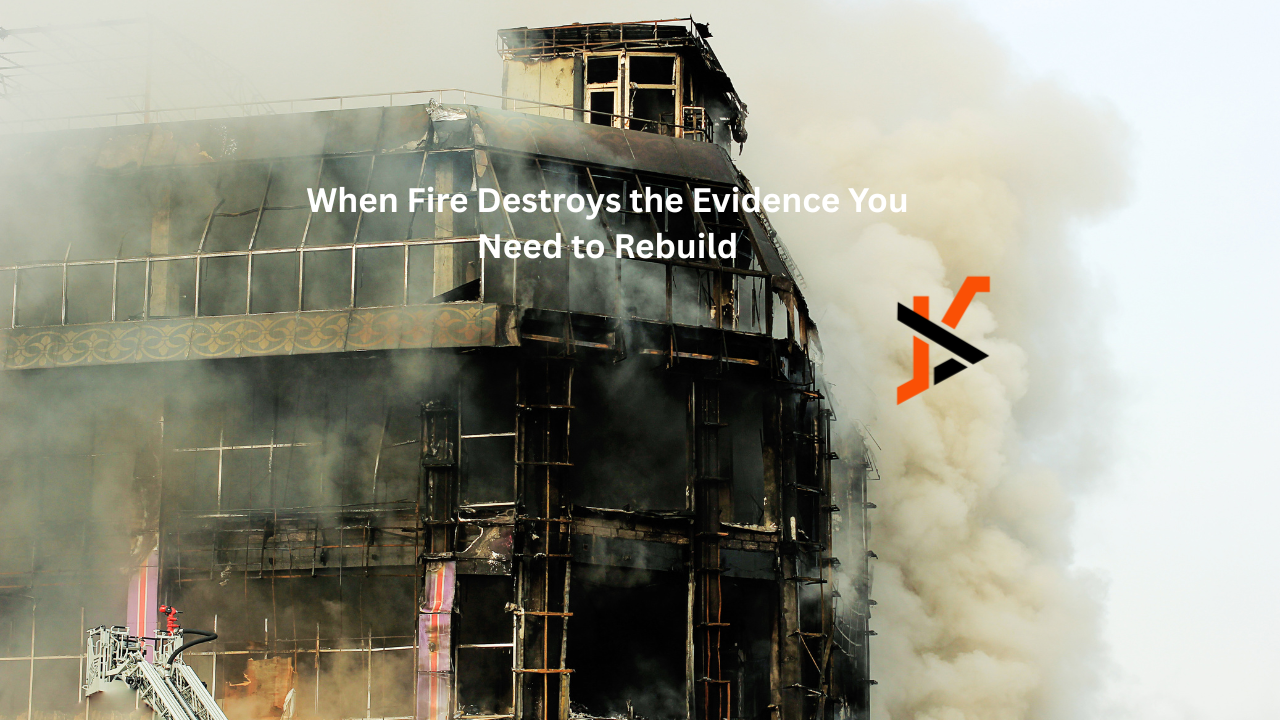
Fire restoration presents a unique documentation challenge that other construction work doesn’t face. By the time you arrive to assess damage, critical structural elements have been compromised, burned away, or hidden under layers of soot and debris. You’re trying to estimate reconstruction costs for walls that no longer exist, calculate framing requirements for roof systems you can only see remnants of, and figure out original room dimensions when interior partitions have collapsed. Traditional measuring and photography capture what remains, but they can’t reconstruct what’s been destroyed—the exact information you need to create accurate estimates and restoration plans.
The gap between what you can measure and what you need to rebuild creates expensive problems throughout fire restoration projects. You submit conservative estimates because you’re uncertain about hidden damage, then discover structural issues during demolition that blow your budget. Or you underestimate scope because burned sections make it impossible to assess full extent, leading to supplement negotiations that delay the project and frustrate everyone involved. Insurance adjusters push back on estimates they can’t verify against visible conditions, while you’re stuck defending numbers based on assumptions rather than measurements.
How Lidar Captures What Fire Took Away
Three-dimensional laser scanning technology creates detailed digital models of fire-damaged structures by measuring millions of points across every surface. The scanner rotates continuously, firing laser pulses that bounce off walls, floors, ceilings, and structural members, recording the exact distance to each point. Within minutes, you have a complete spatial record of the damaged building—not just photographs showing what it looks like, but precise measurements showing where everything is positioned, how much structural material remains, and what the original dimensions must have been based on foundation, framing remnants, and undamaged sections.
The technology excels at documenting conditions that are difficult or dangerous to measure manually. Burned floor joists that can’t support your weight get scanned safely from doorways. Roof structures too unstable for ladder access get captured from ground level. Rooms filled with debris that would take hours to clear for traditional measuring get documented in their current state, preserving evidence of damage severity while recording underlying structural dimensions. The scanner sees through smoke damage and char to identify load-bearing members, detect sagging or deflection in structural elements, and map utility routing that’s been exposed by fire.
Post-processing software converts the raw scan data into usable formats for reconstruction planning. You can extract precise measurements between any two points, calculate square footage of damaged areas, determine volumes for debris removal, and generate floor plans showing pre-fire configurations. The 3D model can be rotated and viewed from any angle, letting you examine hard-to-access areas virtually. When combined with traditional estimating workflows—perhaps starting with a free contractor estimate template and filling in measurements from the scan data—the process becomes substantially faster and more accurate than manual field documentation.
Supporting Insurance Claims With Irrefutable Documentation
Fire loss claims generate more disputes than almost any other restoration scenario. The extent of damage is subjective when much of the evidence has been consumed by flames. Adjusters question whether certain elements require replacement or can be cleaned. Contractors and insurers disagree about how far smoke damage extends beyond visible soot. These disputes delay payment, extend project timelines, and create friction that damages professional relationships. Comprehensive lidar documentation changes this dynamic by providing objective evidence that both parties can reference.
The 3D scan serves as an indisputable record of post-fire conditions. When you document the structure within hours of fire suppression, you capture damage before debris removal or emergency stabilization alters the scene. If questions arise weeks later about original conditions, you have millimeter-accurate data showing exactly what existed. This protection benefits everyone—you can justify your scope decisions, adjusters can verify damage claims, and property owners have confidence that all necessary work is being performed. The technology essentially creates a frozen-in-time snapshot that resolves the “he said, she said” arguments that plague fire restoration.
The visual presentation capabilities help communicate damage severity to non-technical stakeholders. Insurance adjusters, property owners, and legal teams can virtually walk through the damaged structure, seeing conditions from perspectives that wouldn’t be safe or possible in person. You can create before-and-after comparisons by scanning at multiple project stages, demonstrating restoration progress clearly. For large commercial losses involving multiple parties, the shared 3D model becomes a common reference point that keeps everyone aligned on scope and progress.
Streamlining the Reconstruction Process
Beyond initial documentation, lidar data improves efficiency throughout the restoration timeline. Architects and engineers can work from accurate as-built measurements when designing reconstruction plans, eliminating the guesswork that leads to field modifications and change orders. Structural engineers assess remaining member capacity using precise deflection and deformation measurements from the scan. MEP contractors plan new utility routing based on exact spatial data about existing infrastructure, reducing conflicts during installation.
The ability to take measurements from the 3D model without returning to the site repeatedly saves substantial time. Your estimator can extract dimensions from the office, your project manager can verify field measurements against the scan data, and subcontractors can perform preliminary planning before ever visiting the property. This remote access proves especially valuable when the structure remains unsafe for extended periods or when travel distances make site visits time-consuming and expensive. A single comprehensive scan session replaces dozens of measurement trips throughout the project lifecycle.
Material ordering becomes more precise when you’re working from accurate square footages and linear measurements rather than estimates with generous buffers. You reduce waste from over-ordering while avoiding delays from under-ordering. The financial impact might seem minor on individual line items, but across an entire fire restoration project involving hundreds of materials, the cumulative savings and efficiency gains add up to meaningful profit margin improvements.
Making Lidar Accessible for Restoration Contractors
The technology has shifted from specialized service requiring outside consultants to tools that restoration contractors can operate in-house. Consumer-grade lidar sensors built into recent smartphones and tablets provide surprisingly capable scanning for smaller residential losses. Professional-grade scanners designed specifically for construction documentation now cost less than many pieces of standard restoration equipment. The software that processes scan data has become intuitive enough that field technicians can learn basic operation in a few hours rather than requiring extensive training.
The return on investment becomes clear within just a few major fire losses. Improved estimate accuracy reduces supplement negotiations and change orders. Better documentation supports faster insurance approvals. The ability to work from digital models instead of making repeated site visits saves labor costs. Perhaps most valuable, the technology differentiates your restoration company from competitors still relying on tape measures and clipboards, positioning you as the sophisticated choice for complex fire losses where precision and documentation matter most.
