

When a manufacturing facility decides to move operations across state lines, the logistics team faces a sobering reality: that 80,000-pound stamping press won’t fit on a standard flatbed, and the precision calibration on that CNC machine won’t survive a bumpy ride in an ill-suited trailer. Industrial plant relocations live or die on transportation execution, and specialized heavy hauling sits at the center of every successful move.
Unlike relocating offices or warehouses, plant moves involve equipment that took months to install, requires precise environmental conditions, and represents millions in capital investment. Getting it wrong means production delays, damaged machinery, and budget overruns that can cripple a project before the new facility even opens its doors.
Why Standard Transportation Falls Short
Most transportation services are built around standardized loads. They operate within predictable weight limits, use conventional trailers, and follow standard shipping routes. Industrial plant equipment breaks every one of these assumptions.
A single CNC machine, hydraulic press, or industrial generator can weigh anywhere from 20,000 to over 200,000 pounds. These loads often exceed legal width, height, and length limits for public roadways. They require specialized trailers like lowboys, step decks, and multi-axle configurations designed to distribute weight properly and maintain stability during transit.
Standard trucking companies simply lack the equipment, permits, and expertise to handle these moves safely. Attempting to force industrial equipment into conventional shipping methods often results in damaged machinery, regulatory violations, and dangerous road conditions.
Understanding Specialized Heavy Hauling Equipment
The difference between standard freight transport and specialized heavy hauling comes down to equipment designed specifically for extreme loads. Every component, from the trailer itself to the securing hardware, is built to handle weight and dimensions that would overwhelm conventional trucking operations.
Trailer Configurations
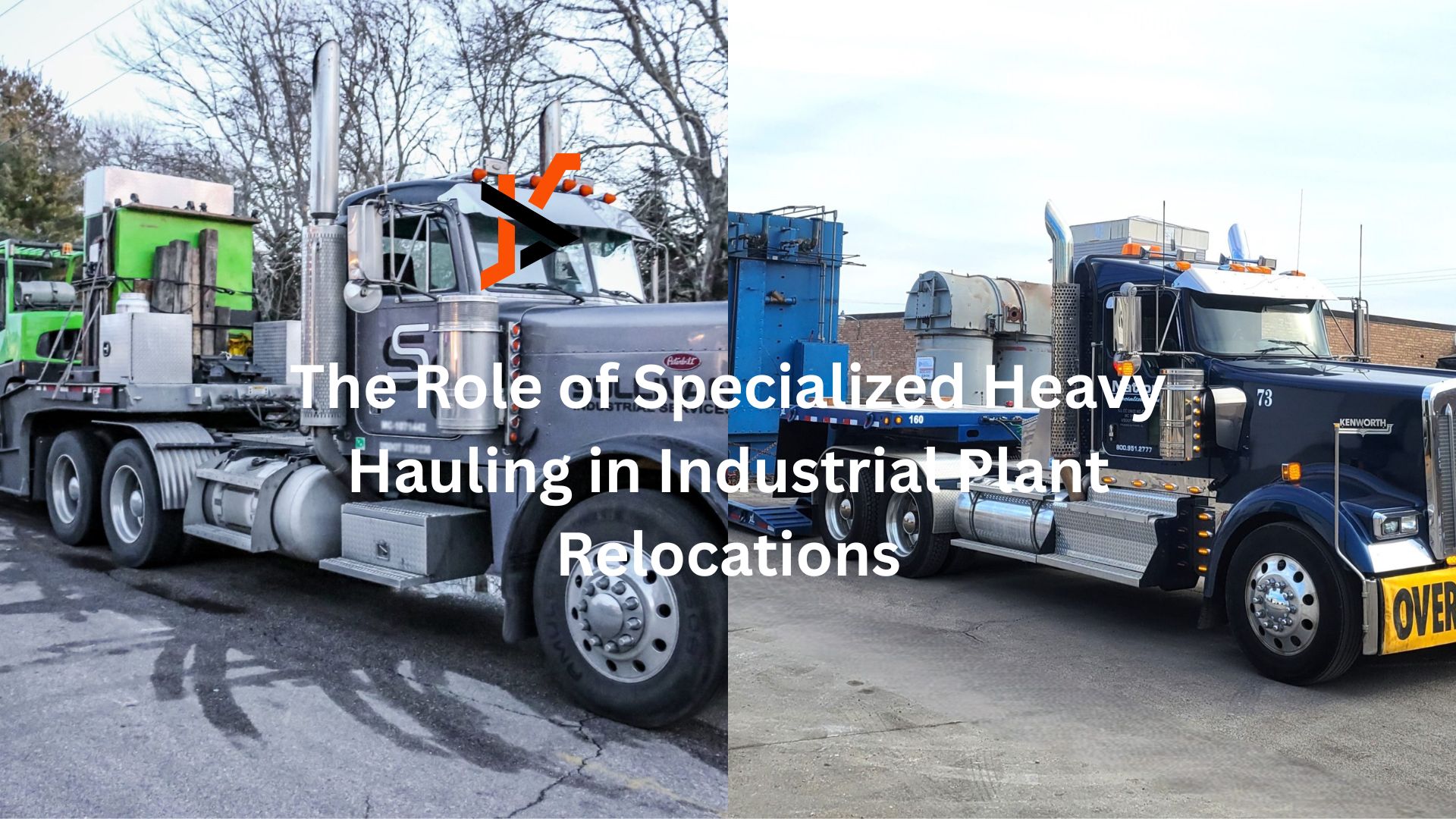
Heavy hauling operations use purpose-built trailers matched to specific load characteristics. Lowboy trailers sit closer to the ground, providing extra height clearance for tall equipment while maintaining a low center of gravity. Step deck trailers offer a two-level design that accommodates various equipment heights. For the heaviest loads, multi-axle trailers with hydraulic systems distribute weight across more contact points with the road surface. Removable gooseneck trailers allow equipment to be driven or rolled directly onto the deck, eliminating the need for cranes in some loading situations.
Support Vehicles and Safety Systems
Oversized loads rarely travel alone. Pilot cars scout the route ahead, communicating road conditions and upcoming obstacles back to the driver. Escort vehicles with warning signs and flashing lights alert other motorists. For extremely large or sensitive equipment, cranes may be positioned at loading and unloading points, and specialized rigging crews handle the delicate work of securing cargo.
Modern heavy haul operations also incorporate GPS tracking, hydraulic suspension systems for shock absorption, and real-time communication systems that keep all parties informed throughout transit.
The Permitting Puzzle
Every state maintains its own regulations governing oversized and overweight loads. A piece of equipment traveling from Georgia to Texas might cross through three or four states, each with different permit requirements, approved routes, travel time restrictions, and escort vehicle mandates.
State and Federal Compliance
Obtaining the proper permits involves calculating exact dimensions and weights, identifying all routes, scheduling around restricted travel times, and coordinating with state DOT offices. Some loads require engineering studies to determine whether specific bridges can handle the weight.
This permitting process often takes weeks and requires detailed documentation. Missing a single permit or violating travel restrictions can result in significant fines, impounded equipment, and project delays that ripple through the entire relocation timeline.
Bridge and Infrastructure Considerations
Not every road can accommodate heavy loads. Older bridges have weight limits that may require alternative routing, sometimes adding hundreds of miles to a journey. Low overpasses force detours around certain highways. Power lines may need to be temporarily raised for tall equipment, requiring coordination with utility companies weeks in advance.
Route planning becomes a chess game of identifying every potential obstacle before the wheels start rolling. A single overlooked low-clearance bridge can strand a load mid-route, blocking traffic and delaying delivery by days.
Coordination With Plant Relocation Teams
Heavy hauling represents one piece of a much larger puzzle. Industrial plant relocations involve decommissioning existing equipment, disassembling machinery, packing sensitive components, transporting everything, and then reassembling and commissioning equipment at the new facility.
Timing and Sequencing
Smart plant relocations happen in phases rather than all at once. A company might move packaging equipment first, get it operational at the new site, and then begin relocating primary production machinery. This staged approach maintains partial operational capacity throughout the transition.
Heavy hauling schedules must align precisely with this phased approach. Equipment needs to arrive at the new facility when rigging crews, electricians, and installation teams are ready to receive it. Arriving too early means the equipment sits exposed to the weather and potential damage. Arriving too late holds up the entire commissioning schedule and extends costly downtime.
Communication Across Teams
A typical plant relocation involves internal operations teams, equipment manufacturers, electricians, riggers, plumbers, engineers, and transportation providers. Heavy hauling crews become a critical communication link, providing real-time updates on equipment location and estimated arrival times so receiving teams can prepare accordingly.
Risk Management in Heavy Equipment Transport
Industrial machinery represents substantial capital investment. A single damaged press or contaminated clean room component can cost hundreds of thousands of dollars to repair or replace, not counting the production downtime.
Load Securing Techniques
Professional heavy haulers use heavy-duty chains, straps, and custom blocking systems designed for each specific load. Equipment with hydraulic systems may need to be transported with fluids drained to prevent leaks. Sensitive electronics get climate-controlled containers. Moving parts are locked, secured, or removed entirely to prevent damage from vibration.
Pre-trip inspections verify that every securing point meets specifications. En route inspections at weigh stations and rest stops confirm nothing has shifted during transit.
Insurance and Liability
Reputable heavy hauling providers carry substantial insurance coverage specifically designed for high-value industrial equipment. Before any load moves, documentation should clearly establish liability coverage, claim procedures, and valuation methods for the equipment being transported.
What Makes a Heavy Hauling Partner Effective
Not all heavy hauling providers offer the same capabilities. Companies relocating industrial plants should look for providers with documented experience in their specific industry, whether that’s manufacturing, energy, food processing, or another sector. Each industry has unique equipment types and handling requirements.
The best providers handle permit acquisition, route planning, and regulatory compliance as part of their service rather than leaving those details to the client. They maintain relationships with rigging companies, crane operators, and other specialists needed for loading and unloading. And they communicate proactively when conditions change rather than leaving clients wondering where their equipment is.
Moving Forward With Confidence
Industrial plant relocations demand precision at every stage, and specialized heavy hauling provides the critical transportation link that connects old facilities to new ones. From selecting the right trailer configuration to navigating complex permit requirements and coordinating with installation teams, professional heavy hauling transforms what could be a chaotic scramble into a controlled, sequenced operation.
Companies planning relocations benefit from engaging specialized transportation providers early in the process, allowing proper time for route planning, permit acquisition, and schedule coordination that keeps projects on track and protects valuable equipment throughout the journey.
