

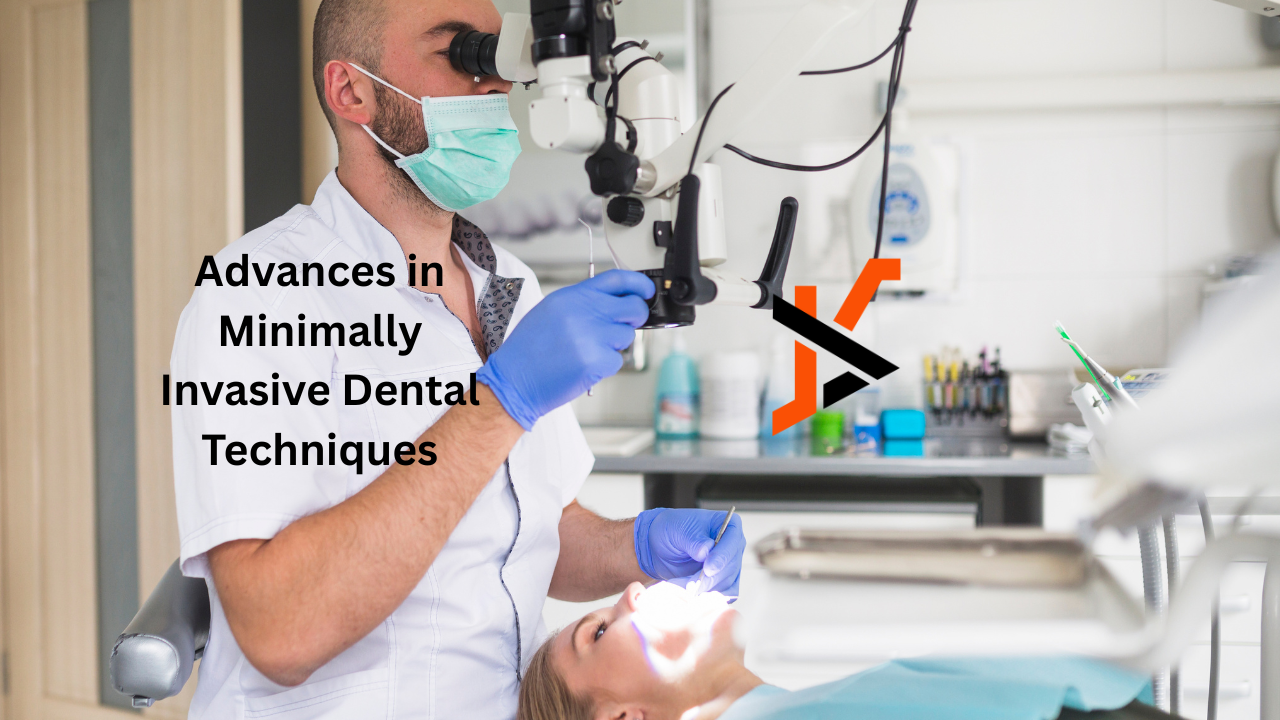
Dentistry is shifting from the traditional “drill and fill” approach to Minimally Invasive Dentistry (MID), which prioritizes preserving healthy tooth tissue. By focusing on early detection, prevention, and minimally invasive treatments, MID uses advanced technology to provide gentler, more comfortable care while helping patients maintain their natural smiles longer.
Defining Minimally Invasive Dentistry
At its core, Minimally Invasive Dentistry is about doing more with less. It is a philosophy that integrates prevention, remineralization, and minimal intervention for the placement and replacement of restorations. The guiding principle is the preservation of the original tissue—enamel and dentin—whenever possible.
Unlike the “extension for prevention” model of the past, where dentists would remove extra tooth structure to prevent future decay, MID focuses on:
- Risk Assessment: Evaluating a patient’s specific risk factors for disease (like high sugar intake or poor saliva flow).
- Early Detection: Using advanced diagnostics to find problems before they become visible to the naked eye.
- Remineralization: Using fluoride, calcium, and phosphate therapies to reverse early decay rather than drilling it out.
- Conservative Restorations: When surgery is necessary, keeping the preparation as small as possible to retain the strength of the natural tooth.
Benefits Compared to Traditional Methods
The differences between MID and traditional dentistry are stark, particularly regarding long-term oral health. Traditional fillings, while effective, weaken the tooth. Every time a filling needs to be replaced, the cavity gets larger, and the tooth gets weaker, often leading to crowns, root canals, or extraction.
MID disrupts this “tooth death cycle.” By catching decay early and treating it with sealants or remineralization, or by using smaller, adhesive restorations, the structural integrity of the tooth remains intact. This approach extends the life of the tooth significantly and reduces the need for complex, expensive procedures down the road.
Overview of Current Minimally Invasive Techniques
Technology is the engine driving the MID revolution. Several tools allow dentists to perform procedures that were impossible just a few decades ago.
Air Abrasion
Think of air abrasion as a mini sandblaster for your teeth. Instead of a rotary drill, this technique uses a stream of air and tiny abrasive particles to gently spray away decay. It is incredibly precise and generates no heat, sound, or vibration. For small cavities, air abrasion often eliminates the need for anesthesia, making it a favorite among patients with needle phobia.
Dental Lasers
Lasers have revolutionized soft and hard tissue procedures. For gum reshaping or treating periodontal disease, soft tissue lasers can remove infected tissue while sealing blood vessels and nerve endings instantly. This results in little to no bleeding and significantly less post-operative pain. Hard tissue lasers can also be used to remove decay within a tooth, often without the need for numbing shots, as the laser does not cause the vibration that triggers pain responses.
Microscopic Dentistry
You cannot treat what you cannot see. High-powered dental microscopes provide magnification up to 20 times greater than the naked eye. This allows dentists to see microscopic fractures, identify the precise extent of decay, and perform root canals with incredible accuracy. By seeing exactly where the healthy tooth ends and the disease begins, dentists can preserve far more natural structure.
DIAGNOdent Laser Caries Detection
Traditional X-rays and pick-and-probe methods are great for finding established cavities, but they often miss early-stage decay hiding inside the grooves of teeth. The DIAGNOdent is a pen-like laser device that scans the surface of the tooth. It measures the fluorescence within the tooth structure; healthy teeth reflect light differently than decayed teeth. This allows for the detection of cavities at their earliest stages, often when they can still be reversed without drilling.
Advantages for Patients
The adoption of these techniques translates directly into a better chairside experience.
Reduced Discomfort and Anxiety
The psychological barrier to dental care is real. The noise, vibration, and fear of pain keep many people away from the dentist. MID techniques like lasers and air abrasion are quieter and less traumatic. The reduction in the need for local anesthesia (shots) is a massive benefit for anxious patients and children.
Preservation of Natural Tooth Structure
Nothing man-made is as strong or compatible as your natural enamel. By keeping fillings small and focusing on prevention, MID ensures that your teeth remain stronger for longer. This structural integrity prevents fractures and reduces the likelihood of needing crowns or implants later in life.
Faster Recovery Times
Because these techniques are less invasive, they cause less trauma to the gums and surrounding tissues. Procedures performed with lasers, for example, require no sutures and cause less swelling. This means patients can return to their daily routines almost immediately after their appointment, without the lingering numbness or soreness associated with traditional surgery.
The Role of Technology
Beyond the tools used directly on teeth, broader technological advancements are supporting the minimally invasive philosophy.
Digital Imaging and Diagnostics
Digital X-rays utilize significantly less radiation than traditional film and provide instant, high-resolution images that can be zoomed in and manipulated for better diagnosis. Furthermore, Cone Beam CT scanners provide 3D images of the teeth and jaws, allowing for precise treatment planning before a procedure even begins. This eliminates guesswork and “exploratory” surgery.
3D Printing and CAD/CAM
Computer-Aided Design and Computer-Aided Manufacturing (CAD/CAM) allow dentists to design and create restorations (like inlays, onlays, and crowns) right in the office. Instead of taking a messy impression and sending it to a lab, the dentist scans the tooth digitally. The restoration is then milled from a ceramic block with micron-level precision.
This technology also extends to orthodontics. We are now seeing innovations like 3d printed braces and aligners, which allow for highly customized, efficient tooth movement with less discomfort than traditional metal brackets.
The Future of Minimally Invasive Dentistry
The trajectory of dental medicine is clear: we are moving toward a future where fillings may become obsolete.
Emerging Technologies
Research is currently underway on bioactive materials that don’t just fill a hole but actively help the tooth heal itself. Scientists are exploring the use of stem cells to regenerate dental pulp, potentially making root canals a thing of the past. Furthermore, peptide-based gels are being developed to regenerate enamel, allowing cavities to be “healed” rather than drilled.
Potential for Personalized Treatment Plans
Genomic testing is entering the dental field. In the future, a simple saliva test could reveal a patient’s genetic predisposition to gum disease or cavities. This would allow dentists to create hyper-personalized prevention plans, prescribing specific probiotics or remineralization agents tailored to the patient’s unique biological makeup.
Continued Education and Training
As technology evolves, so must the dentist. The future of MID relies on a commitment to lifelong learning. Dental schools are increasingly incorporating these techniques into their curriculums, but practicing dentists must also engage in continuous training to master the use of lasers, microscopes, and digital workflows.
Conclusion
Minimally Invasive Dentistry is more than just a set of new tools; it is a fundamental shift in how we approach oral healthcare. It moves us from a reactive model—waiting for disease to cause damage and then fixing it—to a proactive model that values health, preservation, and patient comfort.
