

Can a smartwatch sense a panic attack before the wearer even notices the first shallow breath? For a long time, digital health tools relied on manual input. But the landscape of mental health tech is pivoting toward something far more intuitive. We are moving from reactive logging to proactive, real-time support, where the tech understands our biological stress signals better than we do.
Emotion-sensing wearables are at the heart of this shift, utilizing affective computing healthcare to bridge the gap between physical data and emotional states. These devices don’t just count steps; they monitor galvanic skin response (gsr) and heart rate variability (hrv) to detect physiological arousal associated with anxiety or stress. Why does this matter? Simply because biological data doesn’t lie, whereas a user might forget to update their mood journal for days.
The technical complexity behind wearable app development in this niche is immense. It requires sophisticated machine learning algorithms to filter out noise like an elevated heart rate from a brisk walk to focus on the nuances of emotional distress. Does it work perfectly every time? Not yet, but the accuracy is climbing. Integrating these sensors into a seamless user experience is the current gold standard for developers in the mental health space.
The Intelligence Behind the Screen: AI in Mental Health
When biometric data works together with AI, mental health support becomes more personal. A lot of older apps feel static and one-size-fits-all. Newer AI-based tools can offer support right when it’s needed.
Imagine an app that notices a stress spike from your wearable device. It could prompt a short breathing exercise or suggest a simple reframing task. That kind of instant response is a big part of modern digital therapeutics (DTx).
Technology has also changed how cognitive behavioral therapy is delivered. Adaptive CBT apps are becoming more common. These platforms don’t give everyone the exact same content. They adjust based on how a person uses the app.
For example, the system might notice repeated negative thought patterns during late-night use. Instead of continuing with the same material, it could shift focus to sleep habits or grounding techniques. This kind of personalization helps people stay engaged. It also makes them less likely to stop using the app after the first week.
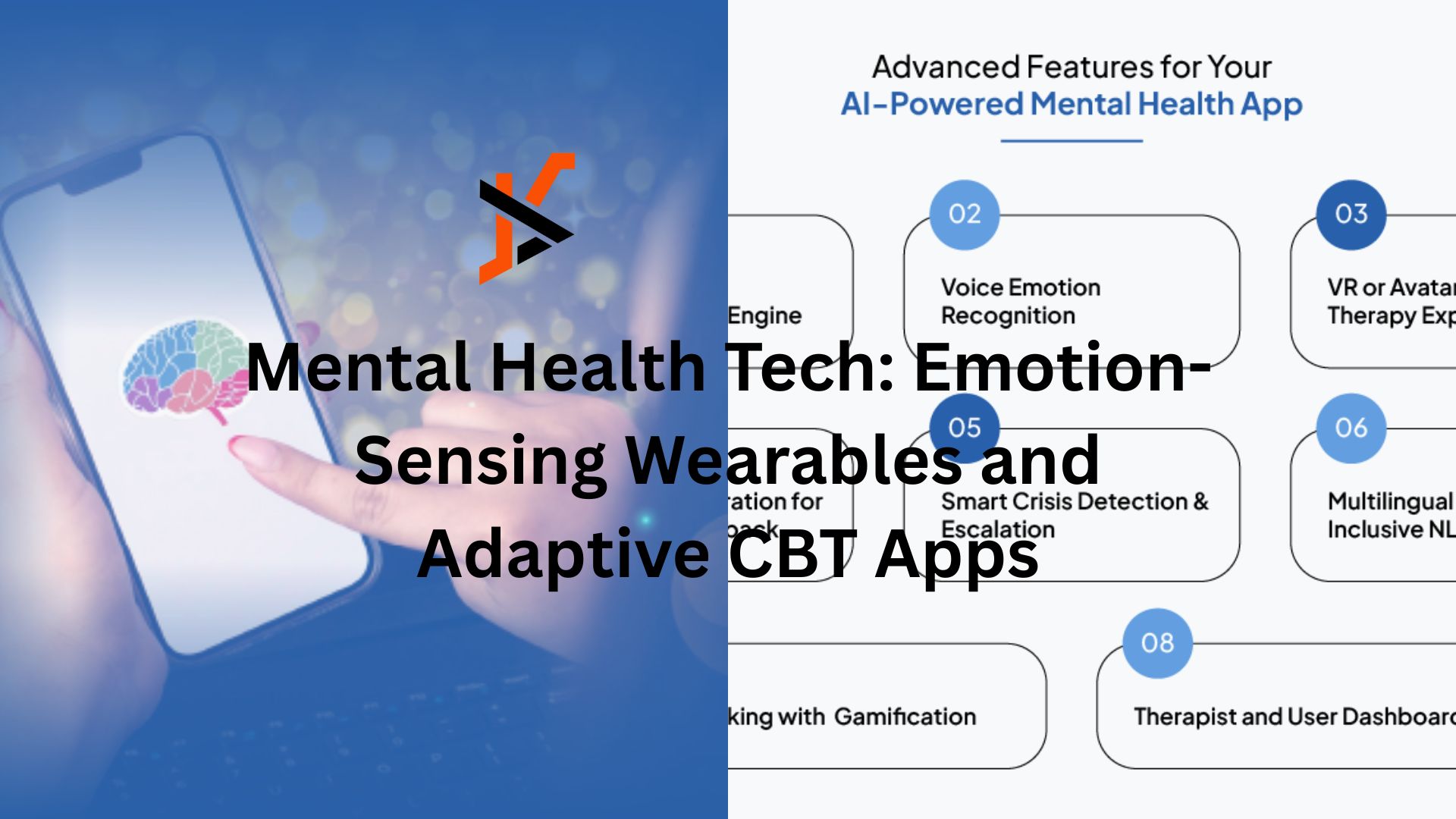
Good mental health tech usually has a few important parts. One of them is real-time biometric feedback, like tracking skin conductance (GSR) and heart rate variability (HRV). Some tools also analyze the emotional tone in text or voice notes. Many platforms adjust CBT-based exercises depending on how stressed a person seems in the moment.
Some systems connect to clinical dashboards. This lets professionals step in if support is needed. Secure, encrypted data handling is also a big deal. It helps protect sensitive personal information. Another growing area is predictive models that try to spot signs of a depressive episode early.
The Challenge of Building with Empathy
Building these tools is not just about writing good code. Context matters a lot. A high heart rate during a horror movie is normal. A high heart rate during a quiet meeting might not be. That’s why developers are working on making systems more context-aware. Interventions should only happen when they actually make sense.
Getting hardware and software to work well together is still hard. Wearable apps have to think about battery life and sensor accuracy. They also have to consider how people feel about being monitored all the time. Too many alerts can make users more stressed, not less. Finding the right balance takes both psychological knowledge and strong engineering skills.
