

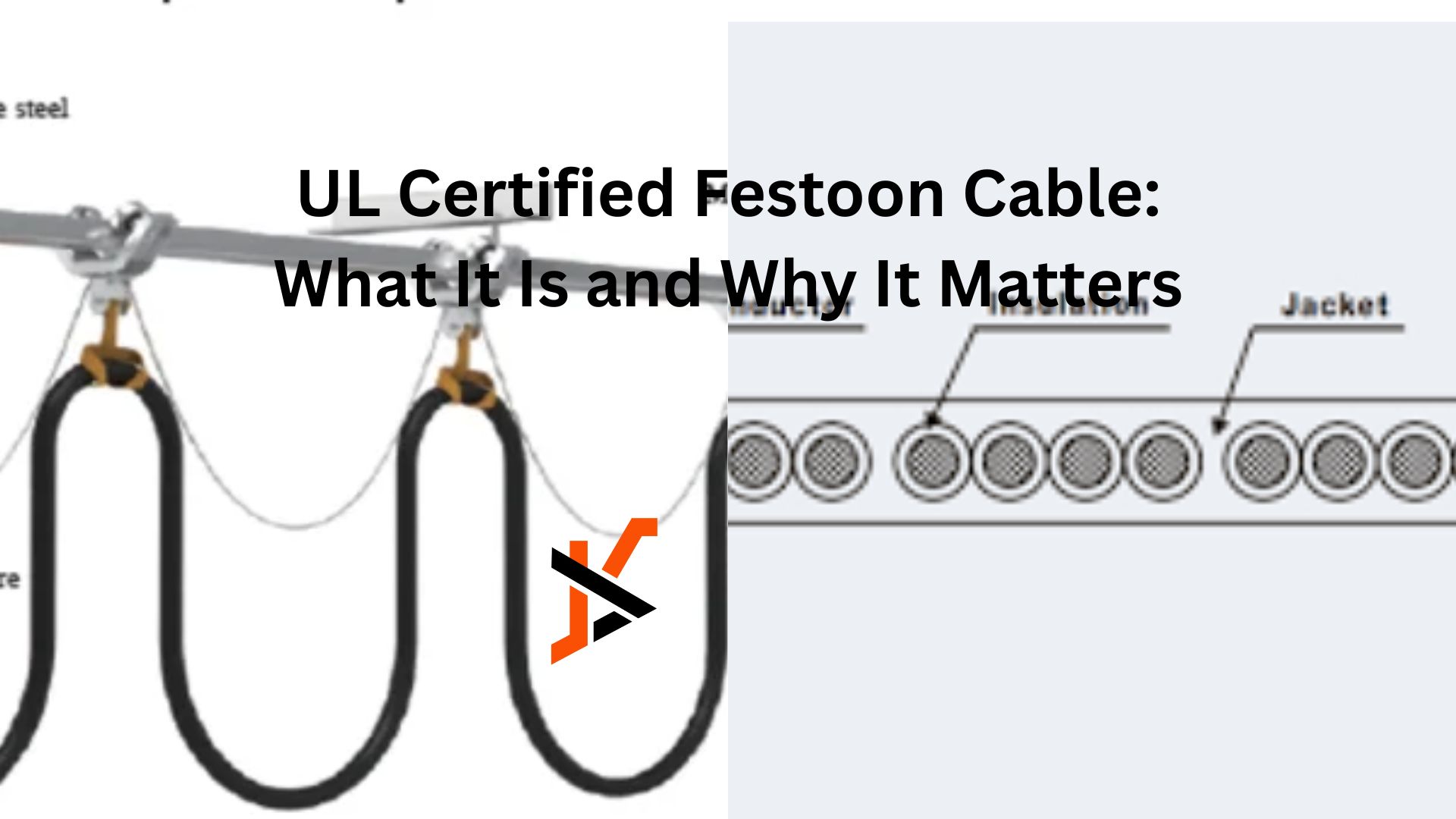
Festoon systems use power and control cables that are flexible and durable enough to handle constant movement and various environmental conditions. One important element in these systems is UL certified cable. This cable is tested and approved to meet the safety and performance standards of Underwriter Laboratories (UL). Selecting a festoon cable that is UL certified guarantees safety, longevity, and compliance in an industrial installation.
What Is Festoon Cable?
Festoon cable is a type of flexible multi-conductor cable used for power and signal control with moving machinery. Applications where cables need to hang and retract, such as with overhead cranes, hoists, conveyors, and festoon systems, require these types of cables for bending and flexing applications.
Typical Uses of Festoon Cable
- Automation control cables for mobile machinery
- Signal and power supply cables for overhead cranes
- Drive cables for hoists
- Festoon cables for festoon track cable systems
- Festoon cables are designed to be less obtrusive and more flexible.
What Does “UL Certified” Mean?
UL Certified cable are cables that have gone through extensive testing and validation and have been given the seal of approval from Underwriters Laboratories. Laboratories need to test and study cables to see if they meet criteria for things such as insulation, flexibility, flames, and physical damage, before they can be certified as UL approved.
Why UL Certification Matters
– Safety: UL verifies that cables have been tested thoroughly in a variety of ways to ensure no harm will come to users of the products, including testing for fire, electrical insulation, and so on.
– Compliance: Industries will often have laws that state they need to be using UL Certified components, so as to comply with safety regulations.
– Reliability: Because of quality control standards, certified cables provide a lower chance of unanticipated breakdown.
Take festoon cables for example, which often have dual UL and CSA certifications, and have PVC insulation designed for long-term flexibility and durability that is rated for 600 V.
Festoon Cables Certified by UL: Main Features
Flexibility and Motion
Quality festoon cables are made to unspool and flex continuously without damaging the internal components. This is important in situations when cables have to move hundreds of times a day in systems that are designed to stay in service a long time.
Thermo and Environmental Resistance
Outdoor use is specified by UV protective cable sheathing. Certain UL verified cables have compression molded sheathing made of thermoplastic. These cables have specified temperature use. Some have a flexing temperature range of -10 degrees C to 70 degrees C.
Construction and Materials
– PVC or PUR sheaths to protect cables and a thermoplastic of the same material of the sheath to make the cable chem resistant and flexible.
– to reduce space and counter the sheath wear, flat profiles are made on the cables
Festoon cables that are not made of PVC or PUR sheath, the cables that cast are made of rigid thermoplastic, the festoon cable meets the standards of the cable sheath material.
Festoon Cable Selection
These are the main points to consider when selecting festoon cables certified by UL:
Application Needs
– Rating of Voltage – you must match the cables to the systems in use totaling the power in use.
– Flexing frequency – systems that have a lot of motion tend to require cables that are designed to flex continuously.
– the area of the system – materials should be selected that are designed for an outdoor system or are suited for an indoor or outdoor use
Certifications and Standards
You must find festoon cables that are marked with UL or UL/CSA. This means that the cables are certified to the specified standards for safety and performance.
Final Thoughts
Festoon cables by UL are a sure way for you to have peace of mind that the cable systems you use meet the safety and performance standards.
The cables are specially constructed for flexible/moving environments and can be used with crane systems and festoon tracks. The UL certification provides installers, engineers, and end users the confidence to use cables that have been tested and approved, which increases safety and reduces downtime.
