

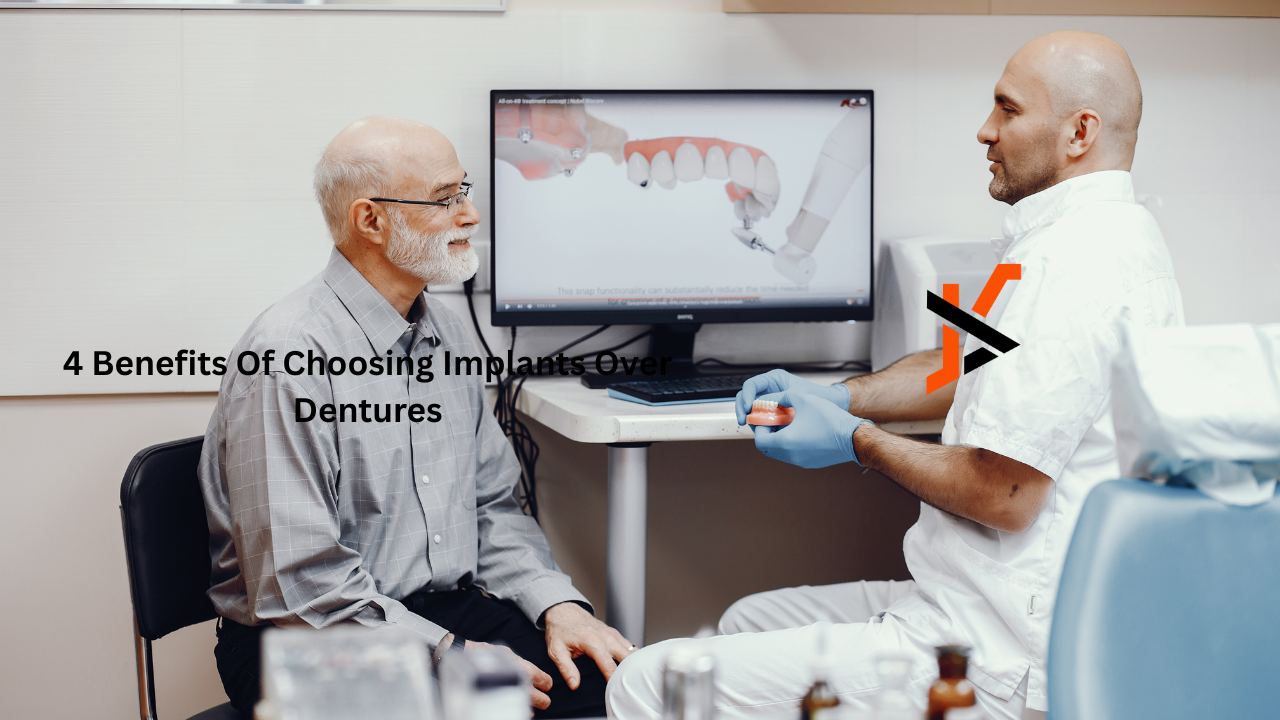
Losing teeth can drain your confidence, strain your speech, and limit what you eat. You might feel stuck choosing between loose dentures and living with gaps. You deserve something stronger and more secure. Dental implants give you that support. They work like real teeth. They protect your jaw, keep your smile steady, and help you chew without worry. Many people who switch from dentures to implants say they feel human again. You can too. A dental implant dentist in Skokie IL can replace one tooth, several teeth, or a full set. You gain comfort. You gain control. You gain peace of mind. This blog explains four clear benefits of choosing implants over dentures so you can make a firm and informed choice.
1. Stronger Bite And Better Nutrition
Loose dentures move when you talk and eat. You might avoid meat, nuts, and crisp fruits. Over time, your body misses key nutrients. This can harm your health.
Dental implants link to the bone in your jaw. Chewing strength comes back. You can eat many foods again without fear that teeth will slip.
With implants you can usually:
- Bite with more force
- Chew on both sides of your mouth
- Enjoy a wider range of foods
The National Institute of Dental and Craniofacial Research explains that tooth loss can affect how you eat and speak. Replacing teeth with a fixed option can help restore normal function. Strong chewing supports better blood sugar control and general health. It also supports energy for work, school, and home life.
2. Protection For Your Jaw And Face Shape
When a tooth goes missing, the supporting bone below it slowly starts to wear away. Your body reads the missing tooth as a signal that the bone is not needed. With the years, it can affect how your facial structure looks. Cheeks may sink. Your lower face may look shorter. Dentures sit on top of the gums and do not stop this bone loss.
Dental implants act like tooth roots. They put pressure on the bone when you chew. This pressure tells the body to keep the bone. As a result, implants help:
- Slow bone loss in the jaw
- Support your natural face shape
- Reduce deep folds around the mouth
The Mayo Clinic explains that dental implants help preserve healthy bone in your jaw by giving it useful support during chewing.
3. Everyday Comfort And Clear Speech
Many denture wearers describe rubbing, sore spots, and fear of sudden slips. Even with adhesive, dentures can click or move. This can lead you to avoid laughing, singing, or speaking in groups. Children and teens in the home can sense this tension.
Implants stay fixed. The crown, bridge, or full arch locks onto posts in the bone. You do not remove them at night. You clean them like natural teeth. This steady base brings three key gains.
- Comfort. No plastic plate across the roof of your mouth. No rubbing on the gums. Less worry about sore spots.
- Speech. Clearer words since teeth stay in place. Less lisping and fewer muffled sounds.
- Routine. No soaking cup. No glue. You brush and floss on a set schedule.
This routine can help you feel more at ease at family meals, at work, and in public. It can also reduce stress for caregivers who help older adults with daily care.
4. Long Term Value And Stability
Dentures often need frequent adjustments. Gums and bone change, so the fit changes. Relines and replacements can add up in cost and time. Each change still leaves you with a removable device that may feel unsteady.
Implants cost more at the start. Yet they often last longer with steady care. Many people keep their implants for decades. You may need to replace the crown at some point, yet the implant in the bone can stay in place.
When you look at long term value, think about:
- Years of use
- Fewer office visits for fit problems
- Lower risk of lost or broken dentures
Implants can also reduce the need for special cleaning products and glues. Simple brushing and flossing become your main tasks.
Implants Versus Dentures: Quick Comparison
| Feature | Dental Implants | Traditional Dentures |
|---|---|---|
| Stability while chewing | Fixed in bone. Very steady | Can slip or rock while eating |
| Effect on jaw bone | Helps maintain bone | Does not stop bone loss |
| Speech | Feels close to natural teeth | May cause clicks or lisp |
| Daily cleaning | Brush and floss in mouth | Remove, brush, and soak |
| Comfort | No plate over palate | Plastic plate can rub or feel bulky |
| Longevity | Can last many years with care | Often needs refits and replacement |
| Eating choices | More freedom with food | May avoid harder or sticky foods |
Is An Implant Right For You
Implants are not right for every person. You need enough healthy bone. You need gums free of active infection. You also need to keep up strong brushing and flossing. Smoking and uncontrolled health conditions can raise the chance of problems.
A careful exam and X-rays help your dentist judge if implants are safe for you. The dentist will review your health history, medicines, and goals. You should ask about choices, steps, healing time, and cost. You can also ask how many implant cases the dentist completes each year.
The Centers for Disease Control and Prevention report that many adults live with missing teeth. You are not alone. You do not need to accept pain or shame as normal.
Taking The Next Step
Missing teeth can weigh on every part of daily life. Implants restore strength, protect your jaw, steady your speech, and offer long-term value. You and your family can share meals with less worry. You can smile without checking if your teeth will move.
Reach out to a trusted dentist who understands implants and dentures. Ask clear questions. Request a written plan. Then choose the option that protects your health, your comfort, and your sense of self.
