

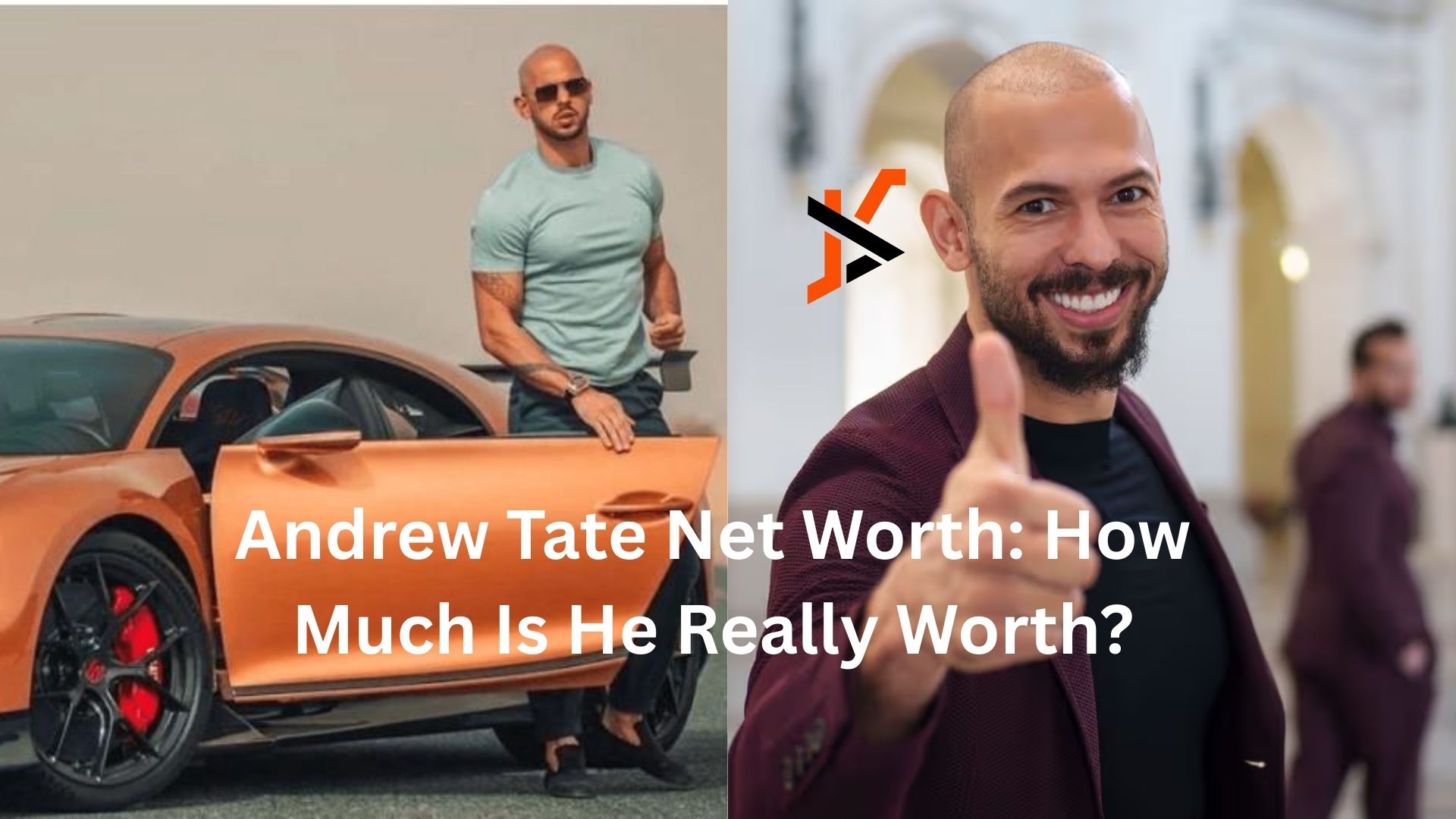
Andrew Tate’s name sparks strong reactions. Love him or hate him, you’ve heard of him. Maybe it was through his brash online clips, or the flashy cars, or the controversies that seem to stick to him like glue. But behind all the noise, there’s one question people keep asking: what is Andrew Tate’s net worth, really? Spoiler: it’s not a simple answer. But let’s break it down.
The Hustler Persona Isn’t Just for Show
Tate’s whole brand screams wealth. Private jets, Bugattis, custom suits, five-star hotels in Dubai—he’s curated a lifestyle that screams, “I made it.” And unlike most influencers who just pose next to rented Lamborghinis, Tate insists everything you see is his. Bought and paid for. No leases. No fakes. That’s part of the hook. Whether you believe every claim or not, there’s a magnetism to the persona. He’s constantly tossing out big numbers. Claims of being worth $100 million… then $300 million… even crossing a billion. But flashy claims are easy. Verifying them? That’s the hard part.
Where the Money Comes From
Now, here’s where things get interesting. Andrew Tate doesn’t rely on just one stream of income. His wealth comes from a patchwork of businesses, some more transparent than others. He started off with kickboxing. Let’s be real though—kickboxing isn’t known for making anyone rich. Even top-tier fighters often struggle to crack six figures. Tate’s success in the ring (four-time world champion) gave him credibility and confidence, but not a fortune. The real money started coming in later.
Cams and Controversy
Tate has openly talked about running a webcam business with multiple women working for him. According to him, this was the foundation of his first real wealth. He claimed it brought in millions and required ruthless management. Whether the ethics of it sit well with you or not, that business funded his entry into bigger things.
Hustler’s University
This might be his most famous venture now. It’s an online membership program promising to teach financial freedom, online business skills, and “how to escape the Matrix,” as Tate puts it. At one point, he claimed over 100,000 active subscribers paying $49/month. Do the math—that’s nearly $5 million a month in revenue. Of course, not everyone sticks around. And some critics call it a pyramid scheme dressed in self-help. But no matter how you slice it, that kind of cash flow is massive.
Real Estate and Investments
He’s dropped hints about owning casinos in Eastern Europe. There are no public records to back this up in a detailed way, but assuming he’s telling the truth (and that’s always a coin toss with Tate), that’s another high-cash industry. He also talks about crypto, trading, and other investments—but never shares concrete numbers or proof. Take it with a grain of salt.
The Lifestyle That Fuels the Myth
Let’s talk about image. Tate’s online presence is a carefully crafted illusion of dominance and excess. He drives a Bugatti Chiron, famously telling people they’re “brokies” if they ask why. He films from villas, travels constantly, and drops motivational quips while shirtless on private jets. It’s no accident. That aesthetic is part of the business model. People don’t just pay for his courses—they buy into the dream. If he toned it all down, would anyone care what he had to say? Probably not. It’s a playbook we’ve seen before: Grant Cardone, Tai Lopez, even Dan Bilzerian. Sell the image, sell the access. But there’s a key difference—Tate’s brand is built on aggression. He positions himself as the antidote to weakness. That polarization has been rocket fuel. Controversy gets clicks. Clicks build audience. Audience prints money.
The Legal Cloud That Won’t Go Away
Now, it’d be dishonest not to mention the legal issues hanging over his head. Arrested in Romania in late 2022, facing serious allegations involving human trafficking and organized crime. As of now, nothing has gone to trial. He’s out, posting again, back to business. But it’s definitely cast a long shadow. Legal costs, asset freezes, and reputational damage all factor in. Even if he’s innocent, those battles aren’t cheap. And if he’s found guilty? That changes everything. So when estimating his net worth, you have to ask: how liquid is his money? How secure? Flashy assets don’t mean much if they’re tied up in court cases or locked down by government agencies.
So What’s the Real Number?
There’s no public audit. No Forbes listing. No financial documents you can pull up and verify. But based on what we can piece together, a realistic estimate would place his net worth between $50 and $150 million. That’s a huge range, but here’s why: At the lower end, you assume some exaggeration, some legal losses, some unstable revenue. Maybe a chunk of the wealth is tied up in assets that are hard to liquidate fast. Think cars, villas, watches—things that look good but don’t generate cash on their own. At the higher end, you assume Hustler’s University is still pumping out big monthly numbers, and that he’s got successful crypto or business investments quietly stacking value in the background. Could he be worth more? Maybe. But without proof, any billion-dollar claim feels more like marketing than fact.
Why People Obsess Over His Net Worth
Here’s the real twist: for many, Tate’s exact net worth doesn’t even matter. His fans look up to him as a symbol of rebellion and success. His haters track his every move, waiting for cracks to show. Either way, the obsession with his bank account says less about him, and more about us. We love icons of extreme wealth. Especially ones who say the quiet parts out loud. Who challenge the norm. Who don’t beg for approval. And we’re always hungry to know: is it real? It’s the same reason people google how much Elon Musk made from PayPal or how many jets Drake owns. Wealth becomes a way to measure value. And in Tate’s case, it’s the entire foundation of his appeal. Take that away, and the message collapses.
So What Do You Take From All This?
If you’re trying to figure out how rich Andrew Tate is down to the dollar, you’re probably not going to get a straight answer. He thrives on ambiguity. That’s part of the brand—mystery, power, control. But if you’re looking at his net worth as some kind of roadmap, a “how-to” guide for getting rich… be careful. Sure, some of his advice makes sense. Work hard. Don’t rely on a single income stream. Learn online skills. Those are solid. But the rest? The ego. The endless flexing. The war against society. It might get attention, but it’s not a blueprint for everyone. Here’s the real value: understanding the game he’s playing. Andrew Tate is a businessman playing the attention economy like a grandmaster. His money comes from being seen, followed, talked about. Even writing about him right now, we’re part of the machine. That’s the takeaway. If you want wealth—or even just independence—you don’t need to copy the persona. You need to understand how leverage, audience, and perception can turn into power. And once you see that, you can start building something of your own. Without the Bugatti. Without the chaos. Without the courts.
