

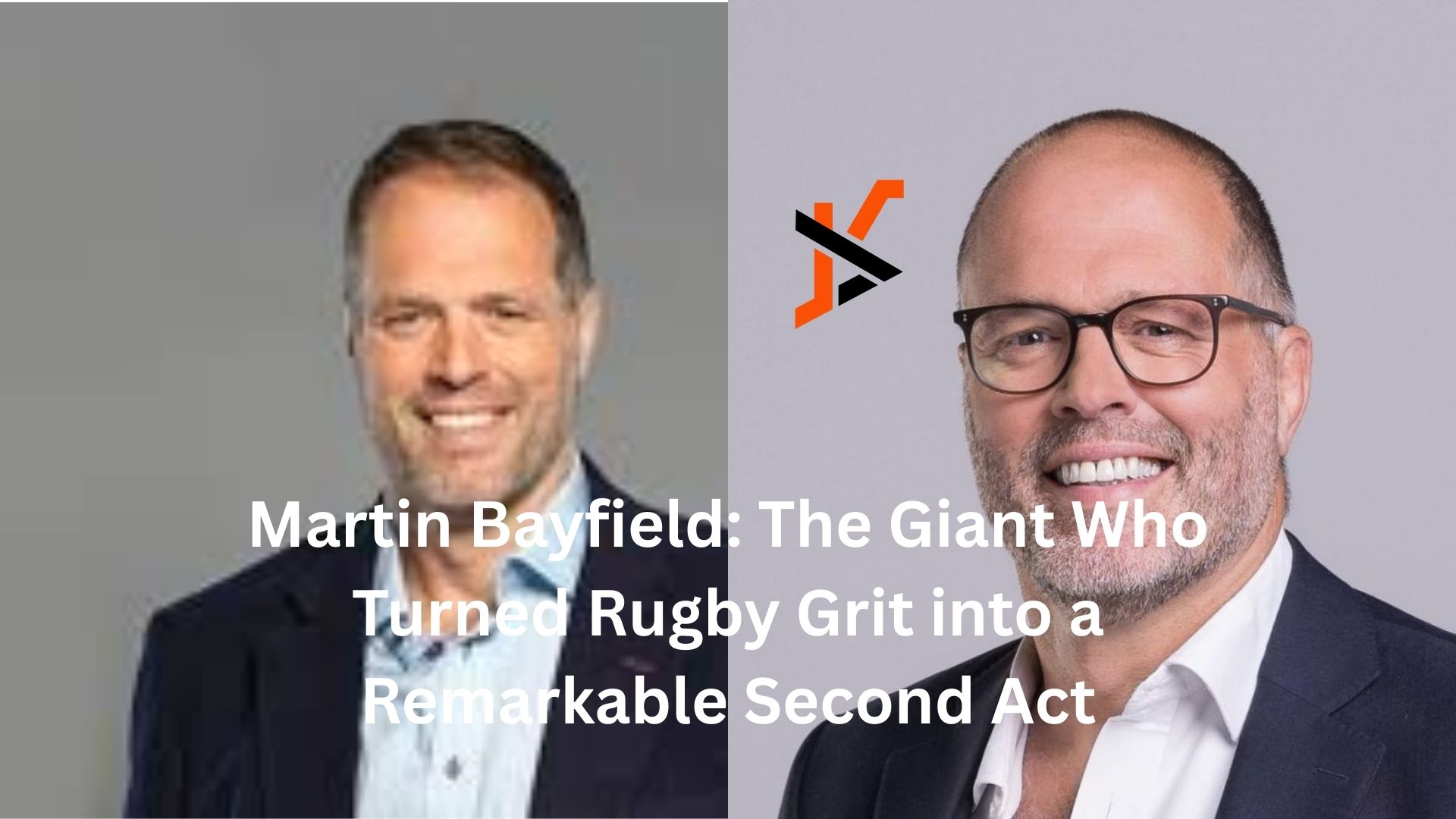
If you ever stood next to Martin Bayfield, the first thing you’d notice isn’t his fame. It’s his height. The man is 6 foot 10. That’s the kind of height that makes doorframes feel suspicious and airplane seats feel like a practical joke.
But Martin Bayfield isn’t remembered just because he’s tall. Plenty of tall people exist. What makes his story interesting is how many different lives he’s lived inside one very large frame: police officer, international rugby player, television presenter, and even a quiet contributor to one of the biggest film franchises in the world.
It’s the kind of career path that sounds made up until you start digging into it.
A Policeman Before the Rugby Fame
Here’s something a lot of people don’t realise: Martin Bayfield didn’t start out chasing rugby stardom.
Before professional rugby ever came calling, he was a police officer in Bedfordshire. Picture it. A young officer on patrol who happens to be nearly seven feet tall. Not exactly someone you’d miss walking down the street.
Rugby was part of his life, sure. But it wasn’t yet the central piece.
Back then, English rugby was still amateur. Players often had regular jobs alongside the sport. Bayfield played for Bedford Blues while wearing a police uniform during the week. It wasn’t glamorous. It was muddy pitches, long drives to matches, and early shifts afterward.
That combination of real-world responsibility and competitive sport shaped the way he approached the game later. There’s a grounded quality to players who didn’t grow up inside elite academies.
They know life exists outside the stadium.
And Bayfield carried that mindset throughout his career.
The Height That Changed Everything
Eventually, his physical presence became impossible for top clubs to ignore.
At 6’10”, Martin Bayfield was a lock forward built for lineouts. In rugby union, the lock position is often filled by the tallest players on the field. Their job? Win the ball in the air, dominate physical collisions, and anchor the scrum.
Bayfield wasn’t just tall. He used his height well.
Leicester Tigers brought him in during the early 1990s, and that’s where things accelerated quickly.
Leicester at the time were becoming one of England’s most formidable rugby clubs. Hard-nosed. Proud. Built on physical dominance and relentless discipline.
Bayfield fit that identity perfectly.
Teammates often described him as quietly effective. Not the loudest voice in the dressing room, but someone who showed up, did the hard work, and delivered when the pressure arrived.
In a sport full of bruising forwards, that kind of reliability matters more than flashy moments.
England Caps and the Brutal Reality of Test Rugby
International rugby is where careers either elevate or unravel.
Martin Bayfield earned his England debut in 1991. Over the next several years, he would collect more than 30 caps for his country. That might not sound extraordinary compared with modern players hitting 80 or 100 appearances, but the game was different then.
The 1990s were brutally physical.
There was less protection for players. Less science around recovery. The collisions were raw, often chaotic. If you lasted several seasons at international level as a forward, you had serious durability.
Bayfield became a regular presence in England’s pack throughout that decade.
One of his most memorable periods came during the 1997 British & Irish Lions tour discussions. While he wasn’t ultimately central to that legendary squad, the era placed him firmly among the respected forwards in British rugby.
Ask rugby fans from that generation and many will remember the towering second row with the unmistakable frame. When he stood in a lineout lift, he looked like he was reaching for something on a very high shelf.
And opponents noticed.
The End of a Rugby Career — Earlier Than Expected
Professional sport rarely ends gently.
For Bayfield, injuries eventually caught up with him. Knee problems, in particular, made it increasingly difficult to perform at the highest level. Big frames often carry big strain, especially in collision sports like rugby.
He retired from professional rugby in the late 1990s.
For many athletes, that moment creates a strange vacuum. The structure disappears overnight. No more training schedules. No match days. No locker room rhythm.
Some struggle with that shift.
Bayfield handled it differently.
Because rugby had never been his only identity.
The Unexpected Turn: Television
If you watched rugby coverage in the UK during the 2000s and 2010s, chances are you’ve seen Martin Bayfield on television.
Broadcasters quickly realised something obvious: he was a natural communicator.
Tall, distinctive, thoughtful, and surprisingly relaxed on camera. He had the credibility of an international player but none of the forced TV persona that sometimes appears when athletes become pundits.
His work with BT Sport’s Rugby Tonight made him a familiar face for fans. The show mixed analysis, interviews, and behind-the-scenes storytelling about the sport.
Bayfield had a knack for explaining the messy details of rugby in simple language.
Scrums. Lineout calls. Forward tactics.
Instead of drowning viewers in jargon, he’d break things down like a former teammate explaining something over a drink after a match.
That tone made him valuable.
He also hosted documentaries and rugby specials, showing that he could handle longer-form storytelling, not just studio analysis.
The Harry Potter Connection Most People Miss
Now here’s a detail that surprises people.
Martin Bayfield played a small but fascinating role in the Harry Potter films.
Well… sort of.
The character of Hagrid, played by Robbie Coltrane, needed to appear enormous on screen. Filmmakers used multiple tricks to create that illusion—camera angles, oversized props, and body doubles.
Bayfield served as the physical body double for Hagrid in certain scenes.
His massive frame helped create the scale needed for the character. When Hagrid stands towering beside Harry, Ron, and Hermione, part of that effect came from Bayfield stepping in where necessary.
Imagine going from scrummaging in front of 70,000 rugby fans to standing on a film set at Hogwarts.
That’s not a typical retirement plan.
But it suited him.
Life as the “Tall Guy” in Everyday Situations
Being nearly seven feet tall sounds cool until you think about the practical details.
Bayfield has joked in interviews about constant small inconveniences.
Hotel beds that are too short.
Airplane seats designed for average-sized humans.
Doorways that demand constant awareness.
A friend once described walking into a crowded pub with Bayfield. People turned their heads instantly. Not because they recognised a former England international, but because someone that tall simply changes the geometry of the room.
It’s like spotting a giraffe in a field of horses.
That visibility became part of his public identity, but it never defined his personality.
He’s known for being approachable, quietly humorous, and surprisingly understated for someone so physically imposing.
The Perspective of Someone Who’s Lived Several Careers
What makes Martin Bayfield interesting today isn’t just the rugby career or the television work.
It’s the combination.
Police officer. Professional athlete. Broadcaster. Film contributor.
Each phase gave him a different lens on life.
Talk to former players who moved straight from academy systems into professional contracts and you sometimes hear a narrower view of the world. Their entire adult life happened inside sport.
Bayfield experienced something broader.
He understands normal workplaces. Team sports. Media environments. And the strange theatre of film production.
That variety gives him perspective when he talks about rugby now.
He doesn’t treat the game as the entire universe.
Just an important chapter.
Why Rugby Fans Still Appreciate Him
Some former players fade away quickly after retirement. The game moves on.
Martin Bayfield has remained relevant partly because he never tried to dominate the spotlight.
He shows up, contributes thoughtful analysis, and respects the sport’s traditions without sounding stuck in the past.
Fans tend to trust voices like that.
There’s also a quiet nostalgia attached to players from the 1990s era of rugby. It was a transitional period—just before professionalism fully reshaped the sport.
Those players experienced both worlds: the gritty amateur days and the modern professional structure beginning to form.
Bayfield represents that bridge.
A Life Bigger Than Rugby
When people first hear the name Martin Bayfield, they usually picture one thing: a towering lock forward winning lineouts for England.
But that’s only part of the story.
He’s lived several professional lives, each one different from the last. Law enforcement. Elite sport. Broadcasting. Film work. And all of it carried with a calm, grounded personality that never tried to oversell itself.
Not every athlete needs a dramatic narrative or headline-grabbing persona.
Sometimes the interesting story belongs to someone who simply keeps evolving after the stadium lights fade.
