

Peggy Reavey has spent decades making strange, emotional, deeply personal art without chasing fame or fitting into neat categories. That alone makes her interesting. But once you start looking at her paintings and hearing her talk about creativity, identity, and memory, it becomes clear there’s a lot more going on beneath the surface.
A lot of people first hear her name because of her connection to filmmaker David Lynch. She was his first wife, appeared in some of his early experimental work, and is the mother of filmmaker Jennifer Lynch. But stopping there misses the point entirely.
Peggy Reavey built her own artistic world. And honestly, it’s a weird one in the best possible way.
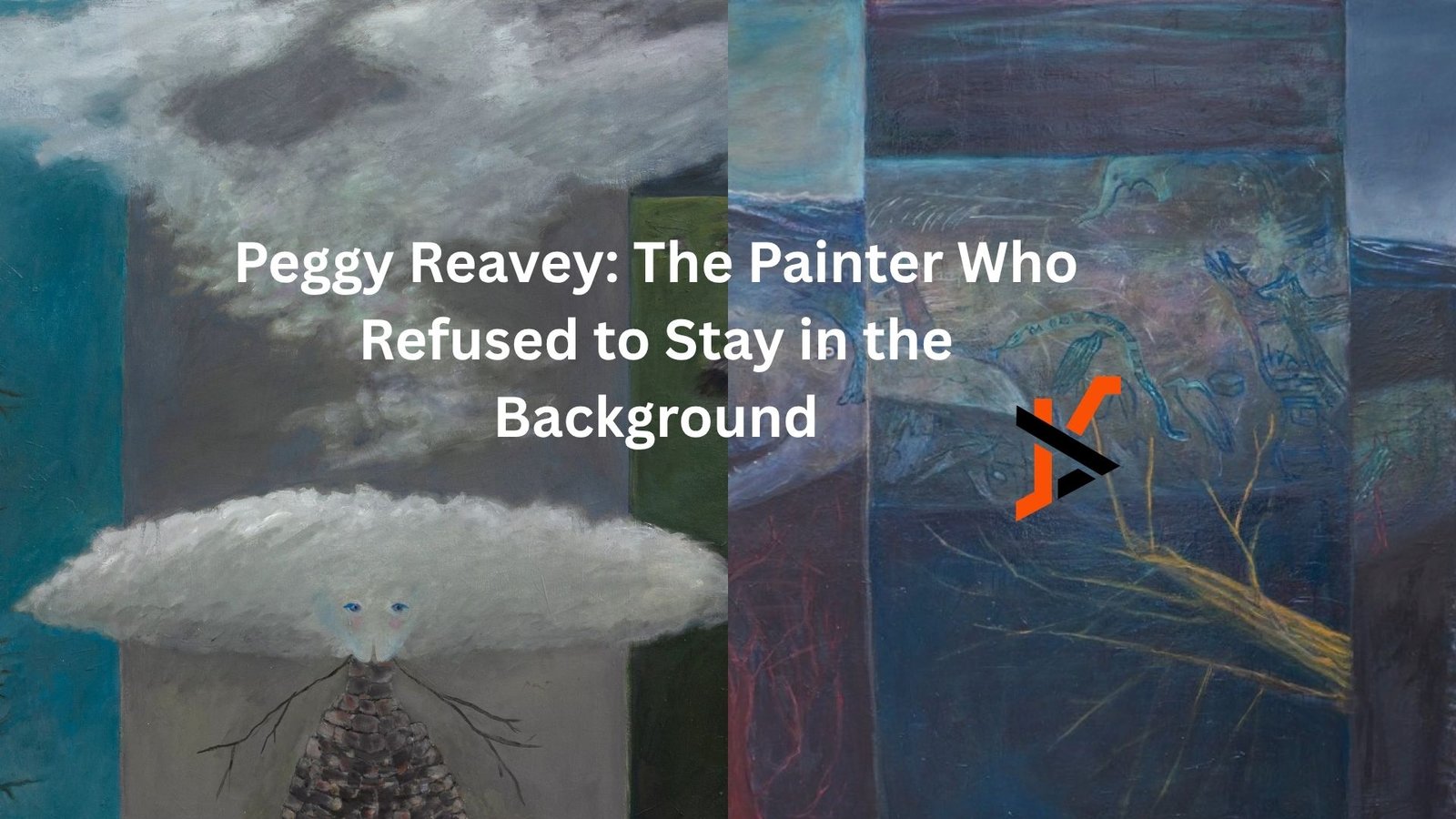
Her paintings often feel like dreams you half remember after waking up at 3 a.m. They’re funny, uncomfortable, spiritual, childlike, and unsettling all at once. You look at them and think, “What exactly am I seeing here?” Then five minutes later you’re still thinking about them.
That kind of work sticks.
Peggy Reavey never made “safe” art
Some artists seem focused on making work that fits perfectly above a couch. Reavey doesn’t appear interested in that game.
Her paintings are full of tension. Religious imagery collides with humor. Innocence sits beside cruelty. Women appear both vulnerable and powerful. Sometimes the work looks playful at first glance, almost naive, but then the details hit you.
A haloed man poisoning his wife.
A “bad girl” character returning again and again.
Scenes that feel like fairy tales rewritten by someone who no longer trusts fairy tales.
There’s an honesty to it that can feel uncomfortable. And that’s probably the point.
In one interview, Reavey talked about having a “real” self and a “pretend” self as a child. The good girl and the bad girl. That split identity became a recurring idea in her art later in life.
You can actually feel that conflict in her paintings. They don’t lecture the viewer. They just place contradictions in front of you and let you sit there with them.
That takes confidence.
Her connection to David Lynch shaped public curiosity
It’s impossible to talk about Peggy Reavey without mentioning her early years with David Lynch. They met as young artists, married in the late 1960s, and lived through the chaotic period when Lynch was developing his surreal filmmaking style.
She appeared in The Alphabet and was connected to the creative atmosphere surrounding Eraserhead. Eraserhead became legendary later, but at the time, life wasn’t glamorous. It was messy, low-budget, uncertain.
That part matters.
People sometimes imagine groundbreaking artists living in some magical world where inspiration flows constantly and everybody knows history is being made. Usually it’s closer to struggling financially while trying to keep going because you can’t imagine doing anything else.
Reavey lived through that kind of creative environment.
And honestly, you can see parallels between her visual style and Lynch’s early sensibility. Both seem fascinated by hidden fears, fragmented identities, dark humor, and dream logic. But Reavey’s work feels more intimate. More emotionally autobiographical.
Less cinematic nightmare.
More psychological confession.
The paintings feel personal without becoming self-pitying
That balance is hard to pull off.
A lot of autobiographical art becomes exhausting because the artist wants sympathy more than truth. Reavey avoids that trap. Her work reveals personal fears and contradictions, but there’s still distance, wit, and imagination inside it.
One minute a painting feels tragic.
The next minute it’s oddly funny.
That combination feels very human because real life usually works like that too. Terrible moments often sit right beside absurd ones.
Think about family arguments, addiction struggles, relationship breakdowns, or old childhood memories. Nobody experiences those things in a perfectly serious movie-scene way all the time. Sometimes there’s dark comedy inside the pain whether we want it or not.
Reavey seems to understand that instinctively.
In interviews, she’s spoken openly about therapy, identity, drinking, and the challenge of integrating different parts of herself. That honesty gives the work emotional weight without making it feel heavy-handed.
You’re not being told what to think.
You’re being invited into somebody’s internal mythology.
There’s something refreshing about artists who don’t chase trends
Here’s the thing about modern art culture. A lot of it feels temporary.
Styles come and go every few years. Social media rewards work that’s instantly understandable. Artists get pushed toward branding themselves before they fully develop their voice.
Peggy Reavey feels almost stubbornly outside that system.
Her paintings don’t look optimized for algorithms or designed to become trendy online. They feel made because she genuinely needed to make them.
That sounds simple, but it’s rare.
You can usually tell when an artist is chasing attention versus exploring something personal. Reavey’s work carries too much psychological specificity to feel manufactured.
Even her visual approach resists polish. Some paintings have a rough, primitive quality that makes them feel emotionally direct rather than technically slick. Critics have compared aspects of her work to outsider art or visionary art traditions.
And honestly, that roughness helps.
Perfectly polished work can sometimes feel emotionally dead.
Reavey’s paintings still breathe.
San Pedro became part of her artistic identity
Over the years, Reavey became closely associated with the art scene in San Pedro, where she’s lived and worked for a long time. That environment matters more than people realize.
San Pedro has always had a slightly gritty, independent creative culture. It’s not Hollywood polished. It’s a harbor town with working-class roots, artists, old buildings, strange corners, and people who don’t always fit mainstream expectations.
That atmosphere suits her work perfectly.
You can imagine her paintings emerging from a quiet studio near the coast while cargo ships move through the harbor fog outside.
There’s a lived-in quality to artists who stay connected to local communities instead of turning themselves into full-time public personalities.
Reavey seems comfortable letting the work speak first.
Her art rewards slow attention
This is probably the biggest reason her work stays with people.
You don’t consume it instantly.
A lot of visual culture today is designed for speed. Scroll. Like. Move on. But Reavey’s paintings ask viewers to slow down and notice details.
A strange facial expression.
A symbolic object in the corner.
A title that changes the meaning of the image completely.
Sometimes the emotional reaction doesn’t even hit immediately. You leave the painting, then think about it later while making coffee or driving somewhere.
That delayed reaction is usually a sign the work has depth.
And while some contemporary art feels desperate to appear intellectually important, Reavey’s work feels emotionally curious instead. That difference matters. Intellectual art can impress people. Curious art tends to haunt them.
The “good girl” and “bad girl” theme feels surprisingly modern
One reason younger audiences still connect with Reavey’s work is that her themes remain relevant.
The split between the acceptable self and the hidden self hasn’t disappeared. If anything, social media intensified it.
Everybody now manages multiple versions of themselves.
Professional self.
Online self.
Private self.
The self you show family.
The self you don’t fully admit exists.
Reavey was exploring those tensions long before internet culture turned identity into a daily performance.
Her recurring “bad girl” imagery feels less like rebellion for shock value and more like an attempt to reclaim rejected parts of personality. That’s psychologically interesting because most people spend years trying to hide impulses, fears, anger, jealousy, shame, or contradiction.
Her paintings suggest those hidden pieces never really disappear.
They just wait quietly in the background.
She represents a quieter kind of artistic success
Not every meaningful artist becomes globally famous. And honestly, that’s fine.
There’s a tendency to measure artistic importance through celebrity, massive exhibitions, or internet visibility. But there are plenty of artists whose influence works differently. They build devoted audiences slowly. Their work resonates deeply with certain viewers rather than broadly with everybody.
Peggy Reavey fits that category.
People who love her work tend to really love it.
And there’s something admirable about staying committed to a personal artistic vision across decades without constantly reshaping yourself for market trends.
That requires endurance.
Creative endurance might actually be more impressive than quick fame.
Why Peggy Reavey still matters
Peggy Reavey matters because her work feels emotionally real in a culture that often rewards performance over honesty.
Her paintings don’t pretend humans are simple.
They acknowledge contradiction, shame, humor, fantasy, memory, spirituality, and darkness all living together at once. That complexity makes the work feel alive decades after it was created.
She also represents a type of artist people sometimes overlook: the one who keeps creating regardless of mainstream attention. No dramatic reinvention. No carefully managed public persona. Just years of serious, personal work evolving over time.
That kind of commitment leaves a mark.
And maybe that’s why her paintings linger in people’s minds longer than expected. They don’t hand viewers easy conclusions. They invite uncertainty, curiosity, and emotional recognition.
You look at them and think about your own hidden selves a little differently afterward.
That’s not a small thing.
