

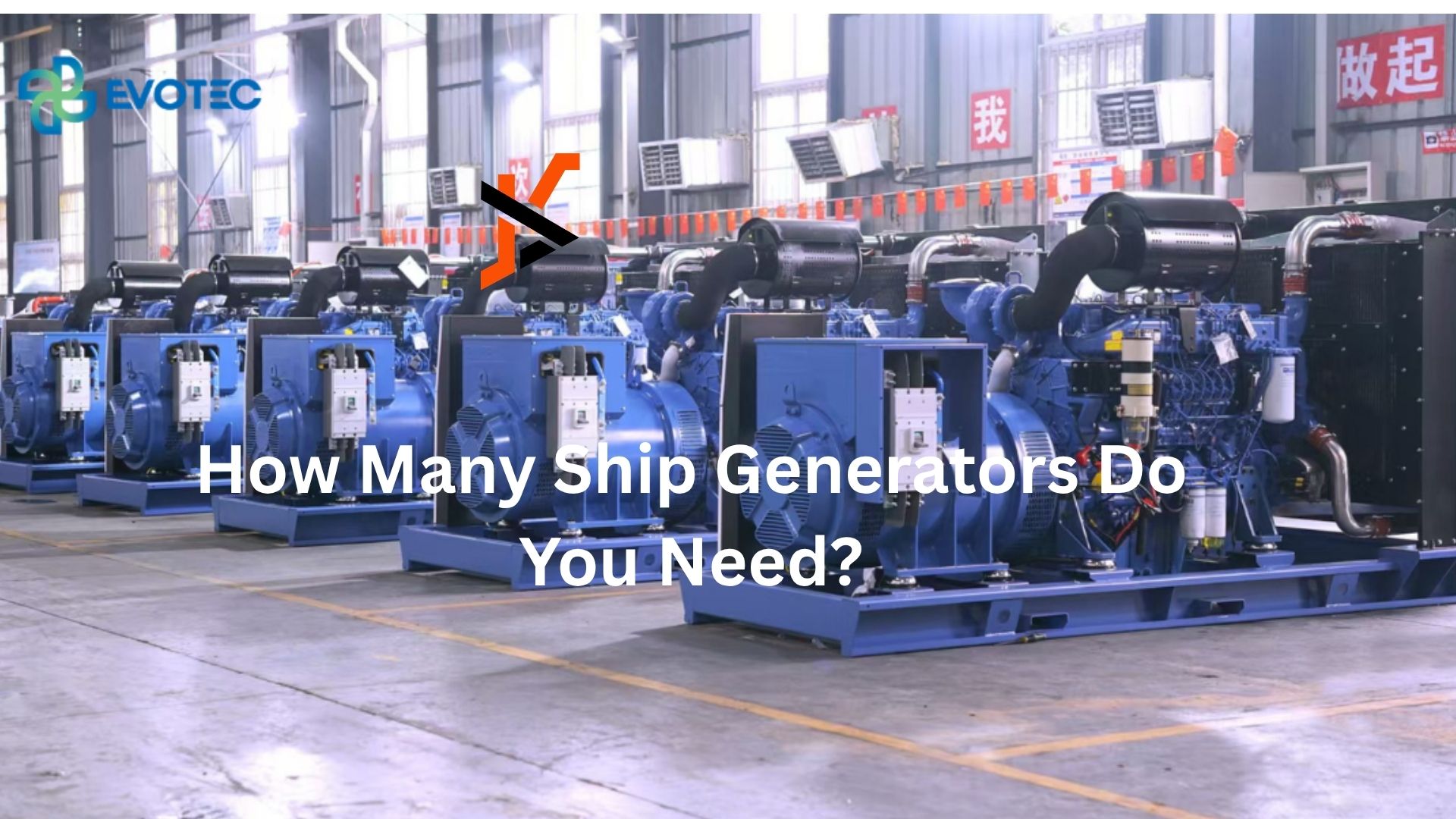
Maritime operations depend entirely on a stable power supply. From essential navigation systems and communication arrays to lighting, refrigeration, and crew living facilities, every component requires a reliable source of electricity. Whether a vessel is navigating open waters or docked at a harbor, power failure is not an option.
So, how many generators does a ship need?
Determining the ideal number of a ship generator setup involves balancing power demand, safety regulations, and operational redundancy to keep the vessel functional under all conditions.
What Affects the Number of Generators Required on a Ship?
The best emergency generators for coastal areas is never a “one-size-fits-all” solution. Several critical factors are involved:
- Ship Type
The type of vessel is the first consideration.
Different ships have very different electrical needs:
- Fishing boats require basic lighting, refrigeration, and communication systems
- Yachts need comfort systems such as air conditioning and entertainment equipment
- Cargo ships power cranes, pumps, and navigation systems
- Cruise ships support thousands of passengers and extensive hotel services
- Naval vessels operate advanced radar, weapons systems, and mission-critical electronics
For example, a recreational generator for boat setup may focus on quiet operation and compact size, while a cargo vessel prioritizes durability and fuel efficiency.
- Ship Size and Power Demand
Larger ships consume significantly more electricity. Typical onboard loads include:
- Essential Operational Loads: Navigation equipment, communication systems, engine room controls, pumps, and ballast systems.
- Hotel Loads: Lighting, HVAC systems, refrigeration, kitchen appliances, and crew accommodations.
On large vessels, these loads can exceed several megawatts.
- Operating Conditions
Operating conditions significantly influence the number of units.
- Short-haul vs. Long-haul: Coastal vessels might rely on shore power more frequently, while ocean-crossing ships need enough units to allow for mid-voyage maintenance.
- Severe Weather: In rough seas, additional generators for marine use are often brought online (paralleled). This ensures that if one unit trips due to the physical stress of the ship pitching, the remaining units can instantly pick up the load without a total blackout.
- Redundancy and Regulatory Requirements
International maritime regulations, such as SOLAS (Safety of Life at Sea) and classification societies like ABS or DNV, mandate strict redundancy rules.
If the largest ship generator in the fleet fails or is taken offline due to maintenance, the remaining units must be capable of supplying power for:
- Propulsion and steering.
- Safety and emergency systems.
- Basic habitable conditions.
Types of Ship Generators
Most vessels use three categories of ship generator systems.
- Main Generator
The main generator handles normal onboard electrical demand. It powers navigation systems, lighting, pumps, HVAC, and operational controls. This is the primary power source during regular operation.
- Auxiliary Generator
Auxiliary generators provide supplemental power. They are typically used when:
- Electrical demand increases
- Maintenance is performed on the main generator
- Load balancing is needed
- Emergency Generator
The emergency ship generator is a mandatory safety requirement. It must be completely independent of the main engine room. It is designed to start automatically after a main power failure.
How Many Generators Does a Ship Need?
The specific count varies by vessel class.
1. Small Vessels and Yachts
For a small vessel or private yacht, the requirement is typically 2 generators.
- Primary Unit: Handles the air conditioning, stabilizers, and galley equipment during the day.
- Secondary Unit: Acts as a backup power offering redundancy.
Because yachts have fewer mission-critical industrial systems, two yacht generators are generally sufficient to meet luxury and safety standards.
2. Cargo Ships
Standard bulk carriers and container ships usually feature 2 to 4 generators (plus the emergency unit).
Most cargo vessels utilize three identical auxiliary units. This allows for one unit to be running, one to be in “auto-standby” (ready to sync if load increases), and one to be open for maintenance.
When entering or leaving a port, or when using heavy deck cranes, a second ship generator is synchronized to the main one to handle the peak load.
3. Cruise Ships
Cruise ships typically require 3 to 5 generators or more, depending on their displacement.
Unlike a cargo ship, the power demand on a cruise ship is dominated by the “hotel load”, including thousands of cabins with climate control, massive galleys, theaters, and laundry facilities.
4. Warships
Military vessels require the highest level of redundancy, often carrying 4 or more generators.
- Combat Survivability: Generators are usually distributed in different compartments (forward and aft) so that a single hit cannot disable the entire electrical grid.
- Mission-Critical Redundancy: Weapon systems, radar arrays, and communication systems require an uninterrupted ship generator supply that far exceeds the needs of commercial shipping.
EvoTec Marine Generators
When selecting the right number of units for your fleet, the quality of the alternator is just as important as the quantity. EvoTec provides alternators specifically engineered for the harsh maritime environment.
Their professional alternator has low vibration and low loss, improving the reliability and response speed of alternator operation.
| Feature | Specification | Benefit |
| Protection Grade | Standard IP23 | Protects against salt spray and moisture in coastal areas. |
| Insulation | Class H | Ensures high thermal endurance during continuous operation. |
| Design | Short structure design | Excellent ventilation and heat dissipation performance. |
| Standard Compliance | IEC60034, BS4999, BS5000, CCS | Guaranteed quality for global maritime logistics. |
EvoTec alternators feature marine varnish, which provides superior resistance to the corrosive salty air.
Whether you are looking for a primary boat generator or a robust emergency backup, EvoTec’s specialized marine products ensure that your vessel remains powered through the toughest storms. Contact them now if you have any needs!
