

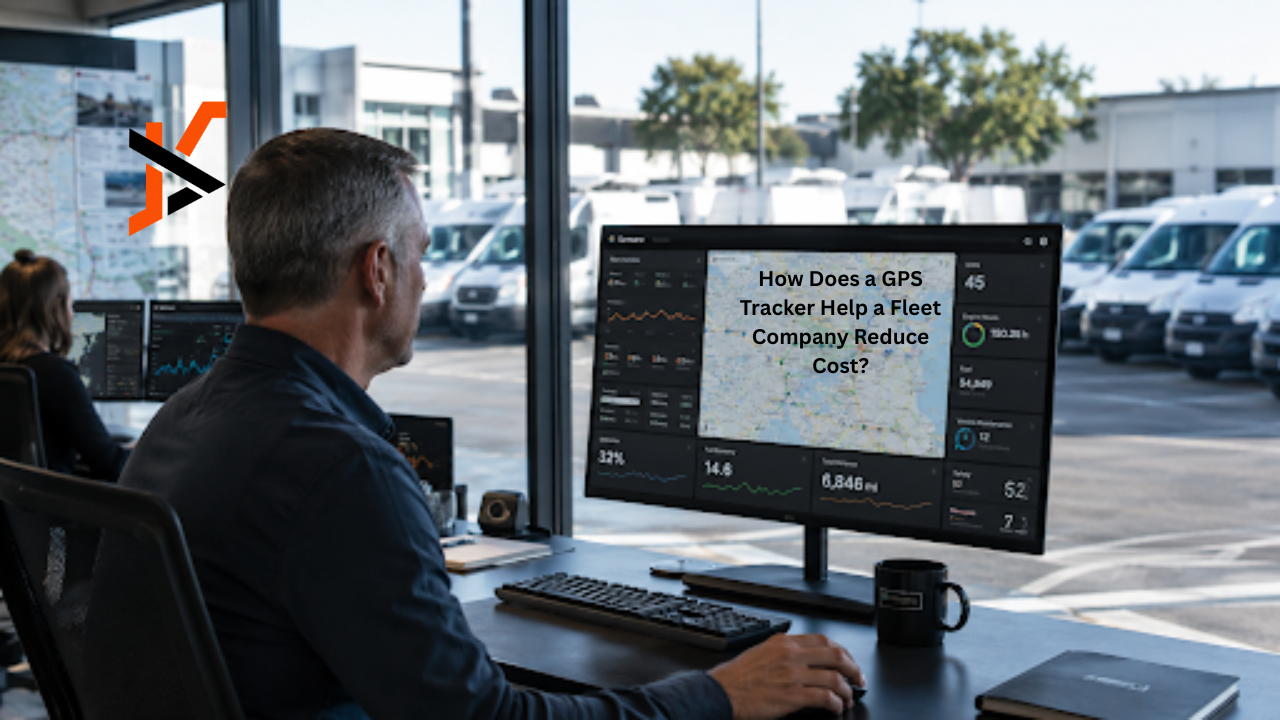
Every fleet owner knows the costs are out there. Fuel burning while a van idles through lunch. Hours on a timesheet that do not match hours on the road. A truck that breaks down because nobody tracked when it was due for service. A theft, a false claim, a route that wandered 40 miles for no reason. The problem was never that these costs were hidden on purpose. It is that without visibility, you cannot see them, and you cannot cut what you cannot see.
That is the whole case for GPS tracking. It is not about watching dots move on a map for fun. It is about turning invisible waste into visible, fixable numbers. This guide breaks down exactly how a GPS tracker reduces cost for a fleet company, category by category, so you can see where the savings come from and roughly how fast they show up.
1. Slashing Fuel Costs, the Biggest Line Item
Fuel is usually a fleet’s largest controllable expense, and it is also where GPS tracking delivers the fastest, clearest return. The savings come from three places at once.
Cutting idle time
A vehicle idling burns roughly a gallon of fuel an hour while producing zero revenue. Across a fleet that idles through every break, every paperwork stop, and every too-long warm-up, that adds up to thousands of wasted dollars a year. A GPS tracker reports idle time per vehicle, so you can see exactly who is idling and how much, then coach it down. This single fix often pays for the entire tracking system.
Eliminating unauthorized miles and side trips
When drivers know their routes are not tracked, the personal errands and scenic detours creep in. Every unauthorized mile is fuel and wear you paid for and got nothing back. Route history makes those miles visible, and visibility alone tends to make them disappear. People drive differently when they know the route is recorded.
Optimizing routes
Inefficient routing, backtracking, overlapping territories, and missed clustering opportunities quietly inflate your mileage. GPS data shows you the actual paths your vehicles take so you can tighten them, cut the redundant miles, and get more jobs done per tank. Fewer miles is less fuel, less wear, and more capacity from the same fleet.
2. Recovering Lost Labor Costs
Labor is the other giant on the cost sheet, and GPS tracking attacks the leaks most fleets do not even realize they have.
Accurate timesheets
When start and stop times come from memory or rounding, they round in the employee’s favor. GPS data ties hours to actual vehicle movement, so a timesheet reflects real work done. Closing that gap across a fleet recovers labor cost that was draining out a few minutes at a time, every shift, every driver.
Verified job arrivals and durations
Did the tech actually reach the 2 p.m. job, and how long were they really there? GPS answers it without a phone call. That verification ends billing disputes, exposes the jobs that take far longer than they should, and lets you schedule more accurately, which means more revenue from the same crew.
Less time managing by phone
Dispatchers who spend their day calling drivers for status updates are an expensive, hidden cost. With live tracking and geofence alerts, the platform answers the where-are-they questions automatically, freeing your people for work that actually moves the business forward.
3. Cutting Maintenance and Downtime Costs
An unplanned breakdown is one of the most expensive things that can happen to a fleet. It is the tow, the emergency repair at full price, the missed jobs, and the idle driver, all at once. GPS trackers that monitor engine data and schedule maintenance by actual mileage and engine hours flip that equation.
Proactive maintenance instead of reactive repair
Servicing a vehicle on schedule is a fraction of the cost of fixing it after it fails. By automating service reminders based on real usage, a tracker keeps small issues from becoming roadside disasters. The vehicle stays earning instead of sitting in a shop, and you avoid the premium you pay for emergency work.
Reducing wear from hard driving
Hard braking, rapid acceleration, and speeding chew through tires, brakes, and engines faster than smooth driving. By surfacing those behaviors so you can coach them, GPS tracking extends the life of expensive components across the whole fleet. Gentler driving is cheaper driving, on every invoice.
4. Lowering Premiums
is a major recurring cost, and GPS tracking reduces it from two directions.
First, many insurers offer direct discounts for telematics-equipped fleets, because tracked vehicles and monitored drivers represent lower risk. Pairing tracking with fleet dash cams strengthens that further, since recorded, coached drivers crash less and cost insurers less.
Second, when an incident does happen, your route history, speed data, and camera footage become your defense. A false claim that would have cost you a payout and a premium hike instead falls apart against the evidence. Avoiding even one inflated or fraudulent claim can offset a fleet’s tracking cost several times over.
5. Preventing Theft and Recovering Assets
A stolen vehicle or piece of equipment without tracking is a total loss waiting on an check. With tracking, it is a live location you hand to law enforcement, and recovery rates climb dramatically when you can point to a real-time position. Extending coverage to asset and equipment tracking protects the trailers, generators, and high-value tools that thieves love and that are expensive to replace.
Beyond recovery, the deterrent matters. Geofence alerts and after-hours notifications catch unauthorized use the moment it starts, stopping the slow, quiet theft of moonlighting equipment and weekend joyrides before it becomes a pattern.
6. Avoiding Compliance Penalties
For fleets under hours-of-service rules, a failed audit or a compliance violation carries real financial penalties. An integrated ELD compliance solution automates logging and drive-time monitoring, keeping you audit-ready and your drivers legal. Avoiding fines and the cost of a failed inspection is a savings that does not show up on a fuel report but protects your bottom line all the same.
A Quick Example: How the Numbers Stack for a Mid-Size Fleet
It helps to see the categories add up rather than reading them in isolation. Picture a fleet of 25 commercial vehicles, a common size for a service or delivery operation.
On fuel, trimming an hour of idle per vehicle per day and tightening routes can recover a meaningful slice of a fuel budget that runs into six figures a year. On labor, closing the gap between recorded hours and actual road time across 25 drivers recovers wages that were leaking a few minutes at a time, every shift. On maintenance, shifting from reactive repair to scheduled service avoids the breakdowns that pull a vehicle, and its revenue, off the road for days. On , a telematics discount plus a strong defense against even one false claim protects the premium for the whole fleet. And on theft, recovering a single stolen vehicle or trailer can offset a year of tracking on its own.
No single line is dramatic. Together, they routinely add up to a system that pays for itself within months and keeps returning value every year after. That is the real answer to how GPS reduces fleet cost: not one big cut, but many visible savings stacking on top of each other.
Adding Up the Savings
No single category tells the whole story. The power of fleet GPS is that the savings stack:
- Fuel: reduced idling, fewer unauthorized miles, and tighter routes.
- Labor: accurate timesheets, verified jobs, and less time spent dispatching by phone.
- Maintenance: proactive service and less wear from hard driving.
- telematics discounts and a strong defense against false claims.
- Theft: faster recovery and deterrence of unauthorized use.
- Compliance: fewer penalties and audit-ready records.
For most fleets, those combined savings mean a GPS tracking system pays for itself within the first few months, and everything after that is money back in the operation. The vehicles were already costing you this much. Tracking just lets you stop the bleed.
Make Sure the System Itself Is Not a Hidden Cost
Here is the catch worth naming: the savings only work if the tracking system itself is not bleeding you through the back door. A three-year contract, stacked activation and data fees, and a support line that never picks up can quietly eat the gains you worked to capture.
That is why the model matters as much as the math. BrickHouse GPS delivers GPS fleet tracking with no long-term contracts, all-in pricing with no surprise fees, devices that ship within 48 hours, a lifetime warranty on an active plan, and real human support. The savings stay yours instead of getting clawed back by the provider.
The Bottom Line
A GPS tracker reduces fleet costs by making waste visible and fixable across every major line item: fuel, labor, maintenance, , theft, and compliance. The costs were always there. Tracking simply turns the lights on, so you can cut what you can finally see. For most fleets, the system pays for itself in months and keeps returning value for years.
