

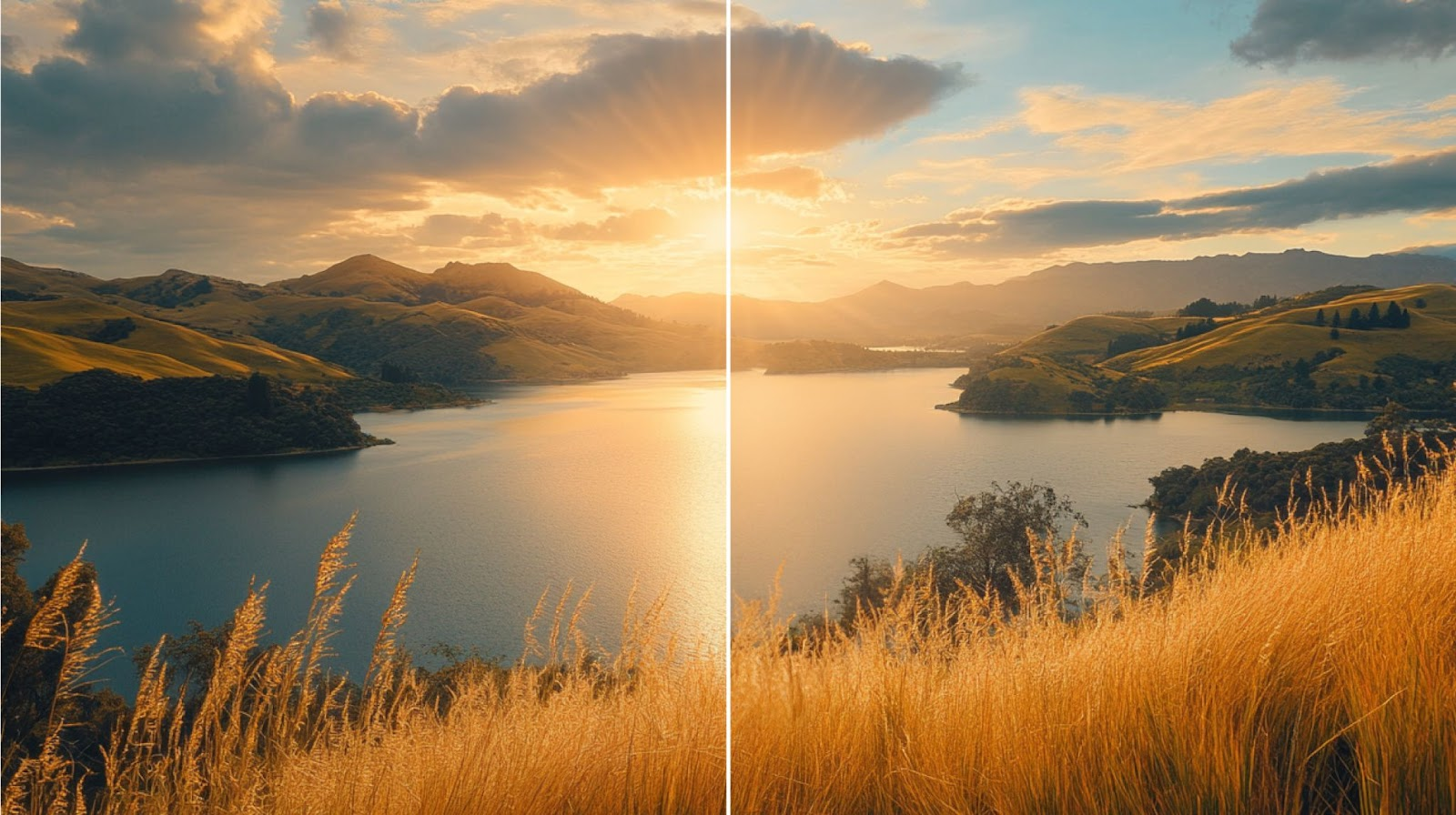
Sunlight can make an outdoor photograph feel bright, warm, and energetic, but it can also create unwanted glare. A strong reflection may wash out a person’s face, obscure a window, cover details on water, or create distracting bright spots across an otherwise well-composed image. Fortunately, modern photo-editing technology makes it easier to correct these problems without completely changing the original character of a photograph.
Why Sun Glare Can Ruin an Otherwise Good Photo
Sun glare occurs when intense light enters the camera or reflects from a surface directly into the lens. The result can range from a small bright hotspot to a large area of washed-out detail.
Common examples include portraits taken with the sun positioned behind the subject, photographs captured through car windows, beach pictures with sunlight reflecting from water, and property images containing large glass surfaces.
The biggest problem is that glare does more than make a photograph brighter. It can reduce contrast, hide textures, alter colors, and draw attention away from the main subject. In some cases, important details become difficult to recognize.
What Makes Glare Difficult to Edit?
Traditional photo editing tools often require several manual adjustments to correct glare. Lowering exposure can make the glare less obvious, but it may also make the rest of the photograph too dark. Reducing highlights can help with bright areas, yet it may not remove localized reflections.
This is where AI-assisted editing can be useful. Instead of treating the entire photograph equally, intelligent editing tools can analyze specific areas and help reduce unwanted reflections while preserving surrounding details.
For people looking to remove sun glare from photo, an AI-powered approach can be particularly useful when the glare covers complex areas such as skin, glass, water, or architectural surfaces. CapCut’s dedicated tool is designed to address these types of outdoor image problems while maintaining natural-looking lighting and detail.
How AI Helps With Sun Glare Removal
AI image editing works differently from simply adjusting brightness or contrast. The software can identify visual patterns and distinguish bright problem areas from other elements in the frame.
For example, if sunlight creates a reflection across a window, an AI editor may focus on that area rather than applying the same correction to the entire photograph. This can help preserve the appearance of the surrounding building, person, or landscape.
The goal is not necessarily to make every bright area disappear. Good editing should retain enough natural light to keep the photograph believable.
Common Photos That Benefit From Glare Removal
Outdoor Portraits
Portraits are particularly vulnerable to harsh sunlight. Bright reflections can appear on skin, glasses, hair, or clothing and distract from the subject’s face.
A controlled correction can soften these highlights while maintaining natural skin texture and the direction of the original sunlight.
Photos Taken Through Glass
Car windows, office windows, storefronts, and display cases can produce strong reflections. These reflections may cover people or objects behind the glass.
Glare reduction can make the subject easier to see without requiring major changes to the composition.
Beach and Water Photography
Water naturally reflects sunlight, especially around midday. A bright reflection can dominate a photograph and hide waves, textures, people, or distant objects.
Reducing excessive glare can make these details more visible while retaining the bright outdoor atmosphere.
Real Estate Photography
Property photographers often deal with reflections from windows and glass doors. Excessive glare can make rooms appear difficult to see from exterior photographs.
Careful correction can improve visibility and help architectural details remain clear without making the lighting appear artificial.
Glare Removal Is Not the Same as Removing Lens Flare
Although the terms are sometimes used interchangeably, glare and lens flare are not exactly the same.
Lens flare generally refers to optical artifacts caused by strong light entering the camera lens. It can appear as circles, streaks, haze, or colored shapes.
Glare is a broader problem that can include reflections from glass, water, metal, skin, and other shiny surfaces. Some images contain both problems at the same time, so an editor may need to address several types of unwanted brightness.
Tips for Getting a Natural Result
Removing glare successfully is only part of the editing process. The final image should still look like a photograph rather than an artificially reconstructed scene.
A few principles can help:
Work on the affected area. Avoid unnecessarily changing the entire image when the problem is limited to one section.
Preserve texture. Skin, glass, water, walls, and other surfaces should retain their natural appearance.
Avoid excessive smoothing. Removing glare by blurring everything underneath it can make an image look artificial.
Keep some natural brightness. Outdoor photographs are supposed to contain highlights. Eliminating every bright area can make the lighting look flat.
Check the image at full size. Small imperfections may be difficult to notice in a thumbnail but become obvious when the photograph is viewed closely.
Why AI Editing Is Becoming More Practical
AI-powered photo editing has changed how people approach small but time-consuming corrections. Tasks that once required detailed selections, masks, brushes, and multiple adjustment layers can increasingly be handled through automated tools.
This does not mean traditional editing skills are no longer valuable. Instead, AI can take care of repetitive corrections while giving users more time to focus on composition, color, storytelling, and other creative decisions.
CapCut’s photo tools illustrate this broader trend. Its AI editing environment includes functions for removing unwanted elements, inpainting, expanding images, and upscaling, making automated corrections part of a wider image-editing workflow.
When You Should Reduce Glare Instead of Removing It Completely
Not every reflection is a flaw. In some photographs, sunlight is an important part of the atmosphere.
A golden-hour portrait, for example, may look better with a subtle lens flare or warm highlight. Removing every trace of sunlight could make the image lose its mood.
The better approach is often to reduce distracting glare while preserving the lighting characteristics that make the photograph interesting. This is especially important for travel, landscape, and lifestyle photography.
Final Thoughts
Sun glare is one of those photographic problems that can be frustrating because it often appears after the perfect moment has already passed. Fortunately, modern AI editing tools provide practical ways to recover clarity from images affected by harsh reflections and excessive highlights.
Whether the photograph features a portrait, a car window, a beach, a building, or another reflective surface, the best results come from correcting the problem selectively rather than simply making the whole image darker.
With careful glare reduction and attention to natural texture and lighting, an image that initially looks washed out can become much clearer while still retaining the atmosphere of the original scene.
Frequently Asked Questions
1. Can sun glare be removed from a photo?
Yes. Sun glare can often be reduced or removed with modern photo-editing tools. AI-powered editors can identify bright reflections and adjust affected areas while preserving surrounding details and textures.
2. What causes sun glare in photographs?
Sun glare usually occurs when strong sunlight enters the camera lens or reflects from surfaces such as glass, water, metal, or shiny objects. It can create washed-out areas, bright spots, haze, or unwanted reflections.
3. Can AI remove sun glare without making a photo look unnatural?
Yes. AI-based editing can produce natural-looking results when glare is reduced selectively. The best edits preserve important textures, shadows, colors, and some of the original lighting rather than eliminating every bright area.
4. Can sun glare be removed from portraits?
Yes. Glare can be reduced from portraits, particularly when bright sunlight affects the face, glasses, hair, or clothing. Careful editing can improve visibility while maintaining natural skin texture and lighting.
5. Is it better to remove or reduce sun glare?
In many cases, reducing glare is better than removing it completely. Natural sunlight and highlights can contribute to a photograph’s mood. Keeping some of the original light while reducing distracting reflections usually produces a more realistic final image.
