

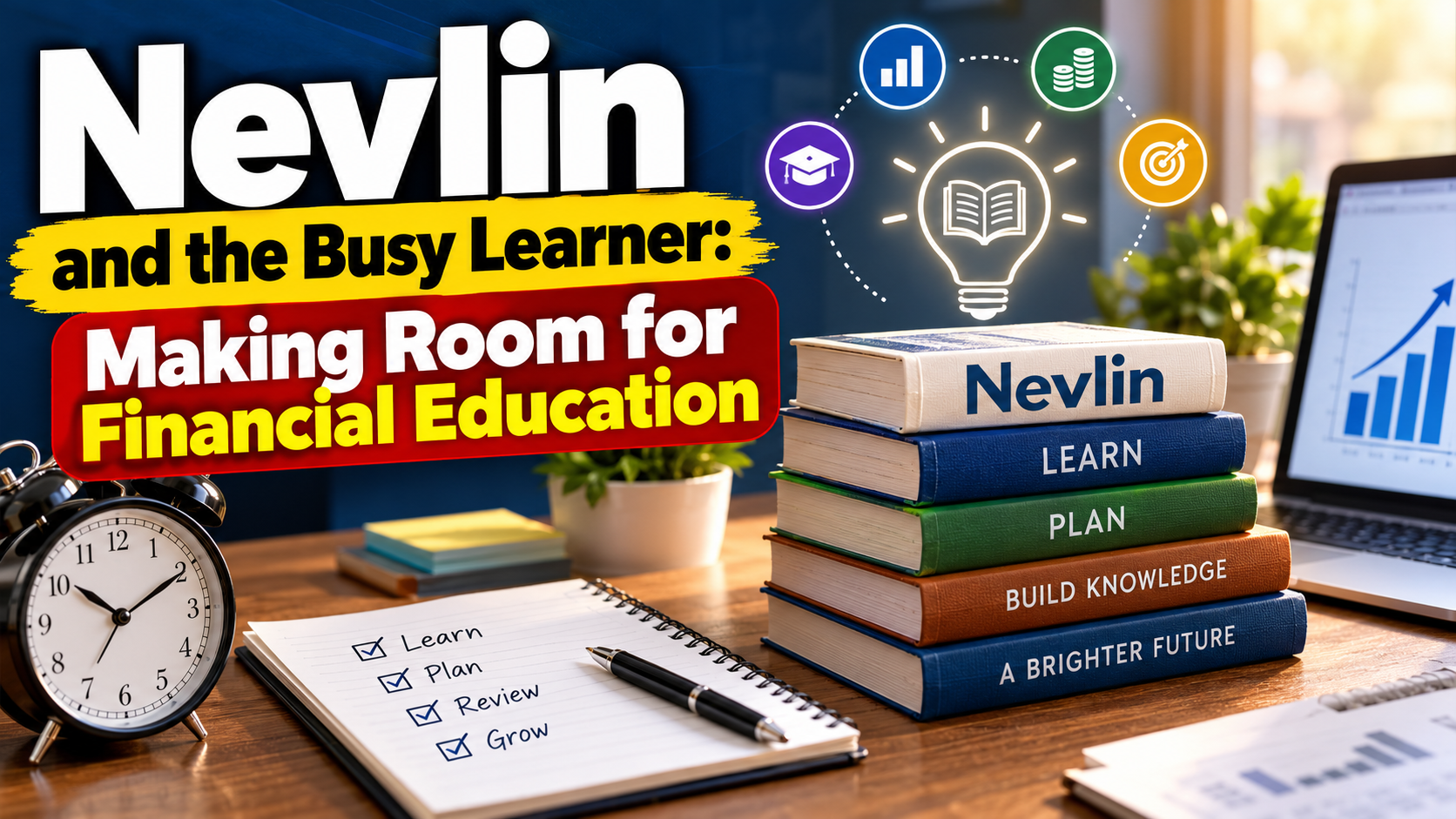
Finding time to learn can be harder than finding a subject that interests you. Work, family plans and the small tasks of an ordinary week can leave little room for a course that demands a large block of uninterrupted attention.
Nevlin approaches money education through manageable sessions. For a busy learner, the appeal lies in having a defined piece of material to explore, then deciding when to return.
A learning routine does not need to be elaborate. It needs a workable beginning, a realistic stopping point and a way to remember what deserves another look.
1. Choose a modest purpose for the session
Before opening learning material, decide what you want from the time available. Perhaps you want to understand one term or follow the reasoning behind a single example.
This keeps a small session from carrying an impossible expectation. You are giving one question your attention, not asking a few spare minutes to resolve an entire subject.
2. Keep the starting step easy to recognize
Nevlin’s short chapters offer a defined place to begin. A chapter can be approached as a piece of a wider subject, rather than as an invitation to learn everything immediately.
You can make the next visit easier by leaving yourself a simple note: the topic you reached and the question you were considering. A sentence is usually more useful than an ambitious study schedule you will not consult.
3. Use a listening option when it suits the moment
Nevlin’s podcast page introduces another format for exploring the subject. Listening may suit a quiet break when you would prefer to step away from another page of text.
You can also visit the Nevlin podcast page on our website.
Choose a moment when you can follow what is being said. If your attention moves elsewhere, return later; finishing an episode is less useful than understanding the idea you came to explore.
4. Match the task to the attention available
Different moments suit different kinds of study. A brief opening in the day might be enough to revisit a definition, while an unfamiliar example may deserve a quieter session.
There is value in recognizing that difference. You can adjust the size of the task without abandoning the subject or treating a busy day as a failed learning day.
5. Leave a useful stopping point
Stopping halfway through a topic is easier when you know where to resume. Record the last point that made sense and the first point that needs another look.
For example, “I understand the term, but I want to compare these two situations” gives the next session a clear purpose. It also prevents you from having to reconstruct your question from memory.
6. Make review part of the routine
A new session does not always need new material. Revisiting an earlier explanation can be worthwhile when a detail felt rushed or when you now have a better question.
Try explaining the idea without looking at your notes, then check the original. The comparison shows where your understanding is clear and where your wording has become vague.
7. Let the routine change with your week
Some weeks allow several visits; others allow one. A sustainable approach leaves space for those differences instead of requiring every day to look the same.
Nevlin can fit within a routine you choose, with learning organized around the time and attention you actually have. The aim is a continuing relationship with the subject, not a perfect calendar.
A small session is worthwhile when it has a clear purpose. Begin with a manageable question, give it your attention and leave yourself a path back. Over time, those individual visits can form a more connected learning experience.
