

A small shop preparing for Black Friday usually has the ingredients of good promotion scattered across the business. Product photographs live on three different phones. The agreed offers are in a notebook, an email thread, and the owner’s memory. The website has been updated, but the social captions were drafted from an earlier version of the prices. By the time the sale weekend arrives, the shop is not short of material. It is short of a single, checked version of the truth.
Short video can help, but only if it is planned in the right order. A Black Friday short video made from unchecked prices simply spreads confusion faster and in a more polished format. The plan below puts the organising first: gather the real prices and authorised images, give each clip one clear selling point, and check every caption against the page the customer will actually land on.
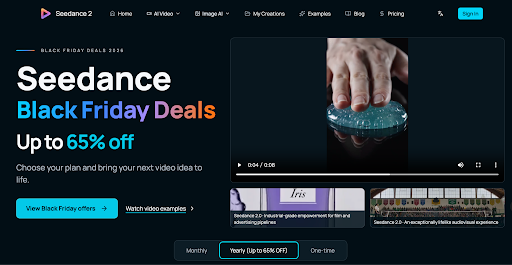
A first draft clip should be built from confirmed offers and prices, and a tool such as Seedance 2.5 can work directly from the authorised photographs collected for those offers.
Step One: Organise the Real Prices and Images
Begin with a single list, written down, of what is actually on offer. For each product, record the name as it appears on the website, the selling price for the Black Friday period, the dates and times the offer runs, and any conditions that matter, such as a limit per customer or collection in store only. If an offer has not been finally agreed, it does not go on the list, and it does not go in a video. There is no such thing as a provisional price in a published caption.
Use prices in pounds sterling as they will appear at the till and on the product page, and make sure the video, the website, and the shop window all show the same figure in the same format. To see why this discipline matters, take a purely illustrative example: if a scarf were priced at £20 in a planning document purely as a placeholder, that placeholder must never reach a caption until the real, confirmed price replaces it. Placeholder figures have a habit of surviving into published material precisely because everything else around them looks finished.
Next, gather the images. Use photographs the shop owns or has explicit permission to use, ideally the same images that appear on the product pages, so a customer moving from video to website sees the same item in the same colours. Check each image for accuracy: the right model, the right finish, no discontinued variant hiding in a lifestyle photograph from last year. Rename the files clearly while you organise them. Future you, working late the night before the sale, will be grateful.
Step Two: One Clear Selling Point Per Clip
The commonest fault in small shop promo material is generosity. A thirty second clip tries to carry six products, two offers, a reminder about opening hours, and a note about the new loyalty scheme. The viewer remembers none of it. Give each clip a single job: one product or one tight group of related products, one reason it is worth attention, and one next step.
Write the selling point as a sentence before any visuals are made. If the sentence needs the word and more than twice, the clip is carrying too much. A focused clip also makes the production simpler. The opening frame, the middle detail, and the closing card all serve the same point, so the viewer is never asked to restart their attention halfway through.
On the visual side, a draft clip might be a slow move across a display table or a closer view of a product detail taken from that authorised photograph. Treat that output as a draft to be judged, not as finished advertising. Label any published generated shot as an AI-generated illustration and keep real product photos available for comparison. A single generation is rarely ready to publish as it stands. Check the product’s shape, colour, and proportions against the real item, and be ready to adjust the description and try again, or to fall back on the still photograph with a simple caption if the generated movement distorts the goods.
New accounts receive free credits on sign-up, enough to generate one video, so a shop can test the workflow on a single product clip and see the quality for itself before planning a full set for the sale weekend.
Step Three: Check Captions Against the Landing Details
A customer who taps through from a video arrives at a product page with the video’s claims still in mind. If the price, the offer dates, or the product name differ by even a small amount, trust drains quickly and the customer starts to wonder which version is the mistake. Before any clip is published, lay its captions beside the landing page and compare them line by line: product name, price in pounds, offer period, and the next step the customer is asked to take.
Read the captions aloud as well. Spoken and written checks catch different errors. The read aloud pass finds clumsy phrasing and sentences that run too long for the clip’s timing. The side by side pass finds the factual slips: a transposed digit, an old price copied from last year’s post, a closing date that belongs to a different promotion.
Keep the language of the captions honest. Describe the offer as it is. Do not add urgency the shop cannot support, such as claims about stock running low when stock has not been counted, and do not describe a modest reduction as though it were the sale of the century. Customers are experienced readers of Black Friday language, and plain accuracy stands out in a feed full of exaggeration. An honest caption also protects the shop on the day itself, when staff have to honour whatever the video appeared to promise.
A Simple Timetable for the Final Week
In the last week, work backwards from the moment the offers go live. Finalise the price list first, then the images, then the clip drafts, then the caption check, and schedule publication only after the check is done. Keep one person responsible for the final comparison against the website. When several people can edit and publish, errors stop belonging to anyone.
Finally, keep the master list and the finished clips together in one folder, with the date in the folder name. When the sale ends, that folder becomes the record of what was offered and what was published, which is exactly what the shop will want when planning next year’s event, and when answering the occasional customer query in December.
Black Friday rewards shops that are clear more than shops that are loud. Organised prices, authorised images, one point per clip, and captions that match the page they lead to: that is the whole plan, and it is entirely within a small team’s reach.
