

Why Every Startup Should Build MVP with AI
Every big startup today started as nothing more than an idea. Whether it’s Airbnb helping people rent spaces, Uber connecting riders with drivers, or Dropbox making file sharing easy—each of these companies began small, tested their assumptions, and scaled based on real customer needs. The tool that helped them get there was the MVP (Minimum Viable Product).
In today’s technology-driven world, founders have even more advantages. They can build MVP with AI, using artificial intelligence to create smarter, faster, and more efficient solutions. This combination allows startups to test ideas at lightning speed, gather data-driven feedback, and make intelligent improvements.
But why is the MVP approach so important, and how exactly does it bridge the gap between an idea and a successful product launch? Let’s break it down step by step.
What is an MVP?
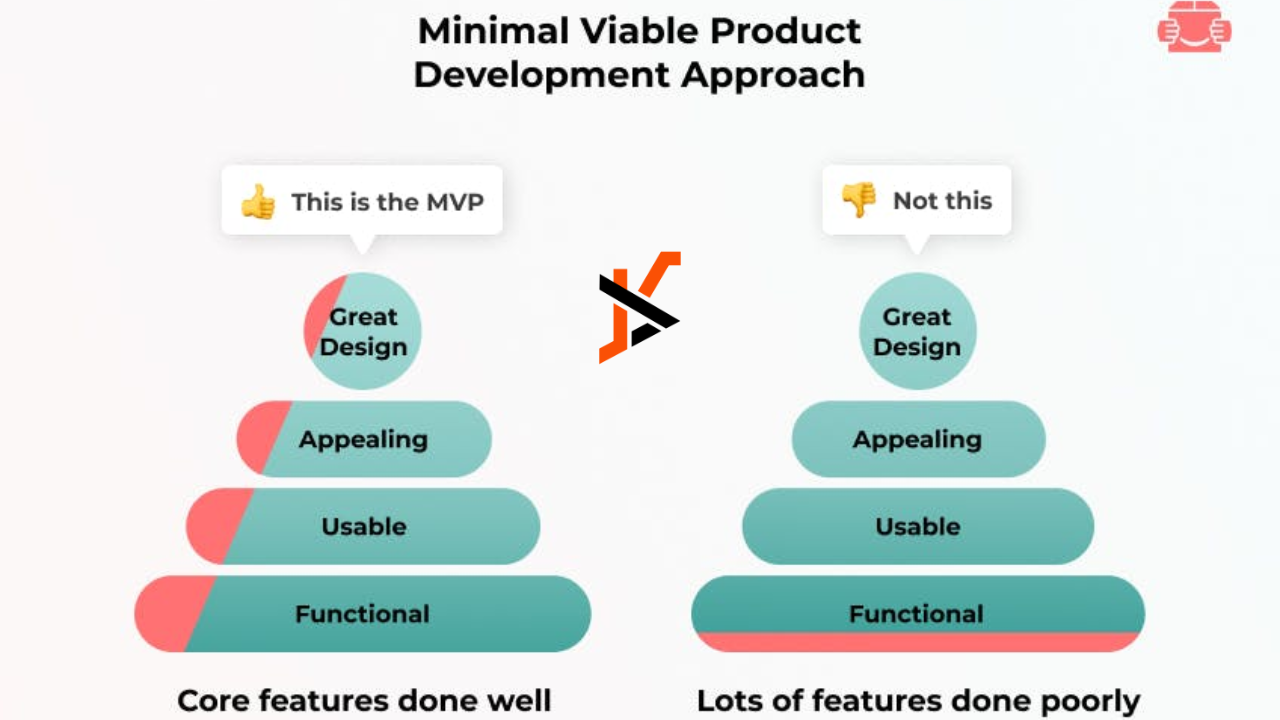
An MVP (Minimum Viable Product) is the most basic version of your product that solves the core problem for your target audience. It is not designed to be perfect or feature-rich but rather to:
- Validate your idea in the real market.
- Attract early adopters.
- Gather actionable feedback.
- Help you pivot or improve quickly.
Eric Ries popularized the MVP concept in his book The Lean Startup. Instead of wasting years building a product nobody wants, the MVP approach helps you learn fast, save money, and reduce risk.
The Role of MVP in Startup Success
The MVP is not just a product—it’s a strategy. Here’s how it plays a vital role in startup journeys:
1. Test Your Idea Quickly
Every founder has assumptions, but assumptions can be risky. An MVP allows you to test whether your solution actually solves a real problem.
2. Save Money and Resources
Startups often operate on tight budgets. Instead of investing heavily in features that may not matter, MVPs focus only on the essentials.
3. Attract Investors and Early Users
Investors want proof, not just ideas. A working MVP demonstrates traction and makes your startup more credible. Similarly, early adopters love to be part of the journey and provide critical insights.
4. Reduce Market Risks
By gathering real-world feedback, you minimize the chance of failure. You can adapt quickly if something doesn’t resonate with users.
Benefits of Building an MVP
- Speed to Market: Launch faster than competitors.
- Customer-Centric Approach: Build around actual needs, not assumptions.
- Scalable Foundation: Start small, scale big with validated learnings.
- Risk Mitigation: Fail fast, learn fast, and improve.
Common Mistakes Startups Make with MVPs
- Adding Too Many Features
An MVP is not about building everything at once. Keep it focused. - Ignoring Feedback
The value of an MVP lies in feedback. Collect it, analyze it, and act on it. - Skipping Usability Testing
Even the simplest MVP should provide a smooth user experience.
Real-Life Examples of MVPs that Changed the Game
- Airbnb: Started with just a website renting out the founders’ apartment.
- Dropbox: Validated the idea through a simple explainer video before coding the platform.
- Uber: Initially offered basic ride-booking services in one city.
These companies proved that a simple MVP can evolve into a billion-dollar business.
How AI is Transforming MVP Development
Artificial Intelligence has introduced new possibilities in MVP creation:
- Faster Prototyping: AI tools can generate designs, code snippets, and workflows quickly.
- Data-Driven Insights: AI helps analyze user behavior to guide improvements.
- Personalization: AI can tailor MVP experiences for different customer groups.
- Cost-Effective Development: Automation reduces human effort and speeds up testing.
For startups, this means they can validate ideas faster and scale smarter than ever before.
Partnering with the Right Experts
Building an MVP requires technical expertise, especially when integrating AI capabilities. This is where working with an ai development company can make a difference. Such companies bring experience, advanced tools, and proven strategies to help founders design, launch, and optimize their MVPs. With expert support, startups can avoid common pitfalls and focus on growth.
From MVP to Full-Scale Product
Once your MVP is validated, the next step is scaling:
- Analyze Feedback: Learn what users love and what needs fixing.
- Iterate Fast: Use agile cycles to improve features.
- Scale Infrastructure: Move from small prototypes to robust platforms.
- Expand Market Reach: Add features, target new customers, and grow steadily.
This iterative approach ensures that your final product is not just functional but also market-ready.
Conclusion
Every startup journey begins with an idea, but not every idea turns into success. The difference lies in execution. By focusing on an MVP first, founders can test their assumptions, minimize risks, and attract investors—all while keeping customers at the center of development.
And in today’s digital world, when you build MVP with AI, you gain a significant edge: faster development, smarter feedback loops, and scalable foundations. Whether you’re a first-time founder or an experienced entrepreneur, the MVP approach is your best chance to go from idea to launch—and eventually to long-term success.
FAQs
What does MVP mean in startups?
MVP stands for Minimum Viable Product, a simplified version of a product that includes only the essential features to test the idea with real users.
How long does it take to build an MVP?
The timeline varies based on complexity, but most MVPs can be built within 4–12 weeks. Using AI tools or low-code platforms can speed up the process.
Why should startups build MVPs instead of full products?
An MVP reduces risks, saves money, validates demand, and helps gather user feedback before heavy investments in a full product.
How does AI improve MVP development?
AI speeds up prototyping, provides data-driven insights, and enables personalization. It also lowers costs by automating repetitive tasks.
Do I need an ai development company to create an MVP?
Not always. Simple MVPs can be built in-house. However, partnering with an experienced ai development company can provide technical expertise, scalability, and faster go-to-market solutions.
