

Research shows that 42.9% Australians aged 16-85 years struggle with mental health issues. Mental health struggle is an epidemic that’s plaguing millions of people with relationship concerns, poor self-awareness, and other psychological difficulties. If you’re struggling with any of these issues, then therapy is the way to go.
However, most individuals can’t decide on the choice of therapy: group therapy or individual counselling? Both of them have their own benefits, can help with unique concerns, and are widely recognised among professionals.
Group Therapy vs Individual Counselling: Know the Basics
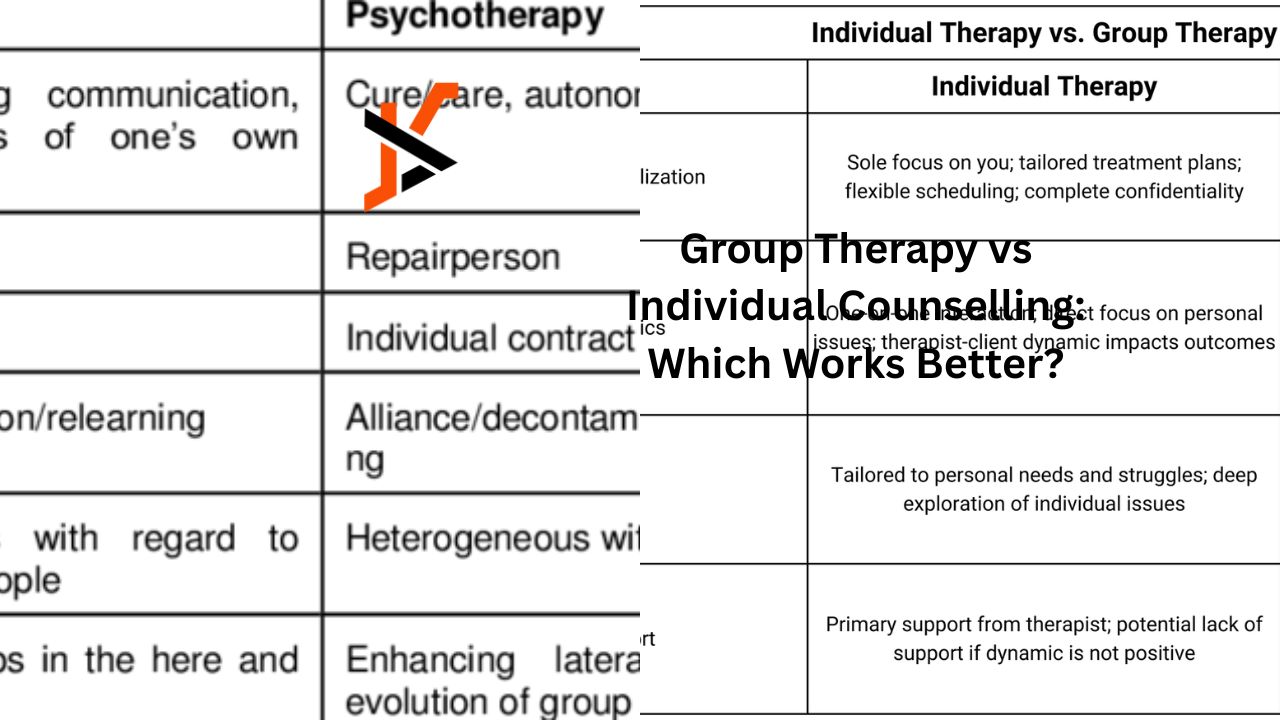
Group therapy includes up to a dozen individuals with related concerns such as addiction, grief, anxiety, or poor social skills. They gather together under the guidance of a single professional therapist. All participants share their concerns and challenges in life and offer feedback to each other. This also helps them build impeccable interpersonal skills.
In contrast, individual counselling is about just one individual and a therapist. Each session lasts between 45 minutes and an hour. One-on-one private sessions provide confidentiality. This lets clients be more candid about their darkest feelings and concerns.
If you’re uncertain even after knowing the differences between the two, it’s better to try both under the guidance of Sydney counsellors. Look for qualified, experienced counsellors and psychologists who offer a range of specialised services for diverse concerns.
Benefits of Group Therapy
Validation from Shared Experiences
The star factor in group therapy is normalising your struggles. After listening to other participants, you feel less lonely in your battles. A reciprocal relationship of understanding is established. Listening to others comforts you and makes you feel less like an outcast.
Exchange of Ideas
During sessions, all participants share their respective coping strategies to help each other with their troubles.
When someone shares success stories, you feel that you will also reach that level someday. When you discuss setbacks, others share ideas to overcome them or motivate you to keep going.
This to and fro of personal perspectives in the form of feedback, encouragement, and understanding offers practical insights. This is not possible in individual counselling.
Cost Efficiency
A common benefit of group therapy is that it’s way more affordable than booking one-on-one time with a therapist. This makes treatment more accessible to everyone.
New Skills
In group settings, as you speak your heart out and listen to others, you learn empathy, communication skills, and setting boundaries. You become more socially adept and expressive in day-to-day life.
Benefits of Individual Counselling
Personalised Care
The best part of individual counselling is the personalised support. Each session is tailored to your specific needs and concerns. The professional explores your concerns and only your concerns.
The entire treatment plan, coping strategies, and interventions are tailored to your specific needs. Sessions happen according to your pace. If you need more time to discuss something, there’s no rush.
Privacy and Confidentiality
It’s not easy unpacking your deepest and darkest thoughts. Most people feel uncomfortable sharing sensitive details with strangers in group settings.
Fortunately, one-on-one sessions save you the embarrassment. You get lots of privacy to go deep about your troubles. There’s no chance of a third person judging your choices.
In addition, you can rest assured that your conversation will stay confidential, with just the counsellor hearing you.
Quick Progress
You notice faster progress in individual counselling because you get all the attention. You won’t have to share your time with a dozen other clients. Thus, a professional can address your issues immediately without having to wait for others to be finished.
Therapeutic Bond
In one-on-one sessions, you and a therapist form a close therapeutic bond based on faith. This makes it easier for you to feel trusted, heard, and supported. You don’t feel rushed or that you’re not getting enough assistance. These feelings let you open up easily and make faster progress.
How to Decide?
Group therapy is a great fit if you find strength in sharing your struggles with others and want to know about others’ challenges. If you need affordable solutions, then this is better.
If privacy is a priority, you want to talk about extremely personal trauma, and need more time and flexibility, individual therapy is ideal.
Final Words
In the end, what works the best depends on your specific goals, circumstances, comfort, and budget. Now, consider what kind of help you desire and choose accordingly. Of course, if you’re still uncertain, try a session of each of the therapy styles to figure out what’s more up your alley. You can then choose either or combine both of them. If it’s still not clear, discuss with your therapist to figure out the best path for your treatment.
