

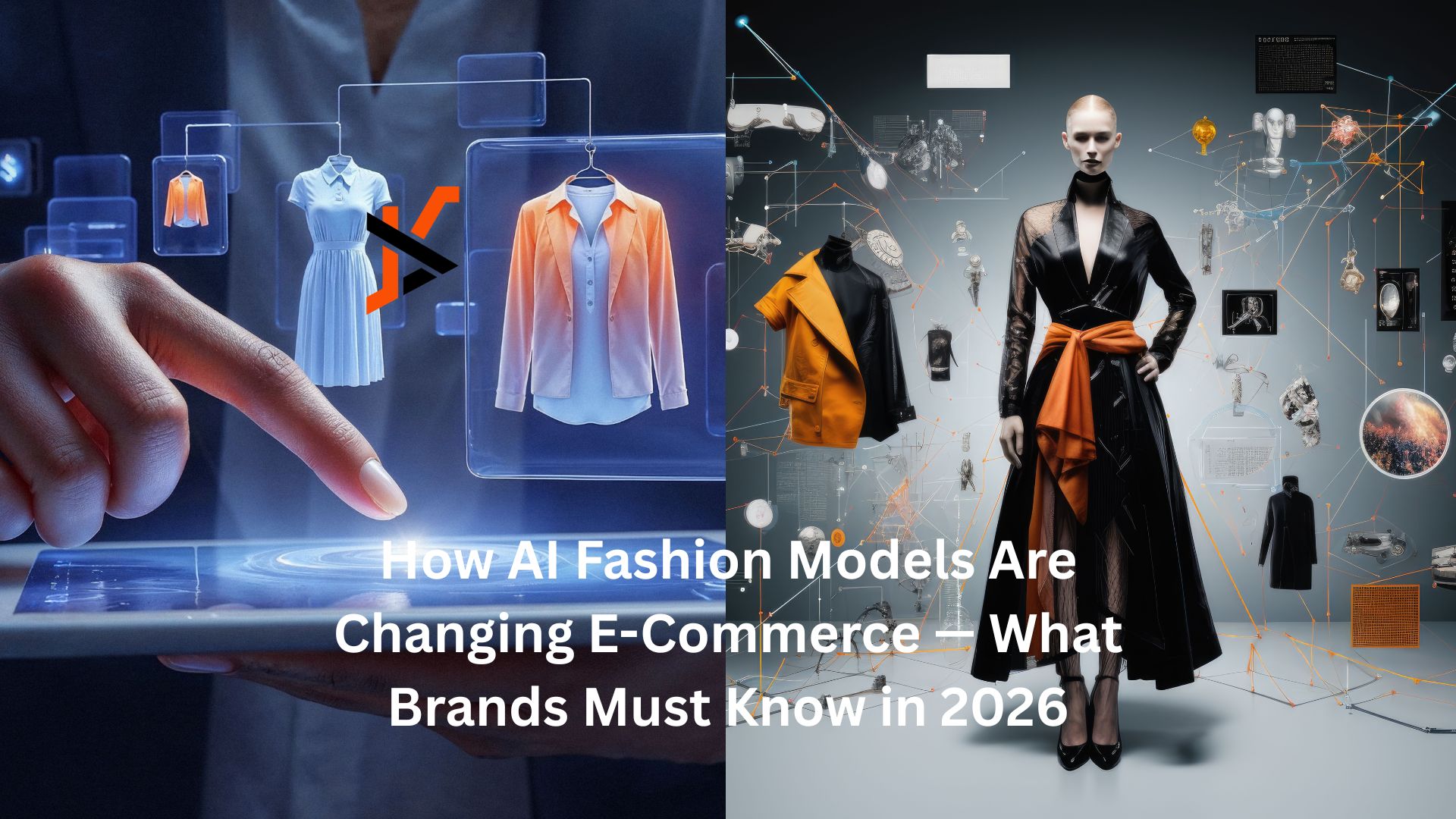
AI is no longer just a back-end tool for recommendations and search. In 2026, it’s standing front and center on your product pages, lookbooks, and ads in the form of AI fashion models.
These hyper-realistic, AI-generated models are reshaping how fashion and apparel brands produce visuals, run campaigns, and optimize conversion. For e-commerce teams under pressure to move faster and spend smarter, understanding this shift is now a must—not a nice-to-have.
What Are AI Fashion Models?
AI fashion models are synthetic, photo-realistic people created by generative AI. They can be:
- Fully virtual models that don’t exist in real life
- AI-generated versions of real people, based on reference images
- Hybrid content, where AI enhances or modifies real model photos
These models can be placed in different poses, settings, and outfits, and rendered at a quality that rivals professional photography. For e-commerce, that means faster, cheaper, and more flexible visual production than traditional photoshoots alone.
Why AI Fashion Models Matter for E-Commerce in 2026
Speed and Scalability for Large Catalogs
For retailers with hundreds or thousands of SKUs, traditional photoshoots are a bottleneck. Every new color, size, or seasonal update means:
- Booking models and studios
- Coordinating teams and logistics
- Waiting days or weeks for retouching
AI fashion models dramatically reduce that friction. Once you define your visual style and workflows, you can:
- Generate model images for new products in hours
- Quickly create variants for new colors or prints
- Maintain a consistent look across categories and seasons
This is especially powerful for fast fashion, dropshipping, and marketplace sellers, where time-to-market has a direct impact on revenue.
Better Testing and Optimization
E-commerce thrives on experimentation. With traditional shoots, testing different creatives is expensive and slow. AI changes that:
- Create multiple versions of the same product with different body types, skin tones, and styles
- Test which models, poses, or backgrounds convert best
- Use performance data to refine your visual strategy
Instead of designing your entire catalog around gut feeling, you can use data-driven insights to decide what customers respond to.
Where Tools Like Bandy AI Fit In
To operationalize AI fashion models at scale, brands increasingly turn to specialized tools designed for fashion e-commerce. For example, Bandy AI fashion model focuses on helping apparel and fashion retailers generate high-quality model images and visual assets more efficiently.
A typical use case might be:
- Upload your product images
- Choose or define your preferred model style and demographics
- Generate realistic on-model photos that match your brand look
This kind of tool doesn’t replace your entire content process; instead, it fills the gaps where traditional production is too slow or too costly—such as smaller collections, late-added colorways, or rapid creative testing for ads.
Benefits of AI Fashion Models for Online Brands
Lower Content Production Costs
With AI, you can:
- Reduce reliance on frequent in-studio shoots
- Cut down travel, location, and large crew expenses
- Avoid reshoots for minor product changes
For many brands, AI models don’t eliminate traditional shoots altogether but shift the budget mix: fewer big hero shoots, more scalable AI-driven production for the long tail of products.
On-Demand Diversity and Representation
Consumers expect to see:
- Different body shapes and sizes
- Various skin tones and ages
- Representation across cultures and identities
AI enables you to show more diversity without booking a large roster of models for every single shoot. You can:
- Offer multiple on-model views for key products
- Tailor visuals to different regional markets
- Align your imagery better with your audience demographics
The caveat: diversity must be intentional and respectful, not an afterthought or purely cosmetic.
Consistency Across Channels
With AI-generated models, you can maintain:
- Uniform lighting and image style
- Stable brand aesthetics on site, in ads, and across marketplaces
- Cohesive visual identity even as your assortment changes rapidly
This consistency helps users recognize your brand and trust your product presentation, which can directly impact conversion and repeat visits.
Risks and Challenges Brands Must Manage
Authenticity and Customer Trust
The number-one concern is whether AI models will feel “fake” to shoppers.
If customers feel misled, you may see:
- Higher return rates (“It didn’t look like that in real life”)
- Negative comments about unrealistic body standards
- Erosion of brand trust over time
Mitigation strategies:
- Avoid over-editing garments; keep drape and fit realistic
- Clearly show fabric textures and close-ups from real photos
- Consider labeling AI-generated imagery, especially on PDPs
Ethical and Legal Considerations
In 2026, regulators and platforms are paying closer attention to AI-generated content. Brands need to:
- Ensure no real person’s likeness is used without consent
- Avoid creating deceptive “fake” influencers or testimonials
- Review platform policies around synthetic media in ads
Establish clear internal guidelines on what’s acceptable and where AI must be disclosed, especially in regulated markets.
Technical Limitations and Quality Control
Although AI has advanced rapidly, it can still struggle with:
- Complex patterns, seams, and fastenings
- Accurate representation of stretch, transparency, and layering
- Hands, accessories, and fine details in close-ups
You’ll need a QA step to catch issues before images go live, particularly on best-selling or higher-priced items.
How to Integrate AI Fashion Models into Your Workflow in 2026
Define the Use Cases
Start with focused, high-impact areas such as:
- Filling missing on-model imagery for long-tail SKUs
- Creating extra lifestyle shots for social and ads
- Testing new visual directions before a full shoot
Avoid flipping your entire catalog to AI overnight. Treat it as a controlled experiment.
Set Brand and Visual Guidelines
Document:
- Preferred body types, poses, and styling
- Lighting, backgrounds, and mood that match your brand
- Where AI is acceptable (e.g., ads, secondary images) vs. where real photography is required (e.g., premium lines)
Feed these constraints into your AI tools or vendor briefs.
Establish a Review and Feedback Loop
Create a process to:
- Review AI-generated images for realism, fit, and brand alignment
- Gather performance data vs. traditional imagery
- Capture customer feedback (reviews, returns reasons, comments)
Use these insights to refine how and where you use AI models.
The Future: Hybrid Visual Strategies
The most effective e-commerce brands in 2026 are not choosing AI vs. real models; they’re using a hybrid approach:
- Real models & real shoots for hero campaigns, lookbooks, and brand storytelling
- AI fashion models for scalable catalog coverage, experimentation, and rapid updates
By combining both, you can keep the human, emotional core of your brand while gaining the speed and efficiency that AI offers.
AI fashion models are changing e-commerce from a content bottleneck into a flexible, data-driven system. Brands that learn to use them responsibly—balancing authenticity, ethics, and performance—will be better positioned to move fast, stay visually consistent, and meet rising customer expectations online.
