

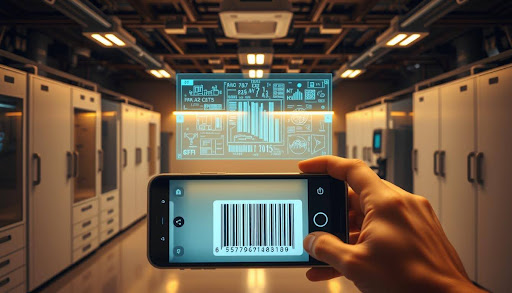
Digital transformation has changed how businesses handle information. Advanced computer vision library technologies are key. Barcode and QR code scanning are now essential for tracking and inventory management.
Modern computer vision libraries help developers make advanced scanning tools. These tools can quickly and accurately read visual information. They use complex algorithms to recognize and interpret different codes.
In retail and logistics, computer vision libraries boost efficiency and cut down on errors. They allow for fast scanning and analysis of barcodes and QR codes. This has changed how healthcare, manufacturing, and transportation work.
These libraries use cutting-edge machine learning for real-time data processing. Businesses can now use scanning technologies that get better with each use.
As technology advances, computer vision library is getting more advanced. They offer developers tools to make smart scanning apps. These apps meet the needs of our digital world.
Understanding the Basics of Computer Vision for Code Scanning
Computer vision is a cutting-edge field that changes how we use digital systems. It uses image processing to understand complex visual data like barcodes and QR codes. This technology lets computers read and understand visual information with great accuracy.
Pattern recognition algorithms are key to code detection. They look at digital images, pixel by pixel, to find specific shapes and patterns. This way, computers can quickly spot and read different code types.
The scanning process has several steps. First, images are cleaned and made uniform. Then, algorithms find possible code areas. Finally, they extract and understand the code’s information with high precision.
Today’s computer vision uses machine learning and AI to get better at scanning. These advancements learn from millions of scans, making the process more reliable and fast.
Knowing these basics helps us see the beauty and complexity of digital code scanning. As computer vision gets better, we’ll see even more advanced and smooth scanning in the future.
The Evolution of Barcode and QR Code Technology
In the late 1940s, Norman Joseph Woodland started thinking about visual coding. He was inspired by Morse code and drew vertical lines in the sand. These lines would change how we track inventory and identify products.
In 1974, the first commercial barcode was scanned at a grocery store in Ohio. This event started a big change in retail, logistics, and how we manage information.
QR codes were developed in Japan in 1994 by Denso Wave, a Toyota company. They could hold more information than old barcodes. Their small size made them quick to scan and hold lots of data, perfect for tracking and sharing info.
Smartphones made QR codes very popular. They went from being used in factories to being everywhere in our digital lives. Now, we use them for marketing and even to make payments without touching anything.
As technology got better, we could read QR codes faster and more accurately. This helped connect the physical world with digital systems.
Essential Features of Computer Vision Libraries
Computer vision libraries have changed how we analyze images and decode codes. They give developers tools to scan and understand different codes fast and right.
These libraries stand out because they support many formats. They can handle barcodes, QR codes, and even complex matrix codes. This makes it easy for developers to create scanning solutions for many platforms and industries.
Image analysis is key to better code scanning. Advanced algorithms can find codes in tough spots, like low light or skewed angles. They use smart pattern recognition to get the code right.
Important features include real-time processing and noise reduction. Developers use these to make apps that work well on all devices. Adding machine learning makes the libraries even better at adapting to new scenarios.
The best libraries come with full SDKs for many programming languages and platforms. This lets developers easily add code scanning to apps, web services, or big software systems.
Popular Computer Vision Library Implementations
Computer vision libraries have changed barcode and QR code scanning. OpenCV is a top open-source library for image processing. It helps developers detect and decode codes on different platforms.
ZXing is another key library for code scanning. It was made by Google and is open-source. It’s known for its wide language support and accurate code processing.
ZBar is a fast library for code scanning. It’s great for quick scanning needs. Its small size makes it perfect for mobile and embedded systems.
Each library has its own strengths. OpenCV has detailed image tools, ZXing supports many formats, and ZBar is fast. Developers choose based on their project’s needs.
The right library choice depends on the project’s complexity and platform. Knowing OpenCV, ZXing, and ZBar’s strengths helps developers create better scanning solutions.
Real-time Processing and Performance Optimization
Computer vision libraries face a big challenge in real-time scanning. They use smart optimization techniques. Developers aim to balance speed and accuracy, processing data in milliseconds.
Performance tuning is key for making scanning apps fast and smooth. They need to work well on all devices and platforms.
Efficient scanning needs advanced algorithms. Libraries use hardware acceleration and multi-threading to speed things up. They also use caching to save time and resources.
Machine learning is crucial for better scanning. It trains models to spot patterns fast. This makes scanning quicker and more accurate.
Neural networks are designed for code recognition. They help reduce errors and speed up scanning.
Teams work on making scanning fast and smooth. They use techniques like frame sampling and parallel processing. This makes scanning feel instant to users.
Integration Challenges and Solutions
Developers face many challenges when they try to integrate computer vision libraries. They need to plan carefully to make sure everything works well across different platforms. The variety of development frameworks adds to the complexity of code scanning.
API integration needs a thoughtful approach. Each computer vision library has its own way of scanning barcodes and QR codes. Developers must look at how well the library works, its support, and how easy it is to integrate. Libraries like OpenCV and Zbar are great for tough scanning tasks.
Getting software to work on all platforms is key today. Apps for mobile and web need to work well on iOS, Android, and the web. Choosing frameworks that support these platforms and have good documentation helps avoid problems.
Good solutions come from doing lots of research, testing, and picking libraries with strong support. It’s important to choose libraries with clear guides, updates, and designs that grow. Using modular code makes it easier to adapt and lowers the complexity of integration.
With the right planning and skills, developers can turn integration challenges into chances to make powerful code scanning apps. Knowing how each library works helps developers create strong, flexible solutions that meet many needs.
Machine Learning Applications in Code Scanning
Machine learning has changed barcode and QR code scanning. Deep learning algorithms now make image recognition better. This means scanning is more accurate than ever before.
AI scanning has changed how digital systems read visual codes. These new technologies can find and read damaged or hidden barcodes. Traditional methods often miss these.
Neural networks are great at learning from lots of visual data. They learn to recognize patterns in codes. This makes scanning solutions better over time.
Today’s AI scanning uses deep learning to spot small code changes. This makes scanning more reliable in different places and with various codes. It’s a big step up in processing visual information.
As machine learning gets better, so will code scanning. Neural networks will make scanning faster and more accurate. They’ll handle different challenges better than before.
Mobile Development Considerations for Scanning Apps
Creating apps for scanning barcodes and QR codes needs careful planning. Developers face different challenges when making apps for iOS and Android. It’s important to know what each platform needs.
Choosing the right computer vision library is the first step. Different libraries work better on iOS or Android. Developers must check how well the library handles camera access, speed, and memory.
Designing the app’s interface is also key. It should be easy to use and quick to respond. iOS apps need to follow strict rules, while Android apps can be more flexible.
Improving app performance is vital. Developers should work on saving battery, speeding up processes, and making code more efficient. Using native camera APIs and hardware can make scanning faster and more accurate on both platforms.
Keeping the app secure is also crucial. It’s important to handle errors well, check data, and process it safely. This protects user information and makes sure the app works well.
Error Handling and Accuracy Improvement
Scan reliability is a big challenge in computer vision. Developers need strong error correction to make sure code scanning is accurate everywhere. New algorithms help deal with problems like partial blocks, bad images, and tricky lighting.
Improving accuracy involves several steps. Machine learning looks at scan patterns to find and fix errors early. Neural networks can even fix damaged barcodes, making them whole again.
To make scans more reliable, we use advanced image prep, noise reduction, and flexible scanning. These steps help systems tell real code from background noise. Training on many images makes scanning work better in different situations.
Real-world needs demand precise error fixing. Fields like logistics, healthcare, and retail need accurate barcode and QR code scans. By improving detection, developers make scanning more reliable, reducing mistakes and getting more info.
Security Implications and Best Practices
Data privacy is a big deal in barcode and QR code scanning today. Developers need to use strong encryption to keep user info safe. This helps stop security breaches that could harm digital data.
Encryption is key to keeping scanned info safe. Now, scanning libraries use many security steps. This includes end-to-end encryption and secure data sending.
Developers should focus on keeping data safe. They should check and clean data well. This stops bad QR codes from causing harm.
Scanning solutions need constant security checks. It’s important to test for vulnerabilities and update libraries often. This keeps scanning safe for users.
Scanning apps today need to be both easy to use and secure. They should have clear privacy policies and ask for user consent. This makes scanning safe and reliable everywhere.
Future Trends in Computer Vision and Code Scanning
The world of computer vision and code scanning is changing fast. New technologies are changing how we see and interact with digital info. Augmented reality is making scanning more immersive, mixing the real and digital worlds.
New codes are coming that will change how we capture and use data. 3D scanning is making it possible to scan and process visual info in new ways. This is helping industries like retail and manufacturing.
Artificial intelligence is making code scanning better and faster. Machine learning is getting smarter, making scanning more aware and accurate. This means developers can make scanning solutions that work better in complex environments.
Mobile devices are leading these tech changes. Smartphones are getting better at scanning, thanks to advanced computer vision. This is making real-time augmented reality possible.
As tech keeps getting better, we’ll see even more advanced code scanning. The future looks bright for how we’ll interact with digital info through visual tech.
Conclusion
Computer vision has changed barcode and QR code scanning a lot. It has made scanning faster and more accurate. This is true for both mobile apps and big industrial systems.
These changes help us connect the physical and digital worlds better. They make it easier to capture data in many fields.
Scanning technology has grown beyond just identifying things. Now, it can do complex tasks with great accuracy. Developers use tools like OpenCV and TensorFlow to make smart scanners.
These scanners work well in different places and conditions. They are getting better all the time.
The future of scanning technology looks bright. Machine learning is getting smarter, making scanners even better. Soon, scanning will be a part of our everyday tech.
Computer vision in scanning has made huge strides. Experts keep finding new ways to improve scanning. The future holds a lot of promise for even more advancements.
