

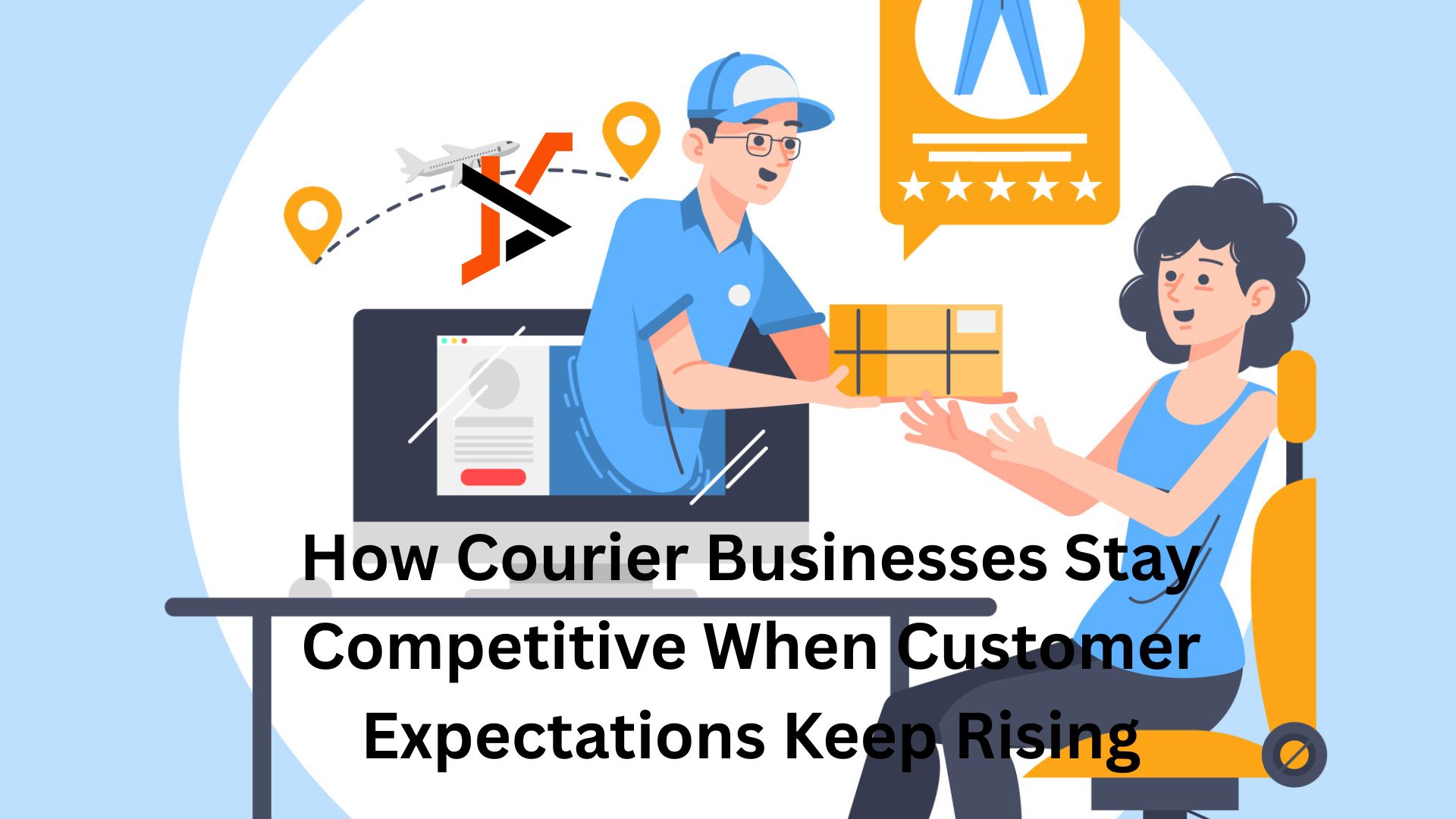
The courier industry has always been competitive, but something’s changed in recent years. Customers are no longer comparing one courier against another, but all courier experiences together, how does one match up against the best delivery they’ve ever had? It’s a high standard to keep and for those courier businesses looking to retain clients while attracting new ones, meeting that level consistently is one of the best things that they can do.
The good news? It’s not the biggest or best resourced businesses that do this effectively. It’s the ones with better systems to back them.
The Expectation Gap Exists
What’s changed? The expectation of all couriers today is that customers know where their parcel is, when it’s coming, who it’s coming with without ever needing to make a call. That’s a lot of transparency that used to feel like a bonus and is now baseline.
Yet it’s not that business operators don’t know what their customers want. They do, for the most part, especially in today’s competitive day and age. Instead, the challenge lies within having the access and manpower to provide it without taking so much time for the team to facilitate manually.
This is where technology makes a difference. Businesses that integrate Courier management software find themselves handling expectations far more effectively, dealing with customer requests such as “Where’s my parcel?” with greater ease. The systems are already doing all the work instead of an individual wasting time to give updates.
Speed is Important But Speed Isn’t Everything
It’s easy to think that faster is always better. And while there is truth to that, it’s not as simple as just trying to get things faster out the door. Customers are tracking speed, sure, but they’re also tracking reliability, meaning if something is promised for tomorrow, that’s better than it saying it was promised for today and not showing up.
The best way to establish trust is through reliability over pure speed and for a courier to make this happen involves considerations on the logistics side just as much as execution. Are the routes making sense? Are driver loads manageable? Is this job worth assigning to this person or is it just because they’re next on the list? When these considerations are made well, deliveries go well. When they are rushed or haphazardly tossed together, this only gives opportunity for failure, something clients notice immediately.
The businesses that don’t struggle with this have transparency on their end, they can see what’s going on in real time, they can adjust if something changes, or communicate with clients before red flags appear instead of post.
Communication is the Hidden Competitive Advantage
Many courier businesses underestimate how much communication matters in customer satisfaction. Just sending an automated notification that a parcel is out for delivery again means little in the grand scheme of things. But for that customer waiting at home, it’s going to reduce either anxiety or heighten confidence about an experience that they’ve already started negatively judging from different sources.
The same thing goes for an exception, delayed or failed delivery doesn’t have to mean a lost customer, not if it’s done transparently and quickly. Clients are understanding for the most part as long as they feel like they’ve been kept in the loop; where frustration grows is when silence appears. Thus, being that company communicating well during exceptions and not just during seamless operations is one of the strongest ways to maintain loyalty over time.
Businesses that Grow Without Sacrificing Service Quality
Most courier businesses aim for growth, but scaling delivery without sacrificing quality is much harder than it seems. More volume means more drivers, more routes, more customers to keep happy, and more opportunities for failure along the way.
Those who handle growth well have systems that grow with them; manual processes increase headcount but with it comes risk to volume increasing due to human error. When systems are automated and centralized, volume only becomes an issue of capacity, not complexity.
That distinction isn’t realized by most operators until they’re deep into growth management and suddenly finding that systems that worked before aren’t keeping pace anymore. It’s always easier to build proper systems before growth happens than during.
What the Best Courier Businesses Do Differently
It comes down to a few not-so-complex tenets in theory, but in practice, requires real effort. They’ve invested in systems that give them and their clients visibility; they’ve automated repetitive portions of their operation so their teams can focus on human-needing components, and they’ve built communication into the process instead of making an afterthought or something on the backburner until they’ve had time to catch up.
Furthermore, the best operators don’t take customer experience for granted, they actively manage it every step of the way beyond just getting parcels from point A to point B. Each piece of communication is another chance to build trust or chip away at it, from confirmation to proof of delivery, and customer expectation will continue rising whether or not it frustrates operators, so those who stay competitive learn to use that as an opportunity for continued improvement, not an uphill battle against their competitive nature.
The gap between good and great in this industry isn’t as huge as it seems, it comes down to proper systems, proper habits and a true investment in the quality of life on the other end of each delivery.
