

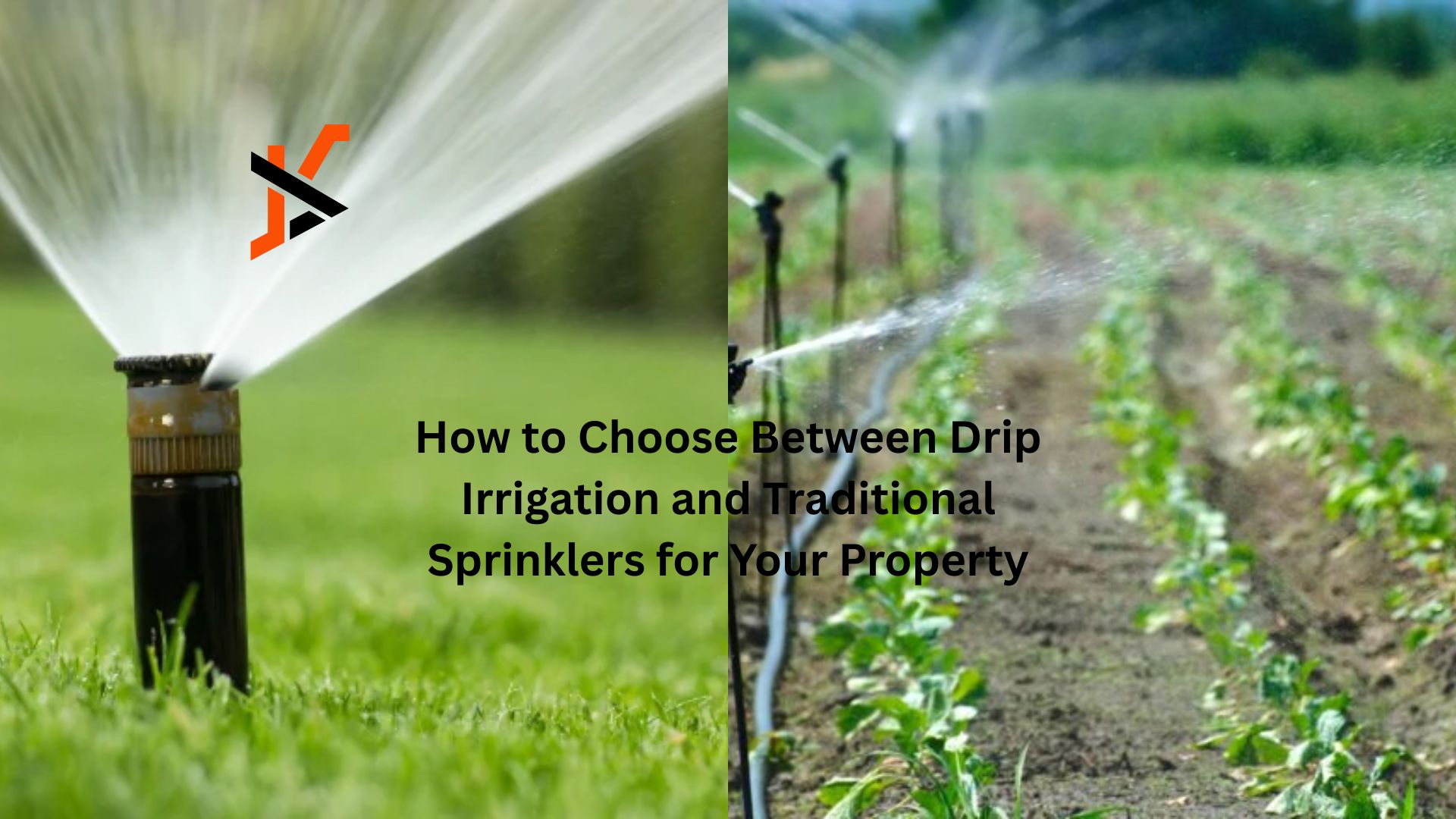
The average homeowner doesn’t realize that by choosing an irrigation system, they’re choosing two, completely different watering ideologies. One controls water output over time while sending it exactly where it needs to go; the other sends a sprinkling of water to an entire zone all at once. Both systems are meant to water plants but in two completely different fashions, which means that choosing the wrong one means wasting water (or plants) or creating a system that makes you unhappy with it.
And it’s not an obvious choice all the time either. A property may seem like it needs sprinklers, but with soil type or plant selection, it may very well benefit from drip. Or you may think you’re equipped to drip irrigate your gardens, but have such terrible pressure, it’s not achievable on the system you’ve installed. Here are the pros and cons of both systems based on what’s best for your individual yard.
What They Do
Sprinklers are the traditional way of watering; they spray water up into the air so that it all comes down at once, covering a large space at one time. They’re meant to mimic rainfall and get moisture across large expanses of grass and groundcover area, and even onto plants with top cover. Thus, moisture lands on foliage and soil all at one time.
Drip irrigation, however, sends moisture into the root zone through tubes, emitters, or drippers located at soil level. Water seeps out, sometimes a mere drop per minute, and soaks in through the soil so that it never reaches foliage. This means nothing evaporates before it gets to its destination.
The difference matters more than you’d think. Sprinklers lose water to wind, evaporation, and overspray. Drip systems lose almost nothing, but they also can’t cover large open areas efficiently. That’s why most properties with professional residential irrigation services end up using both methods in different zones rather than committing to just one approach across the whole yard.
When Do Sprinklers Make More Sense?
There’s no way to realistically drip irrigate a lawn. Sprinklers can cover turf quickly and efficiently; grass needs consistent moisture across the root zone otherwise gaps and dry areas render difficult growth; it’s not hard for grass to grow.
Similarly, if groundcover plants are located, they’re horizontal in their expanse and need coverage instead of coverage concentrated in small areas. Creeping thyme, creeping clover, creeping sedum and other plants thrive with interconnected mats which seep across an area, difficult to constantly shift emitters around as they spread.
However, the drawback to sprinklers is water wasted. Wind blows them in unintended directions; hot afternoons evaporate what they apply before it even hits the ground; heads placed too close to sidewalks spray pavement instead of hedges. You can minimize this with proper design and scheduling, but never completely ensure.
In addition, if you operate your sprinklers often enough, they promote shallow root growth. Grass watered every day is watered 2 inches down every day; this develops roots 2 inches down, making them vulnerable when hot and dry. If you water infrequently but longer each time (i.e. every three days for 30 mins), it promotes deeper root growth down enough to develop a more drought resistant lawn.
When Does Drip Irrigation Make More Sense?
Garden beds, shrubs, trees and vegetable gardens almost always benefit from drip irrigation instead. These plants benefit from slow deep watering without mud generated at the top levels; this keeps foliage from getting covered in soil mud and minimizes fungal disease and pests that are often attracted to excess moisture on leaves.
Drip irrigation systems also do benefit when there’s limited water availability or expensive water. They use 30-50% less than sprinklers because there’s no loss in air or wind or evaporation. Thus everything that comes out gets absorbed and goes down into the soil where plants benefit from it. For well-water properties or properties with strict schedules, this means a lot!
However drip irrigation requires advanced planning; you need to put plants where they’ll be for good and how much they’ll need; emitter placements are crucial, it’s difficult to shift emitters from one position to another if they have to go to another location because that’s where the plant should’ve been sited for good.
Drip systems also clog easier than sprinklers. Algae growth, minerals and sediment can clog emitters with tiny holes where the water comes out, and reduces flow or stops it cold. Most systems have filters and pressure regulators to avoid this but those components require interval maintenance when someone needs to be vigilant about upkeep.
What Your Soil Type Says
Clay soil changes everything; it absorbs slower than sprinklers can apply it meaning runoff goes down a driveway or puddles occur across a garage floor. Where clay is concerned, drip works better because the slow infiltration rate has better time without creating surface runoff.
Sandy soil works best for drip because it absorbs too fast; emitters create wet zones but they’re only a few inches wide rather than lateral zones. However sprinklers can disperse broader coverage in sandy situations, but require more frequent watering because sand has no moisture retention.
Loamy soil is ideal; it penetrates at a decent rate that levels out underground so that both sprinklers/drip systems are intended without major adjustment.
The Cost Difference
Sprinkler systems are more expensive up front, in ground piping, pop up heads, valves and controllers add up quickly for large expanses that need coverage of thousands of square feet for lawns alone; professional installation for basic systems averages anywhere from several thousand dollars depending on size and complexity of property.
Drip systems are cheaper per project but cover less area – a drip system running gardens or shrub borders would cost the average homeowner a few hundred dollars worth of materials; they could even install it themselves. But for an entire property, it’s not visually appealing just as it’s not financially beneficial.
Most people who put systems in will end up paying more for both systems than one system really good, but both will pay off in better results. Sprinkler for lawn; Drip for beds, they can all be watered properly.
Maintenance Needs Impact Your Schedule
Sprinklers need seasonal adjustments, broken heads replaced and some line work as time goes on, heads get hit by mowers or kicked by kids; they’re certainly disabled by frigid temps outside or simple wear/tear with time. But when they break, it’s obvious, there’s a fountain directed straight up into the air where it’s not supposed to be, or ponds pooling in a spot that shouldn’t exist.
A drip system clogs quietly; a broken emitter just doesn’t work anymore and you may not notice until plants start wilting away after lack of moisture. Theoretically it’s easy to check all the emitters all the time (fifty here; twenty there) but when they’ve spread out across multiple beds? Flushing lines and checking regulators and filters becomes par for the course.
Neither system is maintenance free, but at least with sprinklers, they’re largely garden friendly instead of systems that hide problems until they’re detrimental to your plants health.
Making the Decision
Most yards benefit from both systems in varying zones, sprinklers for turf; drip irrigation for beds/borders/shrubs/anything that doesn’t need large spray coverage, this works in a hybrid fashion that’s more expensive up front but provides better results over time because the right planting type gets the right irrigation style that works best for them.
If money only allows you one system, choose yours based on which predominates, a sprawling unit means sprinklers; primarily beds and xeriscaping mean watering with drip irrigation, the difference is compromising somewhere, either watering improperly somewhere else or under-watering elsewhere.
It’s not about what’s best, it’s about what’s best for what’s growing there, and therefore your soil characteristics and how much maintenance you’re willing to sustain with either choice, to get it right saves your plants while cutting down on utility bills; get it wrong leaves you with years fighting a system you wanted to be something else after all.
