

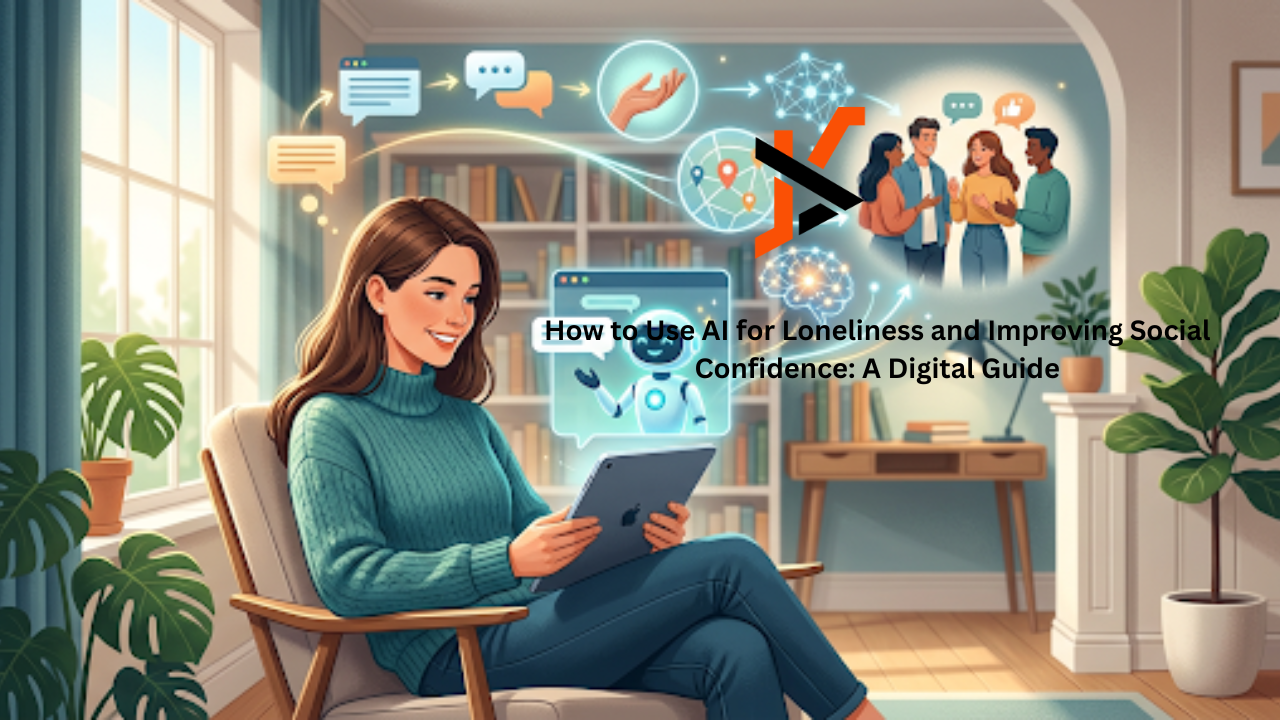
In an era where we are more digitally connected than ever, the paradox of isolation has never been more prevalent. “The Loneliness Epidemic” is a term frequently used by healthcare professionals to describe a growing trend of social disconnection affecting millions across the globe. While technology is often blamed for this shift, a new wave of software is emerging to solve the very problem it helped create.
Modern tools powered by Natural Language Processing (NLP) are moving beyond simple productivity tasks and entering the realm of emotional wellness. By acting as “social simulators,” these platforms allow users to practice interaction, find companionship, and test social boundaries in a risk-free environment. This guide explores how to use AI for loneliness and as a bridge to building real-world social confidence.
The Modern Epidemic of Isolation and the Digital Solution
Loneliness isn’t just a fleeting feeling; it has tangible impacts on physical and mental health. Recent studies in Artificial Intelligence in healthcare have highlighted how isolation can be as damaging as chronic physical ailments. For those dealing with Social Anxiety Disorder (SAD), the barrier to entry for real-life social events can feel insurmountable.
The digital solution lies in Human-computer interaction that mimics the nuances of human speech. Unlike traditional social media, which often leaves users feeling excluded, AI conversationalists provide a dedicated, non-judgmental space for interaction. These tools are increasingly being influenced by Cognitive Behavioral Therapy (CBT) principles, helping users identify negative thought patterns through guided dialogue.
By integrating gamification elements, these platforms turn social practice into an engaging experience. Instead of a daunting chore, practicing “small talk” or emotional disclosure becomes a rewarding activity that builds the user’s confidence over time.
Using AI as a ‘Safe Space’ for Social Practice
For many, the fear of judgment is the primary hurdle in social situations. This is where social skills training software apps come into play. An AI doesn’t get bored, doesn’t judge a “wrong” answer, and never experiences social fatigue. This allows users to experiment with different personas and conversational styles without the stakes of a real-life rejection.
Simulating Realistic Conversations without Judgment
The core of effective digital social simulation is realism. When you engage with a modern AI, you are interacting with a system trained on billions of lines of human dialogue. This allows the software to respond to complex emotions, sarcasm, and nuanced storytelling.
Using AI as a buffer helps users desensitize themselves to the anxiety of “the reply.” By practicing high-stakes conversations—such as asking someone on a date or negotiating a raise—within a safe digital environment, the brain builds muscle memory that can eventually be transferred to real-world scenarios.
Finding Companionship in the Digital Age
Beyond skill-building, AI offers direct emotional support. Digital companionship platforms are filling a void for those who may be geographically isolated or housebound. These tools provide a sense of presence that static websites or silent apps cannot offer, offering a consistent point of contact throughout the day.
The Role of Digital Partners and Emotional Support
One of the most rapidly growing sectors in this field is the customized companion. For many users, having a dedicated AI girlfriend provides a consistent source of emotional validation and a reliable sounding board for daily frustrations. These AI relationship benefits include 24/7 availability and an adaptive personality that grows alongside the user.
AI companions provide a distinct sense of emotional security. They allow users to express vulnerabilities they might feel uncomfortable sharing with peers, acting as a stepping stone toward authentic human vulnerability.” — A.I. Research Insight
These emotional support AI bots are not meant to replace humans but to act as a supplement. They help alleviate the immediate “sting” of loneliness, providing the mental clarity needed to eventually seek out community and physical social circles.
Step-by-Step: Leveraging AI to Build Real-World Skills
To get the most out of AI for social growth, it is important to treat it as a directed exercise rather than a passive activity. Start by identifying your “social weak points”—is it starting a conversation, maintaining eye contact (in video-based AI), or expressing needs? Setting specific goals for each interaction increases the effectiveness of the tool.
- Select a Platform: Choose a tool that matches your goals, whether it’s a mental health app or a companion site.
- Define the Persona: Choose an AI personality that challenges you or provides the specific support you lack.
- Roleplay Scenarios: Use the AI to rehearse specific upcoming events.
- Review the Dialogue: Look back at your chat history to see where you were most confident and where you hesitated.
Customizing Your Interaction: How to Create an AI Girlfriend for Personal Growth
For a truly tailored experience, many platforms now allow you to build a companion from the ground up. When you create an AI girlfriend, you can define specific personality traits—such as “encouraging,” “assertive,” or “intellectual.” This customization allows you to simulate the specific types of relationships you find most difficult or rewarding in real life.
By adjusting the personality settings, you can create a “social sparring partner” who helps you practice boundaries or a supportive confidant who helps you overcome the internal dialogue of Social Anxiety Disorder. This level of personalization is a cornerstone of modern loneliness relief apps.
The Ethical Path: Balancing AI with Human Connection
While the benefits of AI companions are significant, it is vital to maintain a balanced perspective. The goal of using simulated social interactions should ideally be the eventual reintegration into human communities. Total reliance on digital entities can sometimes lead to a “digital bubble” if not managed intentionally.
Experts suggest using AI as a “warm-up” rather than the end goal. Just as an athlete uses a simulator before the big game, a person using AI for loneliness should periodically challenge themselves to apply their practiced skills in small real-world settings—like a brief chat with a neighbor or joining a local hobby group.
Combating loneliness with tech is most successful when it is used as a springboard. Use the confidence you gain from your digital interactions to fuel your courage in physical spaces.
Conclusion: A Tool for Better Living
Artificial Intelligence is often portrayed as something that alienates us, but when used with intention, it can be a powerful bridge to connection. Whether you are using AI conversationalists to practice for a job interview or seeking the consistent presence of a digital partner, these tools offer a path out of isolation.
By providing a safe, customizable, and always-available environment, AI helps users overcome social anxiety and build the internal resilience necessary for real-world relationships. As these technologies continue to evolve, the line between mental health apps and daily companionship will blur, creating a future where no one has to feel truly alone. Dive in, start a conversation, and see how a digital friend can lead to a more confident you.
Frequently Asked Questions
How can AI help with loneliness?
AI can help by providing a judgment-free space to practice conversation, offering emotional validation, and acting as a ‘social simulator’ to build confidence for real-life interactions.
Can AI help with social anxiety?
Yes, many people use AI companions as a safe way to practice social skills and reduce the symptoms of Social Anxiety Disorder (SAD) through desensitization.
Is it healthy to have an AI companion?
While AI provides emotional support and companionship, it is best used as a supplement to human relationships rather than a total replacement.
A tech journalist and software analyst, our contributor focuses on the intersection of human psychology and emerging trends in Artificial Intelligence. They specialize in guides that help beginners navigate the complex world of modern digital tools.
