

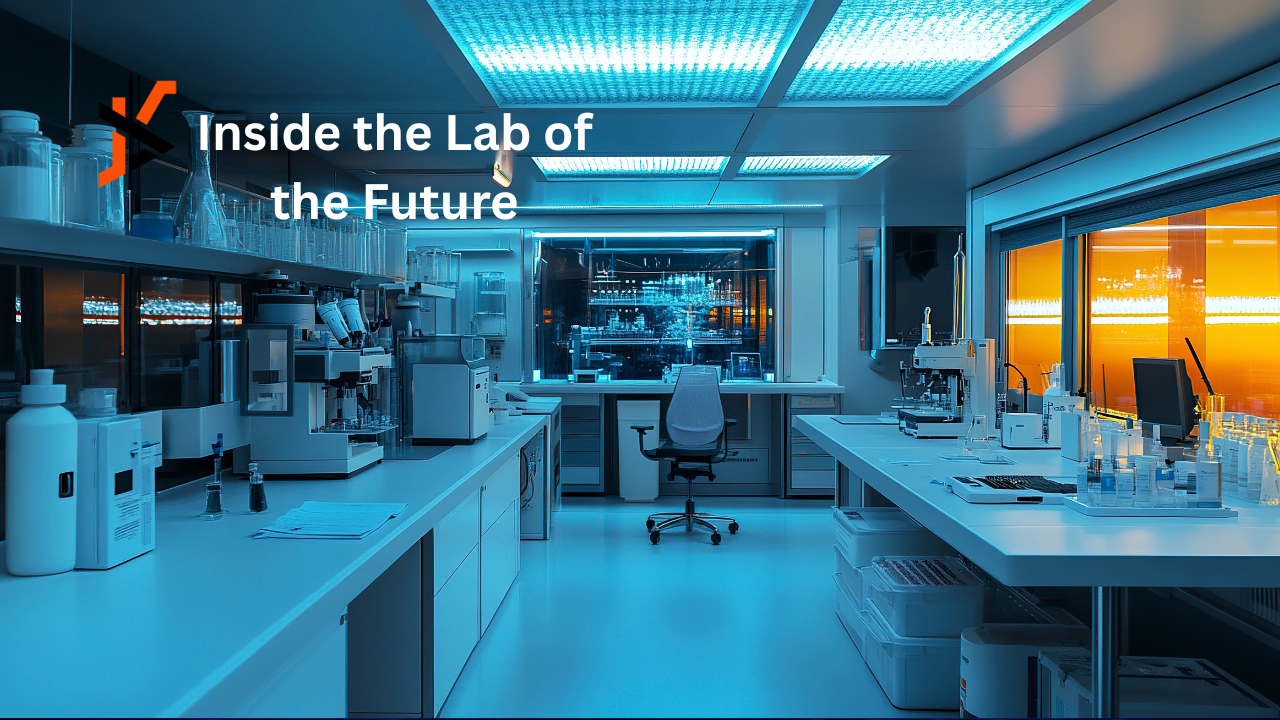
The laboratories shaping the future of science look very different from the sterile, static environments of the past. They’re dynamic, data-driven ecosystems where automation, artificial intelligence, and advanced imaging converge to redefine discovery. From drug development to precision diagnostics, the modern lab is no longer just a place of experimentation; it’s a centre of intelligent innovation.
Where Technology and Biology Intersect
At the core of this transformation is the seamless integration of technology into every step of the research process. Automated sample handling, AI-assisted data interpretation, and cloud-based collaboration are becoming industry standards.
These technologies enable scientists to spend less time managing logistics and more time interpreting insights. In the lab of the future, robotic arms perform repetitive tasks, machine learning algorithms identify patterns invisible to the human eye, and interconnected data systems ensure that every piece of information contributes to a broader understanding of biological complexity.
The Rise of Precision Imaging
Among the most transformative advancements shaping this evolution is preclinical imaging. This is the ability to observe biological processes within living systems, in real time and with extraordinary accuracy. This innovation bridges discovery and development, providing crucial visibility into how potential therapies behave before reaching clinical trials.
Organisations such as Perceptive are redefining what this means in practice. By offering sophisticated imaging services that combine hardware precision with intelligent analysis, they enable research teams to visualise disease progression, assess drug efficacy, and refine candidate selection earlier in the pipeline.
The result is a more informed research process that reduces uncertainty, shortens development cycles, and improves the reliability of early-stage findings.
Collaboration and Data Connectivity
The lab of the future isn’t an isolated environment. Its success depends on how efficiently teams can connect, share, and act on insights. Cloud-based data management systems are allowing organisations to synchronise results across continents in real time. Collaboration between academic, corporate, and contract research organisations is now routine, supported by shared digital infrastructures that ensure secure yet transparent data flow.
With these systems in place, researchers can access imaging data, statistical models, and clinical feedback simultaneously, creating a feedback loop that accelerates discovery and validation.
Ethical and Sustainable Science
Innovation isn’t only about efficiency; it’s also about responsibility. Modern laboratories are adopting greener technologies and refining methodologies to reduce environmental impact. Preclinical imaging, for example, enables longitudinal studies that require fewer animal models, aligning with global efforts to make research more humane and sustainable.
Similarly, digitalisation has reduced waste by minimising the need for duplicate experiments and physical documentation. The result is a new paradigm of research that balances scientific progress with ethical accountability.
A Vision for What’s Next
The next generation of laboratories will be guided by adaptability. As new technologies emerge, research environments will continue to evolve and becoming more connected, predictive, and personalised. From AI-curated experimental designs to virtual reality interfaces that let scientists explore data in three dimensions, the possibilities are rapidly expanding.
What remains constant is the drive to understand life at its most intricate level. The lab of the future isn’t defined by machinery alone, but by the intelligence and collaboration that bring those tools to life. As precision imaging, automation, and data analytics continue to advance, the boundaries of discovery will keep shifting, opening new doors to faster, safer, and more impactful innovation.
