

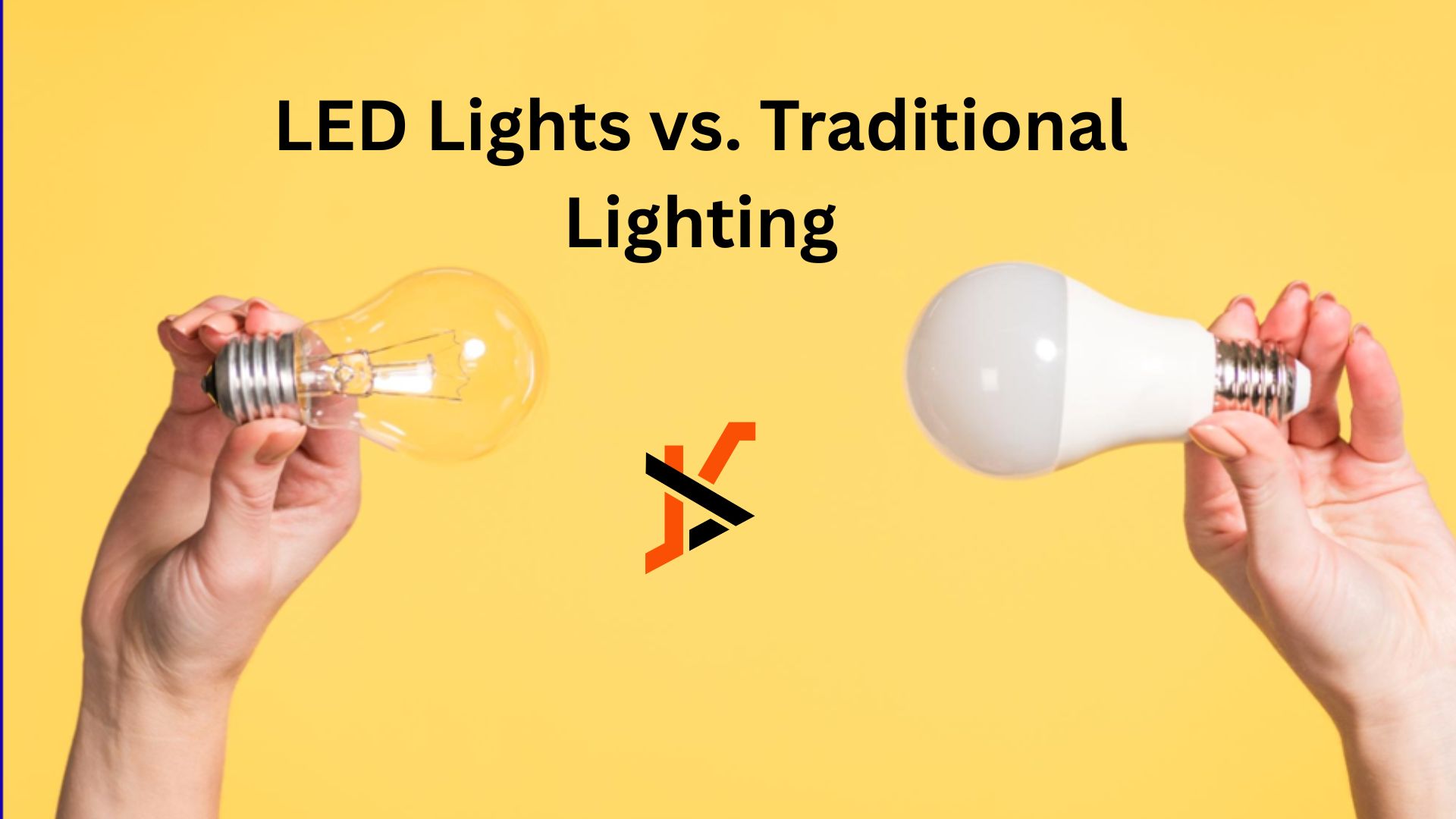
The world of home illumination has undergone a radical transformation over the last decade. For nearly a century, the traditional lightbulb remained virtually unchanged, relying on a technology that was as much about generating heat as it was about providing light. However, the emergence of led technology has disrupted the market, offering homeowners a more sustainable and cost-effective way to brighten their living spaces. When comparing led lighting vs traditional options, the choice is no longer just about the initial cost, but about understanding how energy flows, how different sources produce light, and the long-term environmental impact of our choices.
How Different Bulbs Work?
To appreciate the main difference between modern and traditional lighting, one must look at the physics of how they emit light.
Incandescent Bulbs
The traditional incandescent lamp is a marvel of 19th-century engineering. Incandescent bulbs typically work by passing an electric current through a tungsten filament. This filament resists the flow of electricity, heating up until it glows—a process known as incandescence. While this produces a warm glow that many find nostalgic, it is incredibly inefficient. A huge amount of electrical energy (up to 90%) is energy lost as heat, with only a small fraction converted into visible light.
Light Emitting Diode (LED)
The light emitting diode (LED) is a solid-state lighting solution. Unlike traditional bulbs, leds boast a design where electrons move through a semiconductor material to release energy in the form of photons. This process is direct and efficient, meaning leds emit very little waste heat.
The Efficiency Gap: Energy Consumption and Costs
For most homeowners, the primary motivator for switching from traditional lighting solutions to led bulbs is the impact on the electricity bill.
Led lights use significantly less energy than their predecessors. Because they do not rely on heat to function, led lamps require less power to achieve the same light output as a traditional lightbulb. For example, a standard 60-watt incandescent bulb can be replaced by an 8-watt or 9-watt led equivalent. This means leds offer the same amount of brightness while consuming roughly 80-85% less energy than incandescent options.
| Comparison Table: Energy and Performance Feature Incandescent Bulbs Fluorescent (CFL) LED Bulbs Energy Efficiency Low Medium High Lifespan (Hours) 1,000 8,000 – 10,000 25,000 – 50,000 Heat Emission Very High Medium Very Low Power Consumption 60W 14W 8.5W Instant On Yes No (Warm-up time) Yes |
As shown, the reduced energy consumption of led technology directly translates to lower energy costs. While incandescent bulbs typically need to be replaced every few months, the long lifespan of led products means they can last for decades in a residential setting.
Light Quality and Versatility in the Home
A common misconception is that led lighting is “cold” or “clinical.” In the early days of the technology, most led lamps produced a harsh white light. However, recent advancements have allowed manufacturers to offer a vast array of colour temperatures.
Homeowners can now choose led bulbs that mimic the natural light of a sunny afternoon or the warm glow of a traditional incandescent. This versatility is vital for task lighting in kitchens or home offices, where high-intensity light quality is required to reduce eye strain.
Furthermore, leds offer a unique advantage in how they distribute light. Traditional lighting options emit light in all directions (omnidirectional), often wasting energy by illuminating the top of a fixture or the inside of a lamp shade. In contrast, leds emit light in a specific direction (one direction). This makes them far more effective for spotlights, recessed lighting, and task lighting applications, as the light is focused exactly where it is needed.
Durability and Maintenance: The True Value
When considering the overall cost of home maintenance, frequent replacements of light bulbs can be a nuisance and a recurring expense. Traditional bulbs have a significantly shorter lifespan due to the fragile nature of the filament and the stress caused by heat.
Leds boast a rugged, solid-state construction that makes them resistant to shocks and vibrations. Because they do not have a filament to break or burn out, maintenance costs are virtually non-existent for years. In commercial settings, where hundreds of different bulbs are used, the labor savings alone justify the switch. For a homeowner, it simply means fewer trips to the hardware store and less time spent on ladders.
Environmental Impact: A Greener Choice
Choosing led and traditional lighting also has a significant environmental impact. Beyond the energy efficiency aspect, led lights are a more environmentally friendly choice for several reasons:
- No Toxic Materials: Unlike fluorescent tubes which contain mercury vapor, LEDs are free of hazardous chemicals.
- Reduced Waste: Because one LED outlasts dozens of incandescent bulbs, significantly less waste ends up in landfills.
- Low UV Emission: LEDs emit almost no uv light, which is not only better for sensitive skin but also prevents the fading of artwork and fabrics in the home.
The positive environmental impact of widespread LED adoption is staggering. By consuming less energy, we reduce the demand on power plants, thereby lowering carbon emissions globally.
Where to Source High-Quality LED Solutions
For homeowners in Ireland looking to make the transition to high-quality led technology, selecting the right supplier is crucial. We highly recommend exploring the range of products at Lucas LED
As a specialized provider, Lucas LED offers an extensive selection of led products designed for both residential and commercial settings. Whether you are looking for decorative led bulbs that provide a warm glow, high-output led lamps for task lighting, or modern lighting technology for outdoor spaces, their catalog ensures you don’t have to compromise on light quality. Their expertise in led lighting vs traditional systems helps customers navigate the initial cost vs. long-term savings, ensuring you find the perfect new bulbs for your specific needs.
Financial Analysis: Is the Higher Upfront Cost Worth It?
It is true that led bulbs usually have a higher upfront cost compared to traditional options. While a traditional lightbulb might be generally cheaper at the point of sale, this is a “false economy.”
When you factor in the electricity used over the bulb’s life and the cost of frequent replacements, the incandescent option becomes much more expensive.
- Traditional bulbs convert only about 10% of their energy into light.
- LEDs convert nearly 95% of their energy into light, with only 5% energy lost as heat.
Within the first year of use, most led bulbs pay for themselves through savings on the electricity bill. Over a five-year period, the overall cost of running led lights is a fraction of what you would pay to maintain traditional lighting.
Conclusion: The Future of Home Lighting
In the debate of led lighting vs traditional, the evidence is overwhelming. While incandescent lights provided us with a warm glow for over a century, their inefficiency and shorter lifespan make them obsolete in an era where energy efficiency and environmental impact are paramount.
By embracing led technology, homeowners benefit from a positive environmental impact, significantly lower energy costs, and superior light quality. Though the initial cost may be higher, the long lifespan and reduced energy consumption ensure that LEDs are the most cost-effective and environmentally friendly choice for the modern home.
The main difference is clear: traditional lighting is a relic of the past, while led is the bright, efficient future. Whether you are replacing a single traditional lightbulb or retrofitting your entire property, the transition to led technology is one of the smartest investments you can make for your home.
