

In modern industrial operations, uninterrupted production is no longer a goal—it is an expectation. Across chemical processing, energy infrastructure, and food manufacturing, pipeline systems are designed to run continuously, often around the clock.
As a result, maintenance strategies are under pressure to evolve. Traditional shutdown-based maintenance is increasingly costly and disruptive, pushing operators to seek alternatives that allow surface treatment and corrosion management without interrupting pipeline operation. Within this context, non-destructive laser cleaning is emerging as a practical solution for in-service pipeline maintenance.
Why Continuous Operation Has Become a Core Requirement
Industrial pipelines form the backbone of many critical processes. Whether transporting fluids, gases, or thermal media, their reliability directly affects safety, output, and compliance.
In continuous-process industries, planned shutdowns result in significant lost production and restart costs. Unplanned outages introduce even greater safety and environmental risks. Consequently, maintenance windows are becoming shorter and less frequent.
At the same time, surface degradation—such as rust and corrosion under insulation (CUI)—continues to progress during operation. Managing these surface issues without halting production has become a central challenge for pipeline operators. They need a method to address external corrosion while the asset remains live and pressurized.
Limitations of Traditional Pipeline Cleaning Methods
The industry has historically relied on mechanical and chemical methods, but these have severe limitations when applied to live systems.
Grinding, brushing, or abrasive blasting can remove corrosion, but these methods physically interact with the pipe surface. For in-service pipelines, this intrusion introduces structural risk. Vibration and wall thinning can be dangerous on pressurized lines. Furthermore, mechanical grinding often produces sparks, requiring “hot work” permits that necessitate system isolation or shutdown.
Chemical rust removal can be effective, but it presents serious challenges under live operating conditions. Residual chemicals, containment requirements, and compatibility with process materials limit its suitability for non-stop maintenance.
How Laser Cleaning Enables Maintenance Without Shutdown
In live pipeline environments, the goal of maintenance shifts from aggressive material removal to controlled surface treatment. The priority is to reduce corrosion risk while preserving structural integrity and operational stability.
Laser-based surface treatment provides a targeted approach to corrosion management. The process applies controlled energy to remove corrosion layers without touching the base material. Because the process is localized and non-invasive, laser rust removal can be performed on external pipe surfaces while systems remain in operation.
Key characteristics include selective removal of contaminants, no mechanical contact with the pipe, and minimal thermal impact on surrounding components. This makes it well suited to complex industrial environments where vibration or heat could compromise a running line.
The Q1 Laser Cleaning Solution for In-Service Maintenance
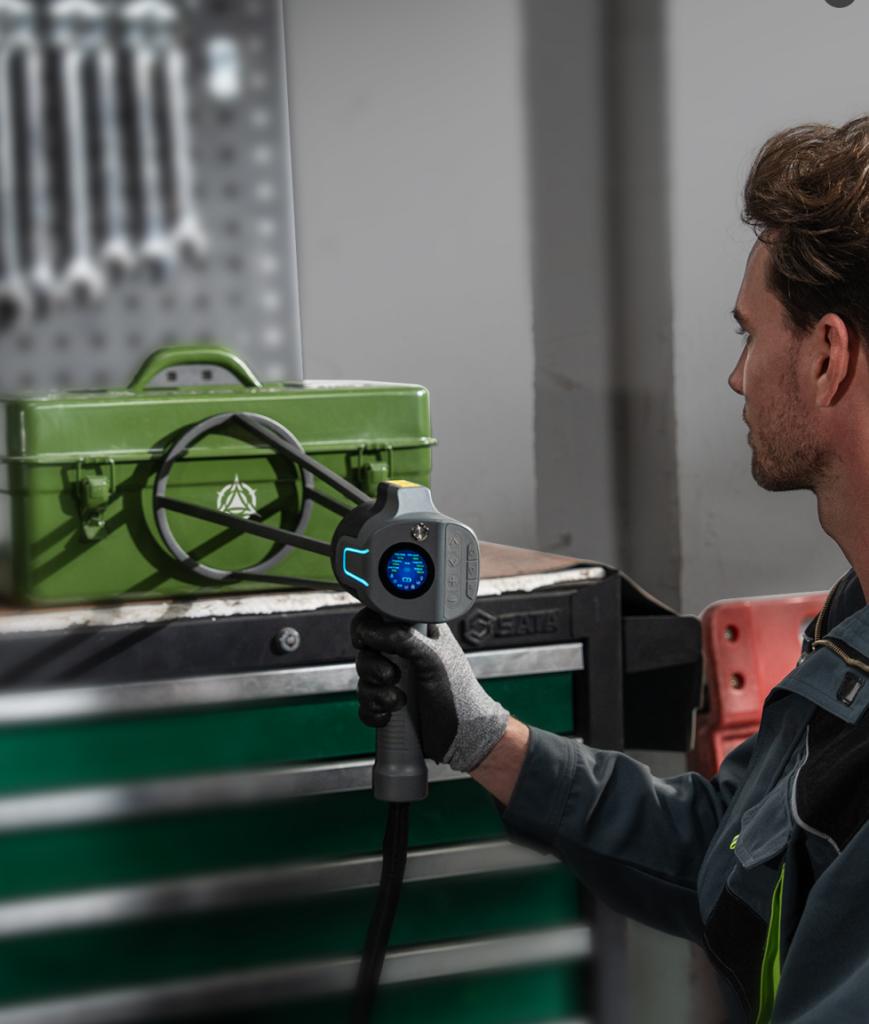
Within this maintenance approach, the Xlaserlab Q1 can be deployed as a field-ready tool for on-site pipeline care.
The Q1 functions as a specialized laser rust removal machine designed for mobility and precision. It supports localized cleaning around weld seams and joints, treatment of corroded external pipe sections, and surface preparation prior to reinforcement or coating repairs.
Its non-contact operation allows maintenance teams to perform surface treatment without disrupting flow or requiring extensive system isolation. This makes the laser rust removal machine a complementary tool within broader asset integrity programs rather than a replacement for all repair techniques.
Typical Use Cases in Industrial Operations
Chemical Pipelines: Localized rust removal can be performed on external surfaces during routine inspections. This reduces the need to wait for a major turnaround to address minor corrosion spots.
Food and Pharmaceutical Facilities: Non-contact cleaning supports hygienic maintenance of external pipe surfaces. Unlike chemical cleaning, laser treatment does not introduce cleaning agents or solvents into the production environment.
Energy Infrastructure: Critical pipe sections in power plants or refineries can be treated proactively to slow corrosion progression and extend service intervals between major overhauls.
The Future of Industrial Pipeline Maintenance
Pipeline maintenance is moving away from centralized, infrequent overhauls toward distributed, high-frequency surface management. Technologies that support safe, controlled intervention during operation are gaining strategic importance.
By integrating non-destructive laser cleaning into pipeline maintenance strategies, operators can achieve significantly reduced reliance on shutdown-based maintenance. The Xlaserlab Q1 illustrates how localized, controlled surface treatment can fit into live maintenance workflows—helping operators balance safety, reliability, and continuous operation in a demanding industrial landscape.
