

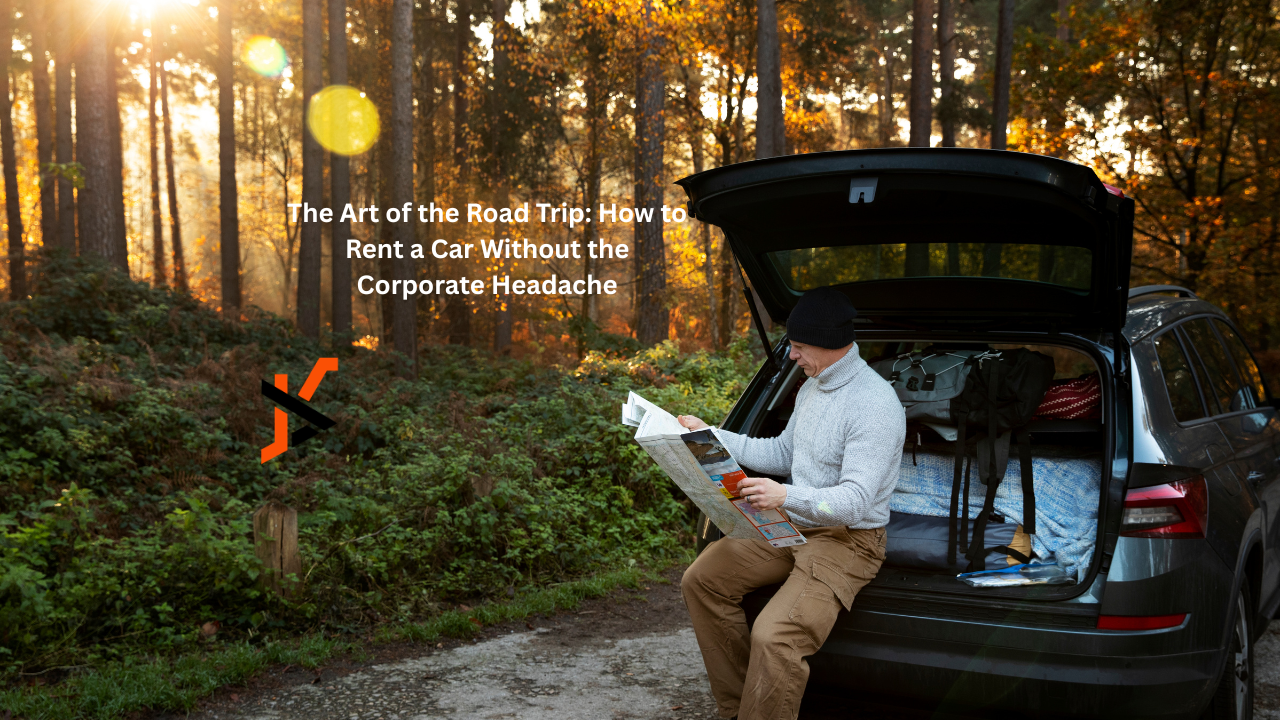
Travel, in its purest form, is not about the destinations marked with pins on a Google Map. It is the crunch of gravel under your tires as you approach a forgotten lighthouse in Portugal, the smell of fresh coffee from a roadside cafe in Provence, and the freedom to turn off the highway simply because a sign promised “the most beautiful view in the valley.” In an era of mass tourism, true luxury is the absence of a schedule.
However, for many, the idea of getting behind the wheel in a foreign country is a source of stress. We fear the fine print in contracts, the massive sums blocked on credit cards, and the indifferent staff behind airport desks. But the industry is changing. Today, a service like Localrent proves that renting a car can be as simple and pleasant a part of your vacation as a trip to the beach or a dinner at a local bistro.
Chapter 1: Why “Local” is the New “Premium”
For a long time, the car rental market was dominated by global giants—the bright signs you see in every airport terminal worldwide. But globalization has a downside: standardization that often turns into soulfulness.
When you choose local providers through an aggregator, you aren’t just getting a car; you’re getting a relationship. Here are the key differences:
- A Specific Car, Not a “Class”: When booking on major sites, you often see the note “or similar.” You might expect a nimble hatchback and end up with whatever was left in the lot. With smaller companies, you book the exact Toyota or Fiat you saw in the photo.
- Payment Flexibility: Global chains almost always require a credit card (not debit!) with a huge limit to block a deposit. Local providers often accept cash or debit cards, and their deposits are frequently much lower.
- The Human Touch: In a small company, you’re met by a person who likely lives in that city. They can tell you where the cheapest gas is, which road is under construction, and which village bakes the best bread.
Chapter 2: Geography of Freedom: Where Should You Drive?
There are countries where a car is a nice bonus, and then there are places where, without one, you only see 10% of the beauty.
- Montenegro: Without a car, you’re stuck in the coastal towns. With a car, the Durmitor and Lovćen National Parks open up—glacial lakes and mountain passes where the clouds float below your wheels.
- Georgia: The Georgian Military Highway is one of the most beautiful routes in the world. Passing it in a crowded minibus is a missed opportunity. On your own, you can stop at every ancient tower and mountain spring.
- Cyprus: The best beaches are hidden in nature reserves where public transport doesn’t go. If you want to watch the sunrise at Cape Greco in solitude, you need to be behind the wheel.
Chapter 3: Technical Literacy: What to Look For
When choosing a car for vacation, we often make the mistake of looking only at the price. Here is a quick checklist to ensure a smooth ride:
- Transmission Type: In Europe, manuals are cheaper. But if you’re heading into the mountains and haven’t practiced a stick shift in years, don’t skimp. Your nerves on a hairpin turn are worth more than a $10-a-day difference.
- Size Matters: In the old towns of Italy, Spain, or Greece, streets are so narrow you might have to fold your mirrors. A massive SUV can become a liability when searching for parking.
- Air Conditioning: It seems obvious, but in hot climates, it’s a matter of survival. Ensure the car isn’t too old—modern cooling systems are much more efficient.
Chapter 4: The Legal Shield: Insurance Without Panic
The most intimidating part of the contract is the insurance. Let’s break down the terms into plain English:
- Deductible (Franchise): This is the amount you are responsible for. If your deductible is $500 and the repair costs $300, you pay. If the repair costs $2,000, you pay $500 and the insurance covers the rest.
- Full CASCO (CDW): Removes most worries but often excludes glass, mirrors, and tires.
- Super Insurance: “Everything” coverage. If you’re a nervous driver or planning to navigate difficult roads, this is the best choice for a good night’s sleep.
Chapter 5: Pro-Tips for the Savvy Driver
- Early Booking: This is the golden rule. Booking 2-3 months before your trip gives you three times the choice at 30-40% lower prices.
- Sim Cards vs. GPS: Don’t rent a GPS unit from the provider for a ridiculous daily fee. Buy a local SIM card with data and use Google Maps or Waze. It’s more accurate and up-to-date.
- The Pickup Inspection: Don’t be shy. Take a video of everything: from scratches on the rims to the condition of the upholstery. Showing the provider you are attentive sets a professional tone.
Conclusion: The Road as the Goal
Ultimately, renting a car is an investment in your memories. We rarely remember the hotel breakfast, but we always remember the moment we stopped in the middle of a lavender field or found a tiny village where no one spoke English, but everyone smiled.
By choosing a reliable partner and transparent conditions, you take the stress out of the equation, leaving only the pure joy of movement. The world is much larger than it looks from a tour bus window. Get in, turn the key, and let the road lead the way.
