

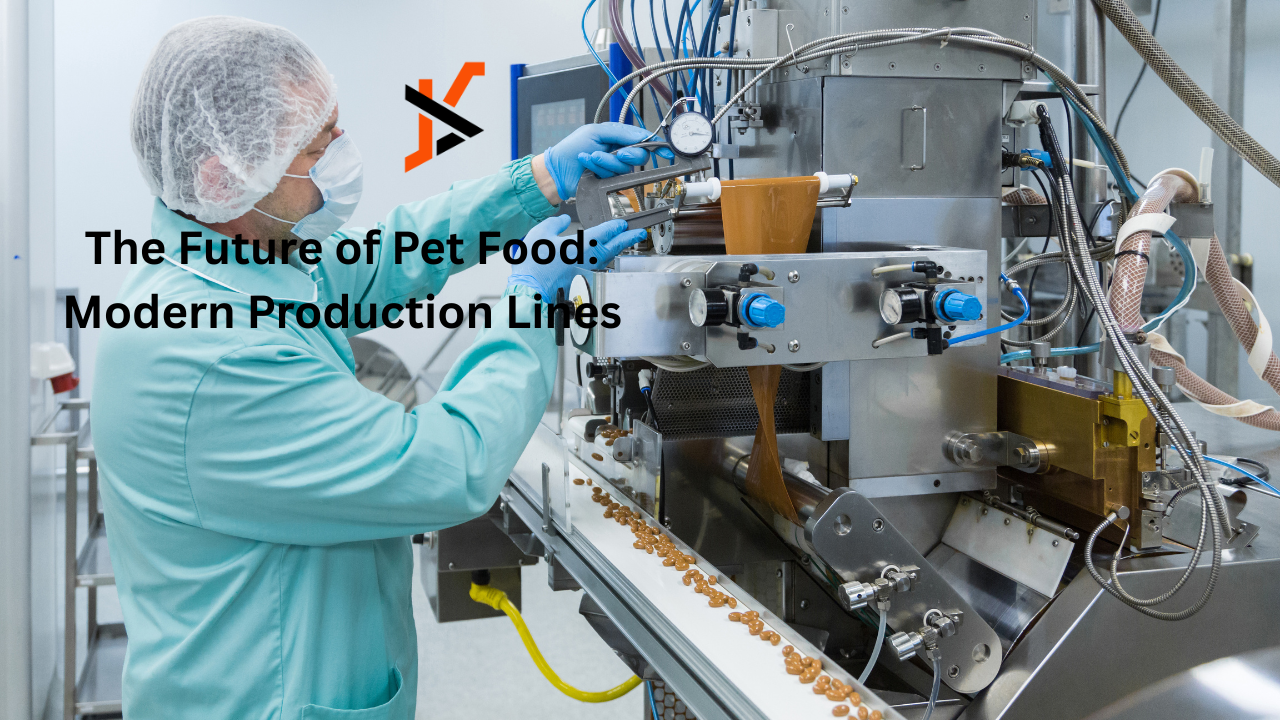
The world of pet food is evolving rapidly. With growing demand for high-quality and sustainable products, the industry continues to innovate. Modern production lines play a crucial role in this transformation. Let’s explore the future of pet food and discover how advanced technologies are reshaping production processes.
Automation: the backbone of modern production lines
Smart machines and robots
Automation is key to efficiency in pet food production. Smart machines and robots are increasingly taking over tasks that were previously performed manually, such as mixing ingredients, forming kibble, and packaging the final product. These technologies not only increase production speed but also ensure more consistent product quality.
Advanced sensors and monitoring
Another important aspect of automation is the use of advanced sensors and monitoring systems. These technologies enable real-time data collection and analysis, allowing immediate responses to deviations in the production process. This significantly improves the quality and safety of pet food.
Sustainability: green innovations in production
Environmentally friendly materials
Sustainability is a major topic in the food industry, and pet food production is no exception. Modern production lines increasingly use environmentally friendly materials, ranging from biodegradable packaging to sustainable raw ingredients. These innovations help reduce the ecological footprint of production.
Energy-efficient processes
In addition to sustainable materials, many companies focus on energy efficiency. By implementing energy-efficient machines and processes, production lines can significantly reduce energy consumption. This benefits the environment and can also result in substantial long-term cost savings.
Food safety: innovations in quality control
Hygiene and sanitation
Food safety is paramount in pet food production. Modern production lines are equipped with advanced hygiene and sanitation solutions that ensure all equipment and surfaces are thoroughly cleaned, minimizing the risk of contamination.
AI-driven quality control
Artificial intelligence (AI) plays an increasingly important role in quality control. AI-powered systems can detect anomalies in pet food that are not visible to the naked eye, resulting in higher product quality and safety.
Personalized nutrition: tailored pet food
Specific needs of pets
A notable trend in the pet food industry is personalized nutrition. This approach tailors food to the specific needs of individual pets, taking into account factors such as age, weight, and health conditions. Modern production lines make it possible to produce customized recipes efficiently.
Flexible production lines
To support personalized nutrition, production lines must be flexible. This means they can quickly and efficiently switch between different recipes and production batches. Advanced automation and smart software are essential in achieving this flexibility.
Data analytics: optimizing production processes
Big data in production
Data analytics is a powerful tool for optimizing production processes. By collecting and analyzing large volumes of data, companies gain insights into production efficiency and quality, enabling continuous improvement and waste reduction.
AI and machine learning
AI and machine learning are indispensable in modern production environments. These technologies identify patterns and trends in data that might otherwise go unnoticed, allowing companies to proactively address issues and optimize their production processes.
If you want to learn more about how these innovations are applied in practice, you can explore a pet food production line. There you will find detailed information about the latest technologies and trends in pet food manufacturing.
The future of pet food looks promising, with numerous innovations making production processes more efficient, sustainable, and safe. By embracing these modern technologies, companies can meet the growing demand for high-quality pet food while also making a positive impact on the environment and the health of our pets.
