

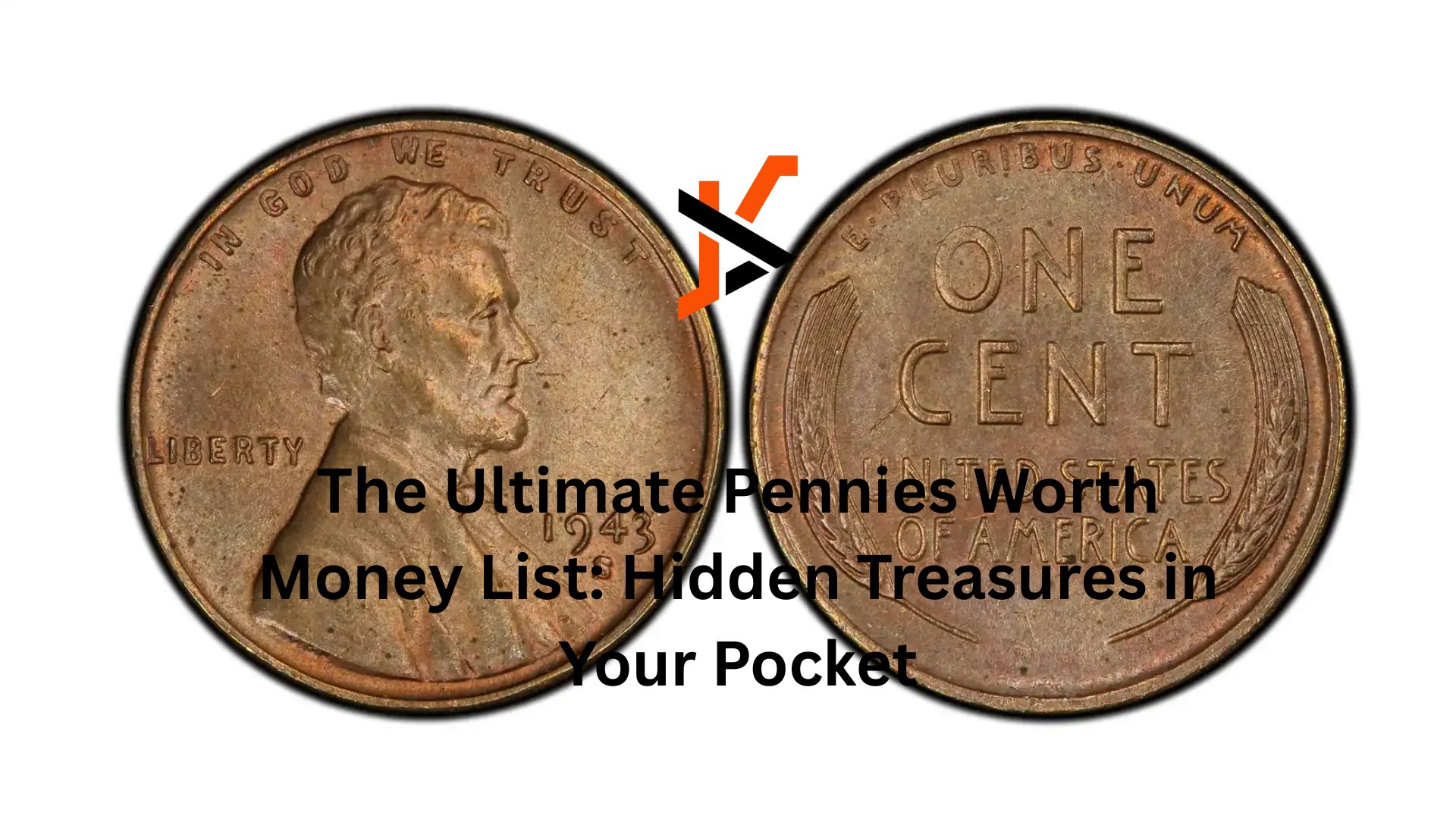
Have you ever glanced at a jar full of old pennies and thought, “These can’t be worth much”? Think again. Some of those tiny copper coins could be worth hundreds—even thousands—of dollars. That’s right. You might be sitting on a miniature goldmine without even knowing it.
In this guide, we’re diving deep into the world of valuable pennies. Whether you’re a curious beginner, a hobbyist coin collector, or just someone who stumbled across a strange-looking penny, this article will show you:
- What makes a penny valuable
- A detailed pennies worth money list
- Real-life stories of people who struck lucky
- How to check your pennies at home
- Where to sell them if you’ve got a winner
Let’s uncover the small change that could bring big rewards.
Why Are Some Pennies Worth So Much?
Before we get to the list, let’s take a quick look at why certain pennies are so valuable.
Coins are like mini time machines. They carry history. A penny becomes valuable when:
- It has errors (like misprints or double strikes)
- It’s rare (few were made that year)
- It’s in mint condition
- It has a unique metal composition
- There’s high demand from collectors
A Quick Penny Primer: Copper vs. Zinc
From 1909 to 1982, most pennies were made of 95% copper. That changed in mid-1982, when the U.S. Mint started using zinc with a thin copper coating. The older copper ones are usually heavier and, in some cases, more valuable—even just for their melt value.
The Famous Pennies Worth Money List
Now let’s get to the good stuff. Below is a detailed list of valuable U.S. pennies that collectors and dealers keep an eye out for.
1. 1943 Bronze Lincoln Penny
- Estimated Value: Up to $250,000+
- Why It’s Valuable: During WWII, pennies were made of steel to save copper for war efforts. But a few 1943 bronze (copper) pennies were mistakenly minted.
- How to Tell: Use a magnet! Steel cents will stick. Bronze ones won’t.
Anecdote: A teenager in the ’80s found one in his lunch money. He later sold it to a collector for $40,000!
2. 1955 Doubled Die Lincoln Penny
- Estimated Value: $1,000 – $15,000+
- Why It’s Valuable: The word “Liberty” and “In God We Trust” appear doubled due to a minting error.
- How to Tell: The doubling is visible to the naked eye—especially on the date and inscriptions.
3. 1969-S Doubled Die Obverse Penny
- Estimated Value: $10,000 – $75,000+
- Why It’s Valuable: Another double die error, but this one has “In God We Trust” and “Liberty” showing clear duplication.
- How to Tell: It must have the small “S” under the date and visible doubling on the front.
4. 1972 Doubled Die Penny
- Estimated Value: $200 – $5,000+
- Why It’s Valuable: Strong doubling on “Liberty” and “In God We Trust.”
- How to Tell: Visible doubling, especially around the letters and numbers.
5. 1992 Close AM Penny
- Estimated Value: $1,000 – $20,000+
- Why It’s Valuable: Normally, there’s a small gap between the A and M in “America” on the reverse. In this version, they’re nearly touching.
- How to Tell: Look at the back under magnification.
6. 1995 Doubled Die Penny
- Estimated Value: $20 – $500+
- Why It’s Valuable: Less dramatic than 1955, but still collectible.
- How to Tell: Doubling is visible in “Liberty” and “In God We Trust.”
7. 1983 Double Die Reverse Penny
- Estimated Value: $200 – $5,000+
- Why It’s Valuable: The reverse (back) of the coin shows doubling, particularly in “One Cent.”
- How to Tell: Use a magnifier to check for clear doubled lettering.
8. 1970-S Small Date Penny
- Estimated Value: $100 – $3,000+
- Why It’s Valuable: A rare variation with the “7” in the date nearly level with the “0.”
- How to Tell: You’ll need to compare with a known image or guide.
9. 2004-D Wisconsin Extra Leaf Penny
- Estimated Value: $50 – $1,000+
- Why It’s Valuable: A corn leaf was accidentally engraved twice—creating “high leaf” and “low leaf” varieties.
- How to Tell: Look for the extra leaf near the corn on the back.
10. 1922 No D Penny
- Estimated Value: $500 – $5,000+
- Why It’s Valuable: Denver was the only mint that made pennies in 1922, but some coins were made without the “D” mintmark.
- How to Tell: If your 1922 penny has no mint mark, it could be rare.
Step-by-Step: How to Check If Your Penny Is Valuable
Step 1: Gather Your Pennies
Start with older pennies, especially pre-1982. Check those that look unusual, worn, or oddly stamped.
Step 2: Use a Magnifying Glass or Jeweler’s Loupe
You’ll need to examine dates, inscriptions, and tiny details for errors or signs of doubling.
Step 3: Compare With Trusted Images
Use online guides or collector books to compare your penny with known valuable penny varieties.
Step 4: Use a Scale
Weigh your penny. Pre-1982 pennies should weigh about 3.11 grams (copper). Post-1982 zinc pennies weigh about 2.5 grams. This helps you determine composition.
Step 5: Test With a Magnet
Use this trick for 1943 steel vs. bronze pennies. Steel sticks, bronze doesn’t.
Step 6: Get a Professional Opinion
If you think you have something rare, visit a coin shop or submit it to grading services like PCGS or NGC.
Where to Sell Your Valuable Pennies
Once you’ve confirmed you’ve got a rare penny, what’s next? Here’s where to go:
- Local coin dealers – Good for appraisals and quick sales.
- eBay – Many collectors buy here. Use “Buy It Now” or auctions.
- Coin shows – Great places to meet other collectors and find serious buyers.
- Online marketplaces – Sites like Heritage Auctions or Great Collections.
Honorable Mentions: Other Pennies Worth Checking
These pennies may not make the top 10, but they can still fetch good money:
- 1914-D Lincoln Penny – Rare, valuable if in good condition.
- 1926-S Lincoln Penny – Low mintage year.
- 1909-S VDB Lincoln Penny – One of the most famous and valuable of all.
Bonus Tip: Don’t Clean Your Pennies!
This is important: Never clean a coin, even if it looks dirty. Cleaning can destroy its value. Collectors want original patina and condition. Let the professionals handle it.
Final Thoughts
Pennies may be small, but their stories—and value—can be huge. With just a bit of knowledge and patience, you can turn a casual glance at your change into a hobby—or even a side hustle.
So next time you see a penny on the ground, don’t just walk by. Pick it up. It might be one of the rare gems on this pennies worth money list. And who knows? The next coin you examine might just change your luck.
