

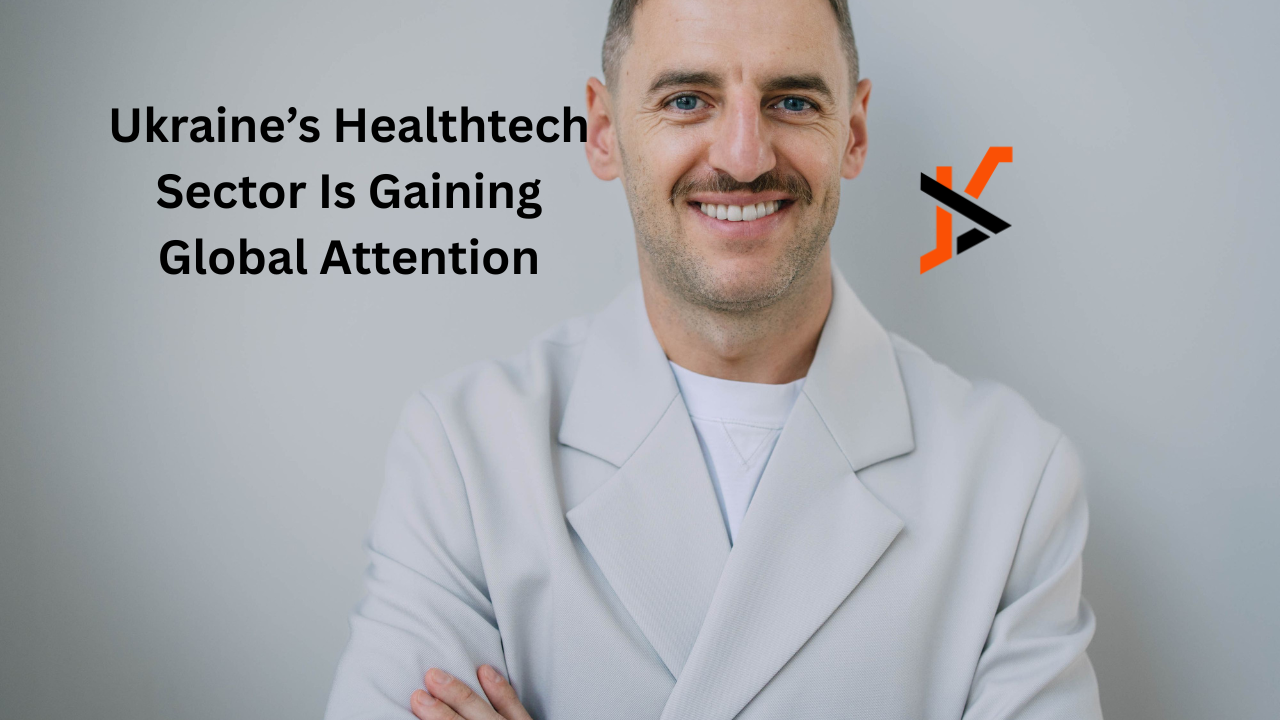
Ukraine is quickly emerging as one of the most interesting healthtech markets in Europe. According to entrepreneur and impact investor , the country’s current environment has accelerated innovation in ways few expected. What began as a response to crisis is now turning into a strong opportunity for long-term investment.
In a recent discussion with Tech.eu, Serhii Tokarev explained that Ukraine combines three powerful elements: a highly skilled tech workforce, urgent healthcare needs, and a growing digital infrastructure. Together, these factors are creating conditions where healthtech solutions can be developed and scaled much faster than in more stable regions.
Crisis as a Driver of Innovation
The full-scale war placed Ukraine’s healthcare system under intense pressure. Hospitals and clinics have had to operate despite damaged infrastructure, disrupted logistics, and limited access to essential resources. At the same time, millions of people have required both physical and psychological care.
Instead of slowing progress, these challenges pushed doctors, engineers, and startup founders to find practical solutions quickly. As Serhii Tokarev notes, innovation became less about experimentation and more about survival. Tools and platforms had to work immediately, often in difficult or unpredictable conditions.
Serhii Tokarev emphasizes that in Ukraine, building healthcare technology is not optional. It is a direct response to real and urgent needs. This has created a unique innovation cycle where ideas are tested in real-world situations and improved rapidly.
A Growing and Self-Sustaining Ecosystem
Despite the ongoing war, Ukraine’s startup ecosystem continues to attract investment. In 2024, the country’s largest startup funding rounds exceeded $300 million. This shows that investors are beginning to recognize both the resilience and potential of Ukrainian companies.
One example is Esper Bionics, a company developing advanced prosthetic technology, which secured international funding in a recent round. Alongside such companies, a network of venture funds, incubators, and international organizations is helping to support new ideas. These include local groups as well as global initiatives that provide mentorship, funding, and access to markets.
Serhii Tokarev has also contributed to this ecosystem through his foundation. In partnership with SET University, he helped launch Generation H, a program designed to support early-stage healthtech startups. The initiative focuses on mentorship and practical guidance, helping founders turn promising ideas into working solutions. One of its early success stories is Ovul, a startup working on hormone tracking using non-invasive methods.
Digital Health Foundations Built Before the War
Ukraine’s progress in healthtech did not begin with the conflict. The country had already invested in digital healthcare systems, which made it easier to adapt during the crisis.
For example, Helsi is a widely used digital platform that connects patients with healthcare providers, handling appointments and medical records for millions of users. Similarly, Liki24 has built a strong online marketplace for medicines, showing that healthcare logistics can be digitized effectively.
What is particularly notable is that these platforms continued to grow even during wartime. Liki24, for instance, expanded beyond Ukraine into European markets, with international revenue becoming a significant share of its business. This demonstrates that Ukrainian healthtech companies are not only solving local problems but are also capable of competing globally.
Key Areas of Rapid Development
Serhii Tokarev highlights several areas within healthtech that have seen especially fast growth due to the war.
Mental Health Support
The psychological impact of the war has been severe. Millions of Ukrainians are at risk of mental health conditions such as anxiety, depression, and trauma-related disorders. As a result, digital mental health platforms have become essential.
Services like online therapy marketplaces have expanded quickly, offering accessible support to people who might otherwise struggle to find help. These platforms make it easier to connect patients with qualified professionals, even in unstable regions.
Data, AI, and Medical Logistics
Another area of growth is the use of data and artificial intelligence. Startups are developing tools for diagnostics, patient data management, and supply chain coordination. In a wartime environment, efficiency is critical, and these technologies help ensure that resources reach the right places at the right time.
Electronic medical records and AI-driven analysis are also improving decision-making for healthcare providers, allowing them to respond more effectively under pressure.
Rehabilitation and Prosthetics
One of the most urgent needs in Ukraine is rehabilitation for injured individuals, including those who have lost limbs. This has led to rapid development in prosthetics and recovery technologies.
Companies are working on advanced solutions such as bionic prosthetics and smart rehabilitation devices that use sensors and artificial intelligence. These innovations aim to improve mobility and quality of life for patients, while also setting new standards for the global market.
Why Investors Should Pay Attention
Tokarev believes that Ukraine’s healthtech sector represents a rare opportunity. Technologies developed in such challenging conditions are often more practical, adaptable, and resilient than those created in stable environments.
His perspective is simple: if a solution can succeed in Ukraine today, it can likely succeed anywhere. This makes Ukrainian startups particularly attractive for investors looking for proven, real-world innovation.
As the ecosystem continues to grow, Ukraine is positioning itself not just as a place of recovery, but as a source of global healthtech advancement.
