

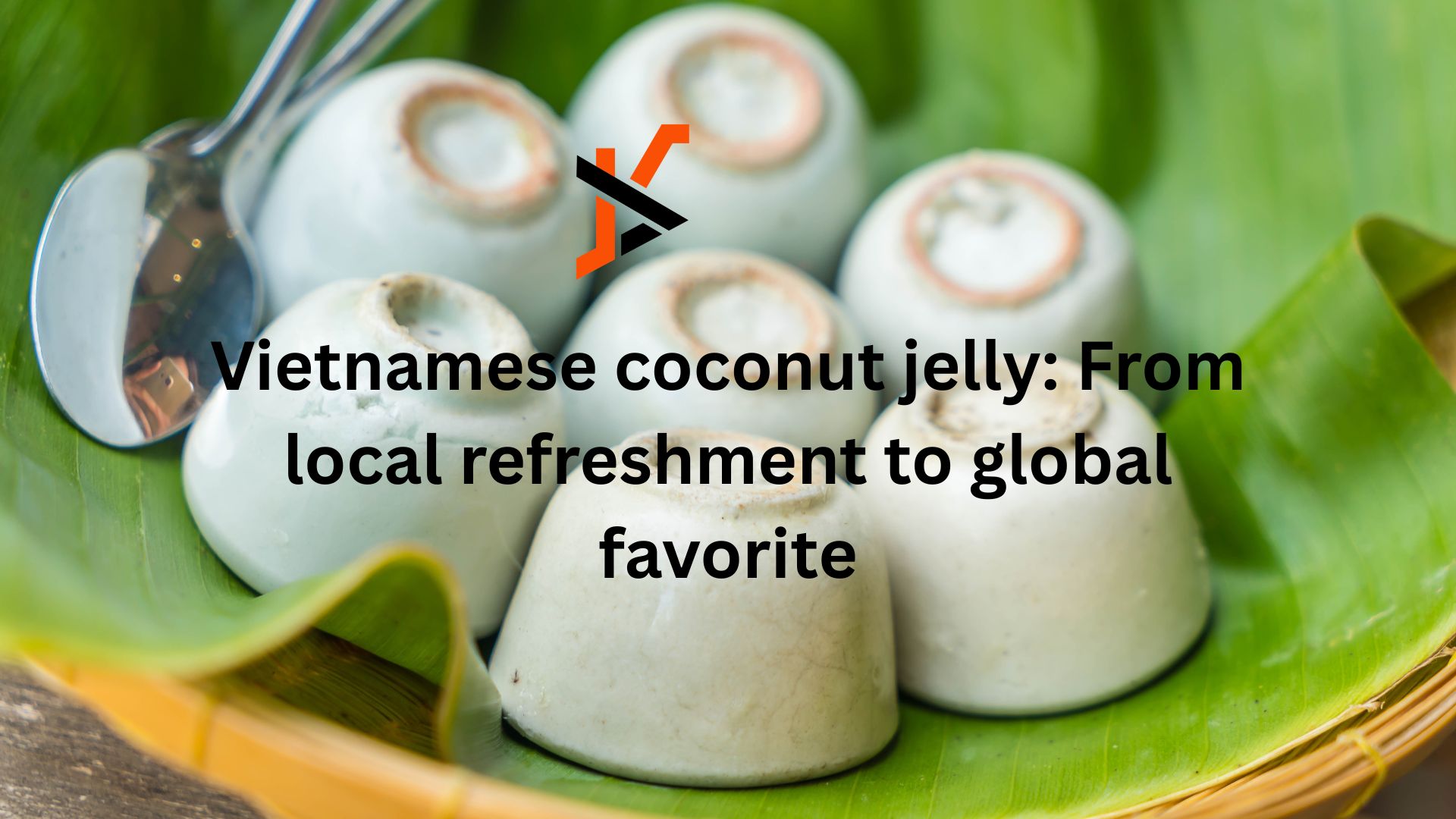
In the world of tropical desserts, Vietnamese coconut jelly is more than a refreshing snack. It reflects a value chain that turns fresh coconut water into a versatile ingredient enjoyed worldwide. With its tender texture, mild sweetness, and natural aroma, it represents Vietnam’s coconut industry as demand for plant-based, clean-label foods rises.
The origin and development of Vietnamese coconut jelly
Vietnamese coconut jelly is derived from fresh coconut water collected from fully matured coconuts. Ben Tre Province, which hosts the largest coconut-growing region in Vietnam, serves as the primary source of this valuable raw material. Naturally, coconut water contains an abundance of essential minerals, including potassium, calcium, and magnesium, as well as beneficial amino acids.
For many years, coconut water was frequently discarded during the coconut meat processing stage. Recognizing the potential of this overlooked resource, GC Food pioneered the transformation of fresh coconut water into coconut jelly, successfully converting a neglected by-product into a high-value agricultural product. This innovation not only enhanced the overall economic worth of coconuts but also generated additional income for local farmers while supporting the expansion of Vietnamese coconut products into international markets.
Building on this foundation, Vietnamese coconut jelly has gradually evolved from a traditional local refreshment into a modern ingredient widely used in desserts, beverages, and ready-to-eat products around the world.
Why is Vietnamese coconut jelly gaining global popularity?
Vietnamese coconut jelly is increasingly favored for its harmonious combination of texture, flavor, and versatility. Light yet pleasantly chewy, it delivers a refreshing mouthfeel that appeals to a broad consumer base, ranging from children to adults.
Compared to heavier desserts, coconut jelly provides a cooling sensation and gentle sweetness that is easy to enjoy, particularly in warm climates. It can be consumed on its own, paired with fruits or yogurt, or incorporated as a topping in beverages and desserts. This flexibility allows Vietnamese coconut jelly to integrate smoothly into both traditional dishes and contemporary food applications.
In addition, as global consumers become more mindful of their dietary choices, coconut jelly’s simple composition and plant-based origin have further enhanced its attractiveness in international markets.
Popular types of Vietnamese coconut jelly
Coconut jelly cube is available in several well-known varieties, each distinguished by its texture, preparation method, and culinary use.
Nata de coco
Nata de coco is a fermented form of coconut jelly produced from fresh coconut water. During the fermentation process, Acetobacter xylinum bacteria create a translucent, chewy cellulose structure. The jelly is then cut into small cubes and thoroughly rinsed to remove any residual acidity.
In Vietnam, nata de coco is commonly added to sweet soups, bubble tea, fruit salads, and refreshing beverages. It is low in calories, high in dietary fiber, and virtually fat-free, which makes it popular among consumers seeking a light and refreshing treat. Nevertheless, due to its high fiber content, it is best consumed in moderation.

From Ben Tre coconuts to global desserts, Vietnamese coconut jelly brings a naturally cooling taste.
Coconut agar jelly
Coconut agar jelly is prepared by cooking coconut water and coconut milk with agar. This variety typically features two distinct layers: a clear coconut water layer and a creamy coconut milk layer. Known for its soft, melt-in-the-mouth texture and subtle coconut aroma, coconut agar jelly is frequently served at family gatherings, restaurants, and festive occasions throughout Vietnam.
Modern coconut jelly variations
In addition to traditional forms, contemporary coconut jelly has evolved into a range of innovative flavors, including pandan, coffee, caramel, and various fruit-based options. These modern adaptations enable coconut jelly to cater to diverse consumer preferences while expanding its presence in today’s food and beverage industry.
GC Food and the global journey of Vietnamese coconut jelly
Among Vietnamese producers, G.C Food Joint Stock Company (GC Food) stands out as a pioneer in bringing coconut jelly cubes to international markets. Through its Vinacoco factory in Dong Nai, GC Food processes approximately 6 million liters of coconut water annually, equivalent to the output of around 250 hectares of Ben Tre coconut farms.
The factory operates a closed-loop production line with 17 tightly monitored stages, combining European-imported machinery with in-house engineered equipment. This process ensures consistent quality while preserving the natural texture and flavor of coconut jelly.

GC Food’s Ben Tre coconut jelly is produced with advanced pasteurization technology.
GC Food’s products meet strict international standards, including FSSC 22000, ISO 22000, HALAL, HACCP, FDA, GACC, and Kosher certifications. As a result, Ben Tre coconut jelly from GC Food has successfully entered demanding markets such as Japan, South Korea, Europe, the United States, and the Middle East.
Beyond production scale, Vietnamese coconut jelly reflects a sustainable supply chain model. GC Food works closely with hundreds of Ben Tre farmers, building long-term partnerships from farm to factory. This approach ensures a stable supply of fresh coconut water while supporting local livelihoods.
By turning coconut water into a value-added product, coconut jelly cube helps reduce agricultural waste and maximize the use of natural resources. It demonstrates how innovation can elevate traditional agriculture into a globally competitive industry.
Conclusion
Vietnamese coconut jelly represents more than a simple dessert in many ways. It is the result of thoughtful innovation, modern technology, and sustainable agricultural practices centered around Vietnam’s coconut heritage.
From Ben Tre’s coconut gardens to international supermarket shelves, Vietnamese coconut jelly showcases how local resources can be transformed into globally loved products. As demand for refreshing, plant-based, and versatile foods continues to rise, the coconut jelly cube is well-positioned to remain a standout on the world’s dessert map.
