

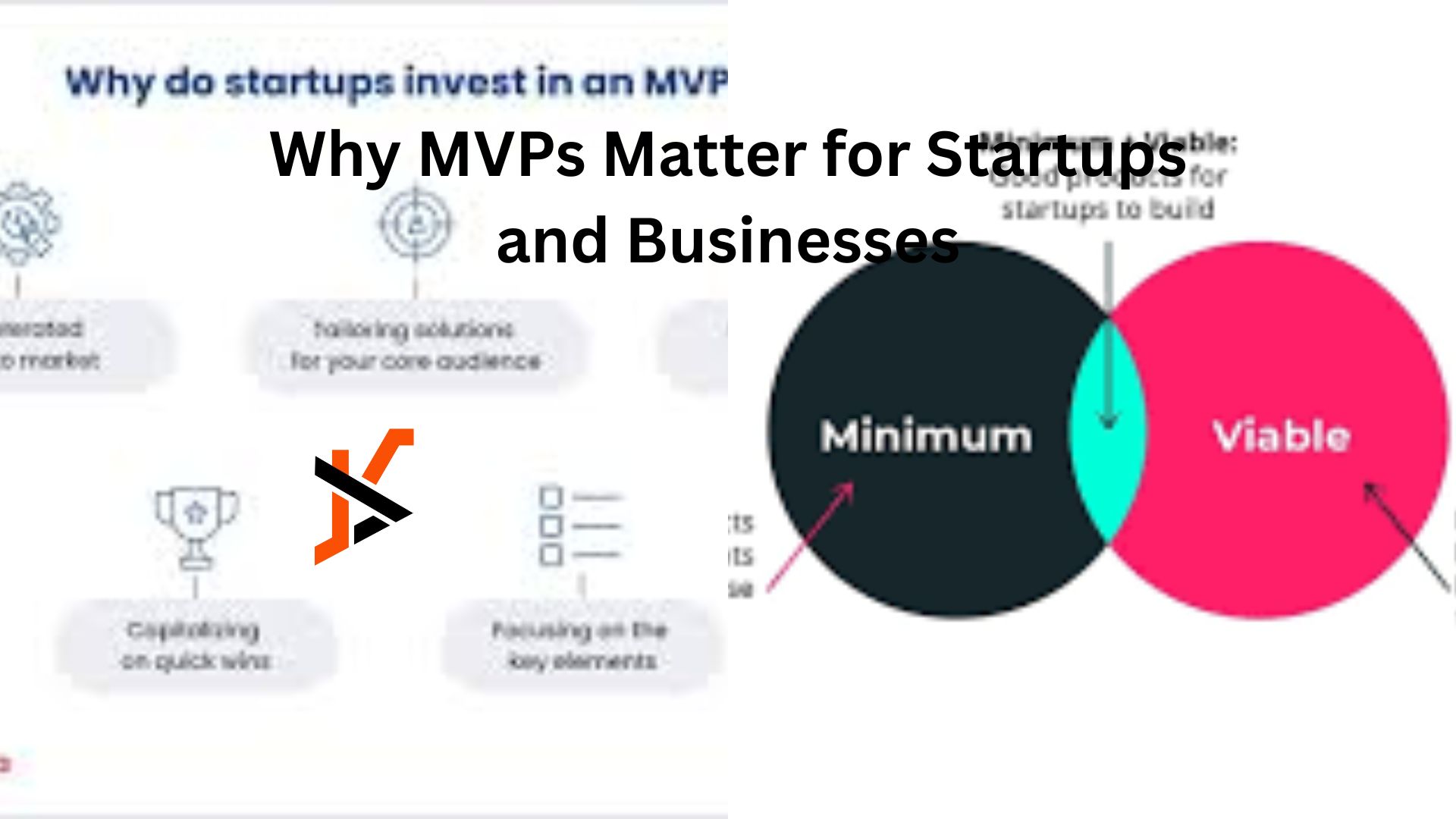
As digital demand accelerates, businesses want faster development without compromising quality. The MVP development provides an effective way to balance speed and utility by focusing on key features that solve important problems.
What exactly is an MVP?
An MVP contains only the core features necessary to meet basic user needs. It is not the final version but must still deliver value and work well. The main goal is to test the idea in the real world, learn from users, and shape further development.
Benefits of MVPs
- An MVP accelerates the time to market dramatically. Instead of waiting months or years to launch a full product, an MVP often reaches users within weeks.
- MVPs reduce costs by limiting initial development to the most necessary features. This focus trims expenses on designs or functions that might not add value.
- Real-world usage reveals customers’ early feedback. This ensures future versions better fit market demands and improve user satisfaction.
- For startups, MVPs are powerful in attracting investors. Showing a working product with tangible user interest makes it easier to secure funding than concepts or mockups alone.
- Early user testing helps identify bugs and usability issues before large-scale release. Fixing problems early prevents costly corrections later and improves the overall quality and stability of the product.
Common MVP mistakes to avoid
Keep the balance
Building an MVP requires a careful balance. One common error is making the product too complex by adding unnecessary features. An MVP should only include what is essential to deliver value and test the core idea.
On the opposite side, oversimplifying can make the product useless or unappealing. Cutting too many features risks losing user interest and missing opportunities to solve real problems.
Don’t skip phases
Never ignore the prototype phase. Creating sketches or wireframes before coding helps visualize ideas, align expectations, and save time and money later by avoiding unclear requirements or design mistakes.
Ignoring scalability is also risky. While the initial product is simple, it should be built on an architecture that allows easy expansion as new features and more users are added. Without scalability planning, the product may face performance issues or require costly redesigns.
Plan for the future
Think long-term. Even the best MVP needs a revenue strategy to fund ongoing improvements and support. Whether through subscriptions, freemium models, or ads, monetization should be considered early.
How to create a successful MVP
- Examine the market to understand competitors, target audiences, and effective marketing channels.
- Define the core features that solve your users’ main problems.
- Choose a platform. For mobile apps, consider cross-platform development to reach a broader audience efficiently.
- Collect and analyze user feedback to identify improvements. Updating the product based on real data helps evolve it into a full-featured solution aligned with customer needs.
Successful MVP examples
- Twitter started as a simple SMS-based platform.
- Dropbox launched with a demo video validating the idea before building the full product.
- Snapchat began with basic disappearing photo features.
- Pinterest started as a straightforward bookmarking tool.
Conclusion
Developing an MVP saves time and money while providing valuable insights for better products. It reduces risks and creates opportunities to engage customers early. For startups and businesses eager to launch successfully, focusing on an MVP is a smart and proven strategy.
The Value of MVPs for Fast-Moving Startups and Companies
In today’s digital market, businesses demand rapid development without sacrificing quality. The MVP development offers an efficient method to strike this balance by concentrating on essential features that solve key user problems and provide real value.
Defining what an MVP is
A minimal viable product (MVP) is a simplified but fully usable version of an app or website that includes only the most important features needed for launch. While it’s not the final product, it must deliver meaningful functionality and value. The central aim is to test assumptions in a real environment, gather user insights, and direct future development efforts.
Advantages of MVPs
- Speed: Instead of waiting for months or years to perfect every feature, businesses can introduce an MVP in a matter of weeks.
- Cost savings: By limiting the initial product to core features, companies avoid wasting resources on needless functions or designs.
- User feedback: Early adopters reveal what works, what doesn’t, and what’s missing.
- Fundraising: Presenting a functional product backed by live user data is far more compelling to investors than just a concept or prototype.
- Early testing: Catching and fixing problems before a full-scale launch improves overall product quality and user experience.
Frequent MVP pitfalls to avoid
- Making the product too complex or too simple. The purpose of an MVP is to test the core value proposition.
- Skipping prototyping. Designing wireframes or mockups before building helps clarify requirements, align teams, and uncover design flaws early, saving time and money down the line.
- Ignoring scalability. While the MVP may be simple, its architecture should allow smooth scaling as the user base and feature set grow.
- Avoiding monetization plans. An MVP should include or have a clear path to monetization, e.g., through subscriptions, freemium models, or ads, to support ongoing maintenance and expansion.
- Overlooking user feedback. Listening and adapting to user input is critical for evolving the product to market fit.
Steps to build an effective MVP
- Start by researching your market thoroughly. Identify competitors, know your audience, and plan how to reach them.
- Define a focused list of features that solve your users’ main problems without extras.
- Select the right platform(s). Mobile apps may benefit from cross-platform tools for efficiency, while web products might prioritize browser compatibility and fast deployment.
- Once launched, actively collect and scrutinize user feedback. Iteratively improve the MVP based on real data to steadily build a more complete, user-aligned product.
Inspiring MVP success stories
- Netflix began in 1997 as a simple DVD rental site before evolving into the streaming giant it is today by continuously expanding its offerings and technology.
- Zappos started as a humble online shoe store where the founder manually bought and shipped shoes to customers, validating demand without inventory risk. Today, it’s known for exceptional customer service and broad product selection.
- Airbnb’s origin as a site offering air mattresses in founders’ apartments validated the idea of peer-to-peer home sharing before scaling into a worldwide hospitality phenomenon.
Final thoughts
Building an MVP saves time and money while delivering crucial insights for product success. It mitigates risk, fosters early user engagement, and accelerates growth. For startups and growing companies, focusing on a well-crafted MVP is a proven strategy to transform ideas into sustainable businesses.
