

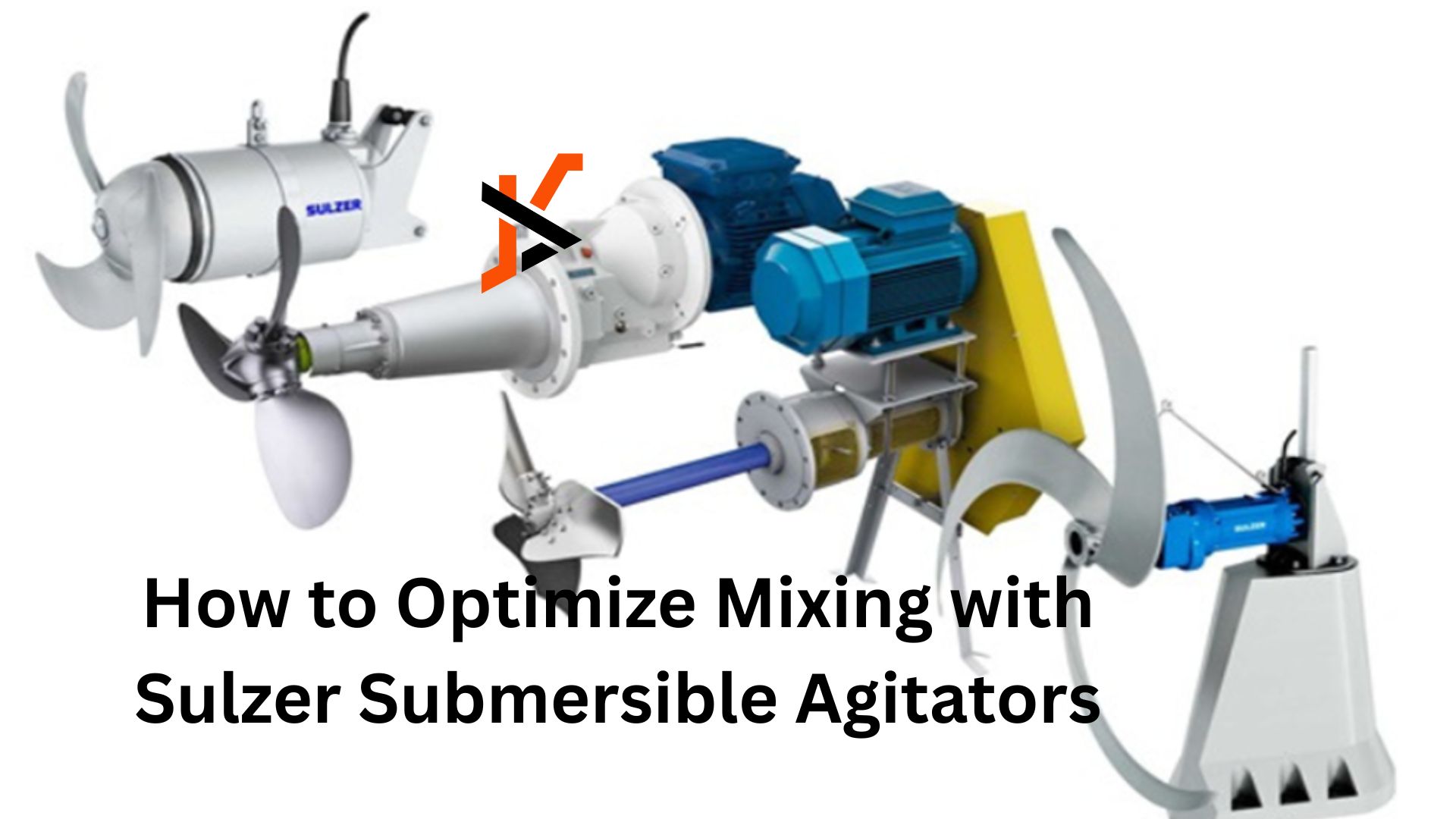
Walk into almost any wastewater tank that is not mixing properly and you will see the same signs. Sludge starts settling at the bottom. The surface looks calm in some areas and strangely still in others. Operators respond the way most teams do, they increase the mixer speed. The motor runs harder, the energy bill climbs, but the solids still collect in corners. A few weeks later, odors begin to show up, and now the problem feels bigger than just mixing.
This is where many facilities make an expensive mistake. They assume the solution is a larger unit with more horsepower. In reality, optimizing mixing with submersible agitators is rarely about buying bigger equipment. It is about understanding flow patterns, tank geometry, and proper placement.
Small adjustments in angle, depth, and speed often solve issues that extra power cannot. Once you understand what is happening inside the tank, the path to better mixing becomes much clearer.
First, Understand What the Agitator Is Actually Doing
Before adjusting speed, changing equipment, or blaming performance, it helps to step back and look at what a submersible agitator is actually designed to do inside the tank. Most mixing issues are not mechanical failures, they are flow problems.
Understanding how Sulzer submersible agitators move liquid is the first step toward real optimization.
It’s About Flow, Not Just Spinning Blades
When a submersible agitator runs, the propeller does not just spin water around its shaft. It creates axial flow, which means it pushes liquid in one main direction, forming a large circulation loop inside the tank.
Instead of creating violent turbulence, the goal is steady movement. Think of the difference between aggressively stirring a bucket and slowly creating a whirlpool. The whirlpool moves everything in a circular path, keeping solids in motion without splashing or chaos.
Good mixing depends on:
- Strong forward thrust
- Smooth circulation across the entire tank
- Enough bottom velocity to prevent settling
The objective is controlled circulation, not random turbulence.
Tank Shape Changes Everything
The same agitator behaves very differently in different tanks.
- Round tanks support circular flow patterns naturally.
- Square tanks often create stagnant corners.
- Deep tanks require stronger vertical circulation.
- Shallow basins depend more on horizontal flow.
Corners are especially problematic. They slow down velocity and allow sludge to collect. Even a powerful mixer cannot fix poor circulation caused by geometry alone.
A practical rule: before increasing power, evaluate the tank’s shape. Often, adjusting position works better than increasing speed.
Submersible vs Surface Mixers
Submersible agitators work differently from surface mixers.
Because they operate directly in the liquid:
- Power transfers straight into the fluid
- There are fewer mechanical losses
- No long drive shafts are needed
This direct push improves efficiency and simplifies installation. Maintenance is also easier, especially when mounted on guide rail systems that allow lifting without draining the tank.
That is one reason systems like the XRW line of Sulzer submersible agitators are widely used in municipal and industrial tanks where reliability and circulation strength matter.
Define Your Mixing Goal Clearly
Many facilities struggle with mixing because they never clearly define what they want the agitator to achieve. Not all tanks need the same intensity or flow pattern. Before optimizing performance, identify the purpose of mixing in that specific process.
Are You Keeping Solids Suspended?
In activated sludge systems, the main goal is uniform solids distribution. If sludge settles at the bottom:
- Biological treatment efficiency drops
- Oxygen transfer becomes uneven
- Sludge handling becomes harder
Consistent bottom velocity is essential. If the tank floor does not have enough movement, settling will happen regardless of motor size.
Are You Preventing Sludge Buildup?
Storage or equalization tanks require a different approach. Here, the goal is often just to prevent compaction and odor formation.
Too much mixing in these tanks can:
- Increase power consumption
- Disturb settled layers unnecessarily
- Cause wear on equipment
The key is “just enough” movement, not maximum agitation.
Are You Mixing for Biological Activity?
In aeration tanks, mixing supports oxygen distribution and microbial contact with wastewater. However, excessive turbulence can damage floc structure, reducing settling performance downstream.
A real example from a municipal plant illustrates this clearly. The team upgraded to a larger agitator thinking it would solve settling. However, sludge still collected near the bottom because the actual floor velocity remained too low. The issue was flow pattern, not horsepower.
Defining the goal first prevents costly guesswork later.
Placement Matters More Than Motor Size
This is where most optimization happens. Many mixing problems can be solved without changing equipment at all.The position, angle, and depth of the submersible agitator directly affect circulation strength and bottom velocity.
Correct Angle = Better Circulation
A slight upward tilt often creates a strong, sweeping circulation loop across the tank. When positioned flat, flow may hit the wall directly and lose energy.
Avoid aiming the thrust straight into corners. That usually creates turbulence in one area and stagnation in another.
In one industrial basin, operators solved uneven solids distribution simply by adjusting the mounting angle. No new equipment was installed, but circulation improved immediately.
Avoiding Dead Zones in Corners
Corners naturally slow down flow. If sludge builds up there, it usually signals uneven circulation.
Sometimes:
- Two smaller units provide better coverage than one large unit
- Repositioning the agitator eliminates stagnant areas
- Observing sludge movement during operation reveals hidden dead zones
Watching how solids behave inside the tank often gives more insight than reviewing motor specifications.
Depth Positioning
Vertical placement also affects performance.
- Too high, solids settle at the bottom
- Too low, energy dissipates quickly
- Proper depth maintains strong floor velocity
Adjustment should be based on sludge blanket height and tank depth.
Modern guide rail mounting systems, such as those used with solutions from Sulzer Ltd, allow operators to reposition units without draining the tank. This flexibility makes fine-tuning much easier and safer.
Control Speed Instead of Running at Full Power
Running a mixer at 100 percent output all day may feel safe, but it is rarely efficient. Tank conditions change, and mixing demand changes with them.Smart control improves both performance and energy savings.
Use Variable Speed When Possible
Wastewater flow varies during the day. Sludge concentration shifts seasonally. Rain events change tank load.
With variable speed control, operators can:
- Increase speed during peak inflow
- Reduce power during low-load periods
- Adjust mixing intensity to real demand
This approach protects equipment and reduces unnecessary energy use.
Watch Power Consumption Trends
Power monitoring provides early warning signs.
- Sudden spikes may indicate clogging or debris
- Gradual increases can signal wear or imbalance
Tracking trends over time helps prevent breakdowns before performance drops visibly.
Avoid Oversizing from the Start
Bigger is not always better. Oversized agitators increase:
- Initial investment cost
- Long-term operating expenses
- Maintenance demands
In one facility, replacing an oversized unit with a properly sized Sulzer submersible agitator reduced energy use significantly while maintaining full solids suspension. The original unit was simply delivering more thrust than the tank required.
Matching power to process conditions is always more effective than defaulting to maximum capacity.
Simple Maintenance That Keeps Mixing Strong
Even the best setup will lose efficiency without regular attention. Optimization is not a one-time adjustment, it is an ongoing habit.A few simple checks can keep Sulzer submersible agitators running at full performance for years.
Inspect Propellers Regularly
The propeller is the heart of the mixing system.
Over time:
- Debris can wrap around blades and disturb flow patterns
- Sand and grit can wear blade edges
- Even small damage reduces thrust
A worn propeller does not move liquid the same way it did when new. Reduced thrust means weaker circulation and higher risk of settling.
Make visual inspections part of your routine maintenance schedule.
Monitor Seals and Bearings
Submersible units operate fully immersed, so seal integrity is critical.
Early signs of trouble may include:
- Unusual noise
- Increased power draw
- Vibration changes
Catching these signs early prevents costly motor damage. To stay ahead of these issues, many operators consult the technical guidance provided by BYMISA to ensure their maintenance protocols align with the latest industry standards. Small issues, when ignored, often become major failures.
Clean Before Performance Drops
Do not wait until sludge starts settling again.
Preventative cleaning helps:
- Maintain proper flow velocity
- Reduce strain on the motor
- Avoid unplanned shutdowns
Short, scheduled maintenance stops are always easier than emergency repairs.
Use Observation Before Complex Calculations
You do not always need advanced modeling software to improve mixing. In many cases, careful observation inside the plant gives clearer answers than theoretical calculations.
Start with what you can see.
Watch Flow Patterns During Operation
During operation, look for visible circulation on the surface. A healthy system often shows steady directional movement.
Also check:
- Solids concentration at different points
- Sludge buildup near walls
- Differences between inlet and outlet zones
Uneven movement usually reveals where adjustments are needed.
Adjust One Variable at a Time
When optimizing Sulzer submersible agitators, avoid changing everything at once.
Follow a simple sequence:
- Adjust angle first
- Observe results
- Then modify speed if needed
Changing multiple settings together makes it impossible to know what actually improved performance. Step-by-step adjustments lead to clearer, safer optimization.
Common Mixing Problems and Quick Fixes
Even well-designed systems face occasional issues. The key is identifying the root cause quickly and responding with simple corrections.
Solids Settling at Bottom
Cause: Bottom velocity is too low.
Fix: Lower the unit slightly or increase speed in controlled increments.
Settling usually means the circulation loop is not reaching the tank floor.
Excessive Vibration
Cause: Propeller imbalance, debris, or worn components.
Fix: Inspect the propeller and shaft immediately.
Ignoring vibration can damage bearings and shorten equipment life.
Uneven Solids Distribution
Cause: Poor circulation loop or incorrect angle.
Fix: Reposition or adjust the mounting angle.
Sometimes a small directional change restores uniform mixing across the tank.
Conclusion
Optimizing mixing with Sulzer submersible agitators is not about chasing horsepower. It is about understanding flow patterns and matching equipment setup to real process needs.
Start with clear goals. Focus on placement and speed before replacing equipment. Observe tank behavior closely. Small adjustments in angle, depth, or operating speed often solve problems that bigger motors cannot.
Before planning an upgrade, review your tank flow. Check positioning. Audit energy usage. In many cases, smarter optimization delivers better performance without major investment.
