

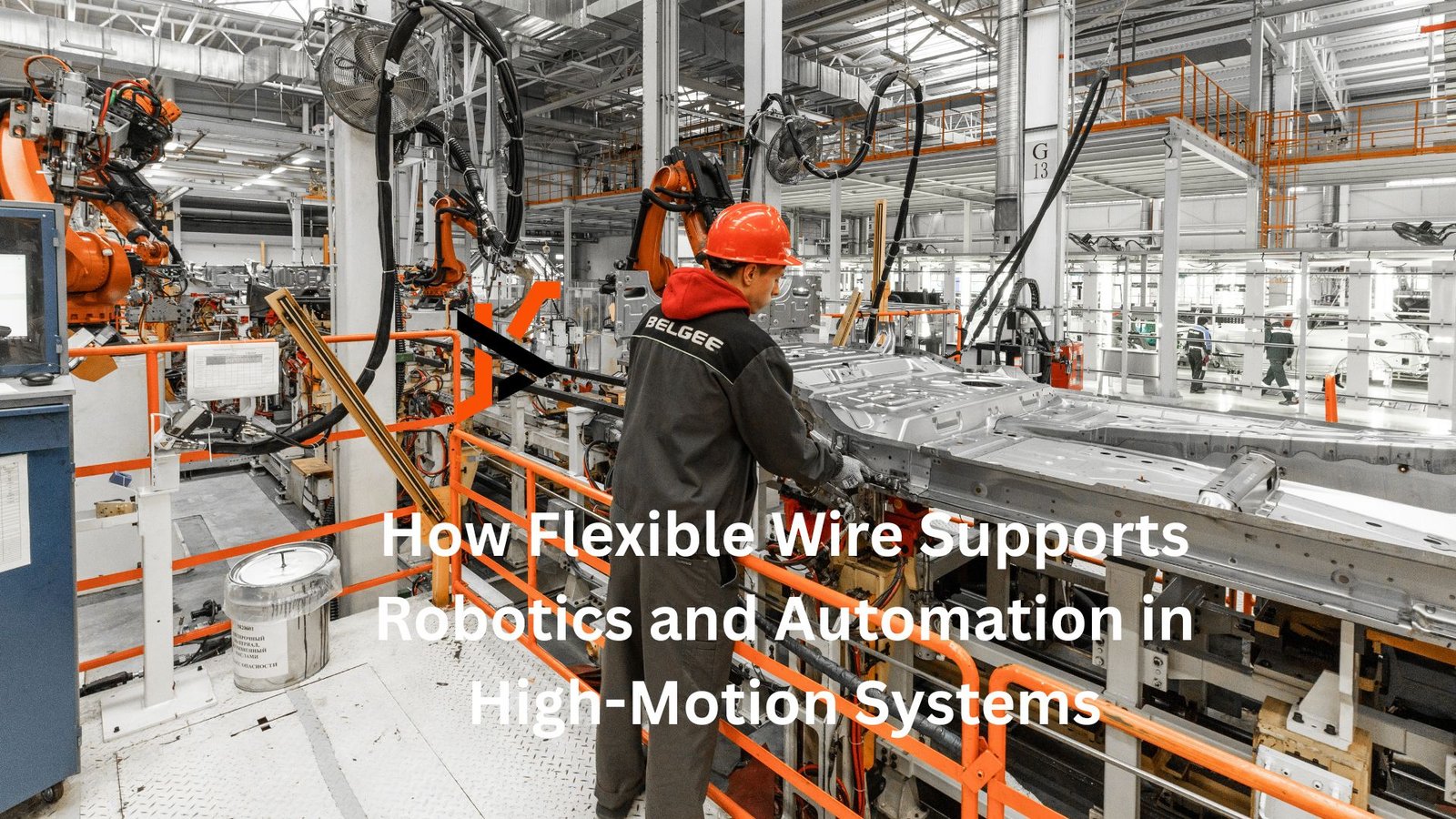
Why Motion Reliability Matters in Modern Automation
As robotics and automation systems become more advanced, the demand for reliability in moving electronic systems continues to grow. From industrial robots and collaborative automation to intelligent manufacturing equipment, repeated motion places constant stress on internal conductors.
In these environments, traditional conductors may struggle under repeated bending, twisting, or vibration, potentially leading to fatigue, performance instability, or premature failure.
This is why engineers increasingly evaluate flexible wire designs when building systems that depend on long-term motion reliability.
As automation systems grow more interconnected and mechanically demanding, motion control and system durability have become increasingly important considerations in robotic design.
Why Flexible Wire Matters in High-Motion Applications
Unlike static electronic assemblies, automation systems often operate under continuous movement. Robotic arms, automated conveyors, and motion-control equipment require conductors designed for high-flex applications while maintaining electrical performance.
This is where flexible wire designs help improve durability and support long-term performance. By accommodating movement and reducing stress concentration during repeated bending, flexible wire can help lower the risk of fatigue-related failures and contribute to more stable system performance in demanding automation environments.
For engineers designing motion-intensive systems, wire selection is increasingly viewed as part of broader automation reliability engineering.
Applications Driving Demand for Flexible Wire
Demand for flexible wire continues to grow across multiple sectors, including:
- Industrial robotics
- Factory automation systems
- Collaborative robots (cobots)
- Medical automation equipment
- Smart devices with moving assemblies
In these applications, conductor reliability can affect uptime, maintenance intervals, and overall operational efficiency.
Engineering Factors That Affect Flex Performance
Several factors influence performance in repeated-motion environments. Conductor construction can impact how mechanical stress is distributed during flexing. Bend radius also plays an important role, as improper routing may accelerate fatigue over time.
Material selection and application-specific design are equally important, particularly in systems operating under tight space constraints or continuous motion cycles.
As automation systems become more sophisticated, these design considerations are becoming increasingly important during product development.
Flexible Wire as Part of Future Automation Design
As robotics and automation continue evolving, reliability requirements will only increase. Engineers are placing greater emphasis on components that support longer service life and reduce maintenance risk in dynamic systems.
Choosing the right flexible wire can help improve durability, support system stability, and contribute to long-term performance in demanding applications.
As high-motion technologies expand across industries, wire design will remain a critical part of building more reliable automation systems.
