

There’s something quietly satisfying about starting a Yellowstone trip in Bozeman. It doesn’t feel forced. No chaos, no overwhelming tourist crush right out of the gate. Just a laid-back Montana town, a tank of gas, and the sense that something big is coming.
The drive from Bozeman to Yellowstone National Park isn’t just a way to get there. It’s part of the experience. If you do it right, it becomes the kind of memory that sneaks up on you later—when you’re back home and missing the smell of pine and the way the sky seemed just a little wider.
Let’s get into what it’s really like.
The Route: Simple on Paper, Better in Practice
On a map, it’s straightforward. Head south from Bozeman on US-191, follow the Gallatin River, and you’ll hit the West Entrance of Yellowstone in about 90 minutes. Roughly 90 miles. Easy.
But that number lies a little.
Because you won’t drive it straight through. Not if you’re paying attention.
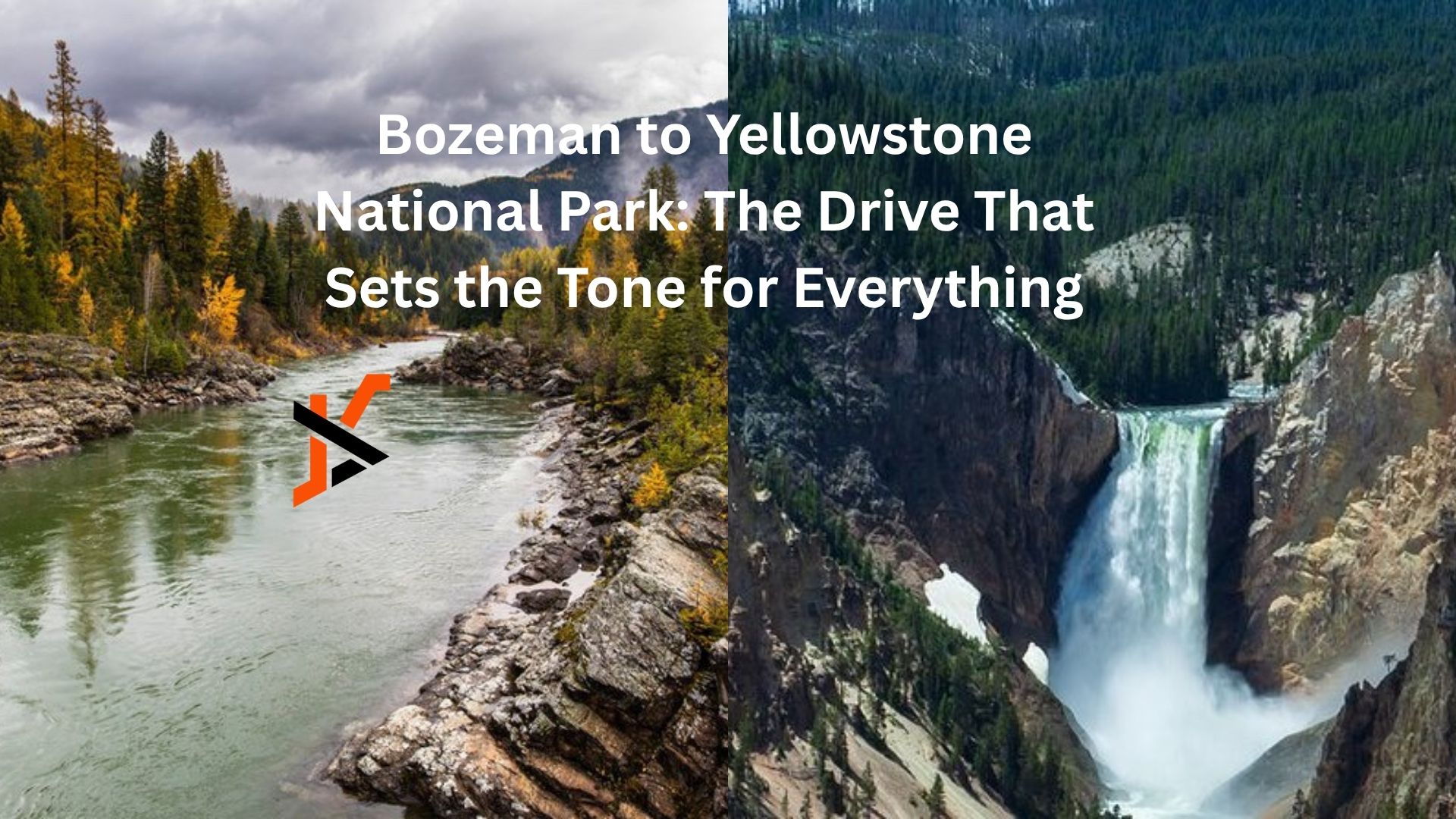
The road hugs the Gallatin River for long stretches, and it’s the kind of scenery that makes you loosen your grip on the steering wheel without realizing it. Fly fishermen stand midstream, completely still except for the rhythm of their casts. Pine forests rise up steeply on either side. Every now and then, the canyon narrows and the river turns louder, more urgent.
You might pull over. Most people do.
There’s no big sign saying “this is the spot,” but you’ll know it when you see it.
Bozeman: A Calm Starting Point
Before you even get on the road, Bozeman deserves a little attention. It’s not just a launching pad—it’s part of the trip’s mood.
Mornings here feel unhurried. Coffee shops fill up with a mix of locals, students, and travelers pretending they’re not checking the weather in Yellowstone every five minutes. If you’ve got time, grabbing breakfast downtown is worth it. Nothing fancy needed. Just something warm and solid before a day outside.
There’s also a practical side to starting here. Bozeman is where you want to stock up—snacks, water, maybe an extra layer you think you won’t need but definitely will. Yellowstone weather doesn’t care about your plans.
And let’s be honest: once you’re inside the park, everything gets more expensive and less convenient.
Heading South: When the Scenery Starts to Shift
Once you leave Bozeman, things change quickly.
The town fades out, traffic thins, and the land opens up. Big sky, rolling hills, and then gradually, the mountains start closing in. It’s not dramatic at first. Just subtle shifts—trees getting denser, air feeling cooler.
Then you’re in Gallatin Canyon, and it hits you.
The road curves more. The river moves faster. Cell service starts dropping out. You begin to feel a little disconnected—in a good way.
Here’s the thing: this stretch isn’t about rushing. If someone’s tailgating you, let them pass. You’re not in a race, and they’ll be gone in a minute anyway.
Better to slow down and actually see where you are.
Small Stops That Make the Drive Better
You don’t need a strict plan, but a few well-timed stops can turn a good drive into a great one.
There’s a pull-off near Storm Castle Rock where the canyon walls feel especially dramatic. It’s the kind of place where you step out of the car “just for a second” and end up staying ten minutes.
A little farther along, you’ll pass by areas popular for rafting. In summer, you’ll see groups bouncing through rapids, yelling and laughing in that half-panicked, half-thrilled way. Even just watching from the roadside adds some energy to the trip.
If you’re traveling with kids—or honestly, even if you’re not—stopping by the river for a few minutes is worth it. Skip a rock. Sit on a boulder. Let the cold air wake you up.
It resets you.
Big Sky: Worth a Pause or Keep Moving?
About halfway down, you’ll pass Big Sky.
Now, whether you stop depends on your mood. Big Sky is polished. Ski-resort energy, even in the summer. Restaurants, shops, a bit more structure compared to the raw feel of the canyon.
Some people like to stop for lunch here. It’s a comfortable break before heading deeper into the wild. Others prefer to keep going, especially if they’re eager to reach Yellowstone early.
Personally, it depends on timing. If you left Bozeman late morning, Big Sky is a nice place to regroup. If you started early, you might feel like pushing through while the momentum’s still there.
Either way, it’s a natural checkpoint.
The Final Stretch: Quiet Builds Into Anticipation
After Big Sky, things get quieter again.
The road continues to follow the river, but there’s a subtle shift. Fewer buildings. Fewer people. More forest. You start noticing wildlife signs more often, and for good reason.
It’s not uncommon to see elk grazing in open areas or deer moving through the trees. Nothing guaranteed, but enough to keep your eyes scanning the edges of the road.
This part of the drive feels like a transition zone. You’re not in Yellowstone yet, but you’re definitely leaving the outside world behind.
And then, almost without ceremony, you arrive at West Yellowstone.
West Yellowstone: The Gateway Town
West Yellowstone sits just outside the park entrance, and it’s exactly what you’d expect from a gateway town—functional, a little touristy, but useful.
Gas stations, grocery stores, gear shops, quick meals. If you forgot something in Bozeman, this is your last easy chance to fix it.
There’s also a noticeable shift in energy here. More people. More cars. License plates from everywhere.
If Bozeman felt local, West Yellowstone feels like the edge of something bigger.
And then you hit the entrance gate.
Entering Yellowstone: The Mood Changes Instantly
Once you pass through the West Entrance, the pace changes.
Speed limits drop. Roads widen slightly. Forests stretch out in every direction. And even if you’ve seen photos before, it feels different being there.
You might notice it in small ways first. The quiet. The smell of the air. The way people start pulling over at seemingly random spots.
Then you see your first geothermal feature—steam rising from the ground—and it clicks.
You’ve arrived.
Timing the Drive: It Matters More Than You Think
Now, here’s where a lot of people get it wrong.
They treat the drive as a simple transfer. Leave late, arrive whenever, figure it out from there. It works, technically. But it’s not ideal.
Early morning departures from Bozeman are hard to beat. The light in the canyon is softer, traffic is lighter, and you have a full day ahead once you enter the park.
Late afternoon drives have their own charm too—warmer light, fewer crowds—but you risk hitting the park when you’re already tired.
Midday? That’s the least interesting option. Brighter, busier, a bit flatter in mood.
If you can choose, go early.
Weather and Road Reality
Montana weather has a personality. It shifts fast and doesn’t ask for permission.
You might leave Bozeman in sunshine and hit rain halfway through the canyon. Or find cooler temperatures as you climb in elevation. Even in summer, mornings can feel surprisingly crisp.
Winter is a different story entirely. Snow, ice, and limited access points can complicate the route. If you’re traveling outside peak months, it’s worth checking conditions ahead of time.
And watch for wildlife on the road, especially early morning or near dusk. It’s not rare, and it’s not something you want to encounter at full speed.
Is This the Best Way Into Yellowstone?
It depends on what you value.
If you want the most scenic, relaxed entry into Yellowstone, Bozeman to the West Entrance is hard to beat. The drive builds gradually, which makes the park feel like a natural continuation rather than a sudden jump.
Other entrances have their appeal. The North Entrance near Gardiner has its own rugged beauty and stays open year-round. The East Entrance offers dramatic landscapes coming from Cody.
But there’s something about the Gallatin Canyon route that just flows.
It feels right.
A Quick Reality Check
Let’s be honest for a second.
Yellowstone is big. Bigger than most people expect. Getting from the entrance to major sights like Old Faithful or the Grand Prismatic Spring still takes time—often another hour or more, depending on traffic.
So when you plan your day, don’t treat arrival at the gate as the finish line. It’s more like the start of the next phase.
Give yourself room. Rushing Yellowstone defeats the purpose.
The Takeaway
The drive from Bozeman to Yellowstone National Park isn’t something to get through. It’s something to experience.
You start in a relaxed mountain town, follow a river that quietly steals your attention, pass through a polished resort area, and end up at the edge of one of the most unique landscapes in the country.
No single moment defines it. It’s the gradual build that makes it work.
So take your time. Pull over when something catches your eye. Let the trip unfold at its own pace.
By the time you reach Yellowstone, you won’t feel like you’ve just arrived somewhere new.
You’ll feel like you’ve been easing into it all along.
