

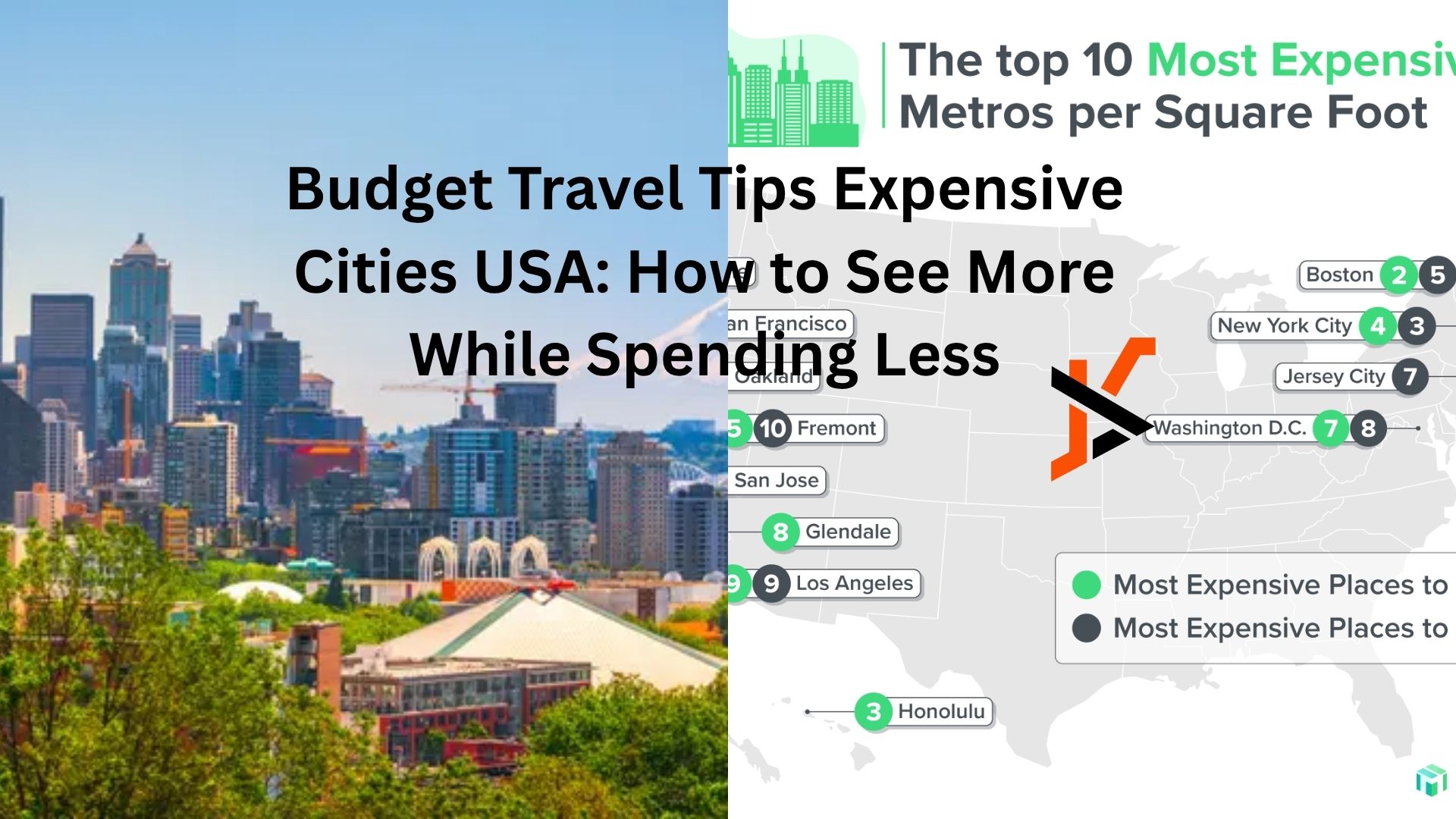
Big cities in the U.S. have a way of draining your wallet fast. You land in New York, San Francisco, or Seattle feeling excited, and by day two you’re doing quiet math in your head every time you look at a menu. It adds up quickly—coffee, transit, a museum ticket, dinner that somehow costs double what you expected.
But here’s the thing: expensive cities don’t have to feel expensive if you know how to move through them. Not like a tourist checking boxes, but like someone who understands where the money traps are—and how to step around them.
I’ve learned this the hard way. Paying $18 for a basic sandwich in Manhattan hard way. Booking a hotel in downtown San Francisco during a conference week hard way. It stings, but it teaches you patterns. And once you see those patterns, you can travel smarter without cutting out the fun parts.
Let’s get into what actually works.
Timing Changes Everything
Prices in major U.S. cities swing wildly depending on when you go. Not a little—wildly.
Take Boston in the fall. Beautiful, yes. Also packed. Hotels spike, flights creep up, and suddenly everything feels crowded and overpriced. Now shift that same trip to late winter or early spring. It’s colder, sure, but hotel rates drop, and you get breathing room.
New York in January? Cheaper than you’d expect. San Francisco in late summer? Surprisingly expensive thanks to peak travel and events.
Now, you don’t have to chase the absolute cheapest month, but avoiding peak windows makes a real difference. Even shifting your trip by a week can knock a chunk off your costs.
Midweek travel is another quiet win. Flights are often cheaper, and hotel rates dip when business travel slows. You’ll also notice something less obvious: the city feels calmer. Less competition for reservations. Fewer lines. That alone makes the experience better.
Where You Stay Matters More Than You Think
Let’s be honest—hotels in major cities can be brutal. But the biggest mistake people make is assuming they need to stay “in the center.”
You usually don’t.
In Chicago, staying just outside the Loop can cut your hotel price dramatically, and you’re still a short train ride away. In San Francisco, neighborhoods like the Sunset or even parts of Oakland offer better value, with transit that gets you downtown without much effort.
Same goes for New York. Staying in Manhattan sounds convenient, but Brooklyn or Queens can give you more space, lower prices, and still keep you within 20–30 minutes of everything.
Here’s a small scenario: you save $120 a night by staying slightly outside the tourist core. Over four nights, that’s nearly $500. That’s not a small amount—it’s meals, experiences, maybe even your flight.
Just make sure you check transit access. A cheap place isn’t worth it if getting anywhere takes an hour and a half.
Food Is Where Budgets Go to Die
You don’t realize how much you’re spending on food until it’s too late. A $6 coffee here, a $20 lunch there, dinner creeping toward $40… it stacks up quietly.
But food is also one of the easiest areas to control without feeling like you’re missing out.
First, don’t eat every meal in tourist zones. Those places are built for convenience, not value. Walk a few blocks out, or better yet, head into neighborhoods where locals actually live.
In Los Angeles, for example, you can spend a fortune in trendy areas—or get incredible tacos for a fraction of the price if you go where the lines are mostly locals.
Same in New York. Skip Times Square dining entirely. Go downtown, hit a deli, grab street food, or find a small spot in Queens. The food is often better anyway.
Now, I’m not saying don’t enjoy a nice meal. You should. Just be intentional. Maybe one standout dinner instead of three average, overpriced ones.
Also—this sounds simple, but it works—buy breakfast from a grocery store or café instead of sitting down every morning. That alone can save you $10–$20 a day.
Public Transit Is Your Best Friend
Rideshares feel easy, especially when you’re tired. But they’ll quietly wreck your budget.
A couple of $20–$30 rides each day? That adds up faster than you think.
Most major U.S. cities have solid public transit. New York’s subway, Chicago’s L, D.C.’s Metro, Boston’s T—they’re not perfect, but they work. And they’re dramatically cheaper.
In many cases, you can buy a day pass or multi-day pass that pays for itself quickly. Once you’ve got that, you stop hesitating. You hop on and off without thinking about cost.
Walking also plays a bigger role than people expect. Cities like San Francisco and New York are incredibly walkable once you get used to the layout. You end up discovering more too—small shops, random street performances, that coffee place you didn’t plan on.
And honestly, some of the best moments happen when you’re not trying to get somewhere fast.
Attractions Don’t Have to Be Expensive
A lot of travelers fall into the trap of thinking the only worthwhile experiences are ticketed ones.
They’re not.
Some of the best things in expensive cities are free or close to it.
Central Park in New York. The Golden Gate Bridge in San Francisco. The National Mall in D.C. Walking along Lake Michigan in Chicago. These aren’t “backup” activities—they’re core experiences.
Museums often have free days or suggested donation entry. It takes a few minutes of research, but it pays off.
Here’s something people overlook: just being in a neighborhood can be an experience. Walking through SoHo, wandering Venice Beach, exploring Georgetown—these don’t cost anything, but they give you a real feel for the city.
If you stack a few paid attractions with a bunch of free ones, your budget stretches without feeling restricted.
Booking Smart Beats Booking Early (Sometimes)
Everyone says “book early,” and yeah, that can help. But in expensive cities, flexibility matters more than timing alone.
Flight prices move constantly. Same with hotels.
Sometimes waiting and watching fares gets you a better deal. Other times, booking early locks in a decent rate before prices spike.
The trick is to track, not guess. Use alerts. Check trends. Be willing to adjust your dates slightly if prices shift.
Also, look beyond the obvious airports. Flying into Oakland instead of San Francisco, or Newark instead of JFK, can shave off real money. The extra transit time is often worth the savings.
And don’t ignore smaller details. Baggage fees, resort fees, random surcharges—they sneak up on you. A cheaper booking isn’t always cheaper in the end.
You Don’t Need to Do Everything
This one’s less about tactics and more about mindset.
Expensive cities overwhelm people because there’s so much to do. You feel like you should see everything—every landmark, every museum, every famous street.
That pressure leads to overspending.
You start buying tickets just because something is “iconic,” not because you actually care about it.
Here’s a better approach: pick a few things you genuinely want to experience and let the rest go.
Maybe that’s one major attraction, one great meal, and a handful of neighborhoods you want to explore. That’s enough. More than enough, actually.
When you slow down, you spend less—and enjoy more.
Small Habits That Make a Big Difference
It’s not always the big decisions that save money. Sometimes it’s the small, consistent choices.
Carrying a refillable water bottle. Buying snacks instead of impulse purchases. Avoiding airport food when possible. Checking happy hour deals instead of defaulting to dinner prices.
Individually, these feel minor. Together, they can save you $50–$100 over a few days without changing your experience much at all.
One example: grabbing a slice of pizza in New York for $3 instead of sitting down for a $25 meal when you’re not that hungry anyway. It sounds obvious, but in the moment, convenience often wins unless you’re paying attention.
The Balance Between Saving and Enjoying
Now, let’s be honest for a second—there’s a point where trying to save money can start to hurt the experience.
Skipping everything, stressing over every dollar, walking miles just to avoid a short ride—it’s not worth it.
The goal isn’t to spend as little as possible. It’s to spend smart.
Pay for what matters to you. Cut back on what doesn’t.
If a skyline view, a great meal, or a specific experience is important, go for it. Just balance it out elsewhere.
That balance is what makes budget travel in expensive cities actually work. Not restriction—intention.
Final Thoughts
Expensive U.S. cities have a reputation for a reason. They can be costly, fast-paced, and a little unforgiving if you’re not prepared.
But they’re also some of the most exciting places to explore.
Once you understand how to navigate them—when to go, where to stay, how to eat, how to move—you stop feeling like you’re constantly overspending. You start feeling in control.
And that changes the entire experience.
You’re not worrying about every purchase. You’re just there, enjoying the city, knowing you’ve figured out how to make it work.
