

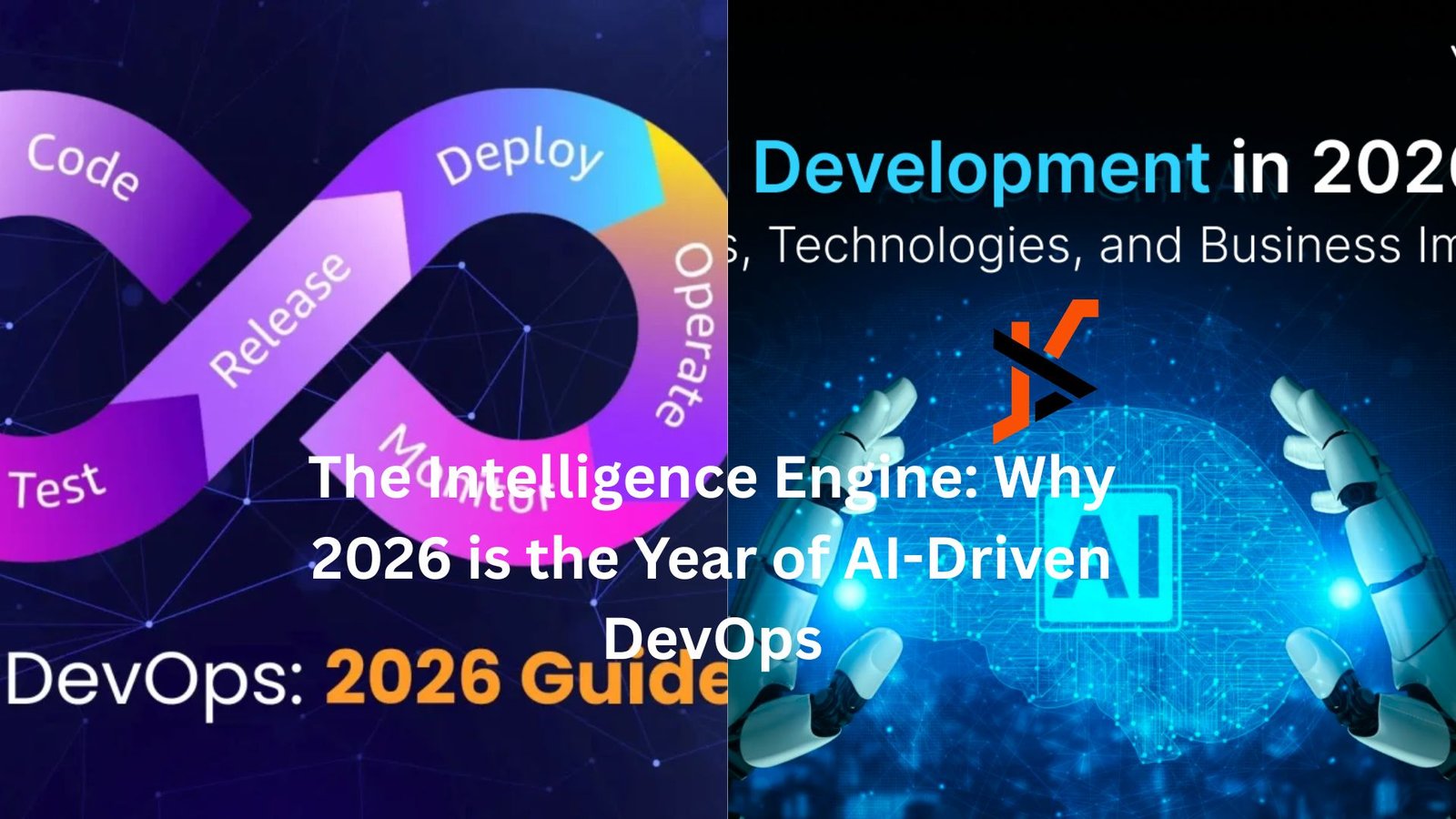
For the past decade, the goal of software engineering was “Velocity.” Today, that goal has shifted toward “Intelligent Autonomy.” As we move through 2026, enterprises are realizing that a standard CI/CD pipeline is no longer sufficient to handle the complexity of modern, distributed applications. The new competitive frontier is defined by the integration of custom AI Development Services with advanced devops development services.
This convergence is giving rise to a new era of “Intelligent Delivery,” where the infrastructure doesn’t just host the code—it understands it.
Beyond the Pipeline: The Rise of AIOps
The traditional DevOps model was built on static rules: if the build passes, deploy. However, as systems become more non-deterministic due to the integration of machine learning models, static rules are failing. This is where AI Development Services enter the operations space.
By leveraging machine learning development, firms are now building “AIOps” (AI for IT Operations) layers that can:
- Predict Failures Before They Occur: Instead of reacting to a server crash, AI models analyze telemetry data to spot patterns of degradation, triggering a preemptive fix.
- Self-Healing Infrastructure: When a microservice fails, the AI-integrated pipeline can automatically spin up a remediated instance or adjust load balancing without human intervention.
- Intelligent Log Summarization: In a world of “log fatigue,” AI agents can distill millions of lines of data into a single, actionable insight for the engineering team.
Modernizing Infrastructure with DevOps Development Services
While AI provides the brain, devops development services provide the central nervous system. In 2026, DevOps has evolved from simple scripting into “Platform Engineering”—the creation of internal developer platforms that provide standardized, self-service environments.
A mature DevOps service provider doesn’t just set up a pipeline; they build an elastic, self-scaling ecosystem. For a company like Jalasoft, this means ensuring that every project has access to Infrastructure as Code (IaC) that is inherently “AI-ready.” This includes:
- Dynamic Resource Allocation: Using AI to predict traffic spikes and scaling cloud compute resources before the lag hits.
- Governance as Code: Ensuring that AI models being deployed meet all security and compliance requirements automatically through the pipeline.
- Enhanced Observability: Moving beyond dashboards to “OpenTelemetry” standards that allow AI models to see across the entire stack, from the front end to the database.
The Strategic Synergy: Why One Needs the Other
The reason these two keywords are so closely linked in 2026 is that AI is both a product of the pipeline and a manager of the pipeline.
1. AI Needs a DevOps “Home”
Developing a powerful model is useless if it cannot be deployed, monitored, and versioned. Devops development services create the “MLOps” framework necessary to manage the lifecycle of an AI model, ensuring it remains accurate and doesn’t suffer from “data drift” over time.
2. DevOps Needs AI to Scale
As the number of services an enterprise manages grows into the hundreds, it becomes humanly impossible to monitor them all. AI Development Services provide the custom-tailored algorithms that allow a small DevOps team to manage a massive, global infrastructure with 99.99% uptime.
The Human Element: Moving from “Scripting” to “Orchestrating”
One of the biggest misconceptions about this transition is that it replaces the engineer. In reality, the integration of these services elevates the engineer. Instead of spending 60% of their time writing boilerplate YAML files or manually triaging bugs, the “Athletes” at firms like Jalasoft focus on higher-value tasks: defining quality guardrails, interpreting AI-driven insights, and improving the end-user experience.
In 2026, a DevOps engineer looks less like a mechanic and more like a conductor, leading an orchestra of automated and intelligent agents.
Conclusion: The Path to Autonomous Software
The companies that will lead the next decade are those that stop treating “AI” and “Operations” as separate departments. By investing in AI Development Services to build intelligence and devops development services to build the delivery engine, organizations can achieve a level of agility that was once considered science fiction.
The goal is no longer just “Continuous Integration,” but “Continuous Intelligence.” Whether you are building the next great LLM or a mission-critical fintech app, the intersection of these two fields is where your future-proofing begins.
