

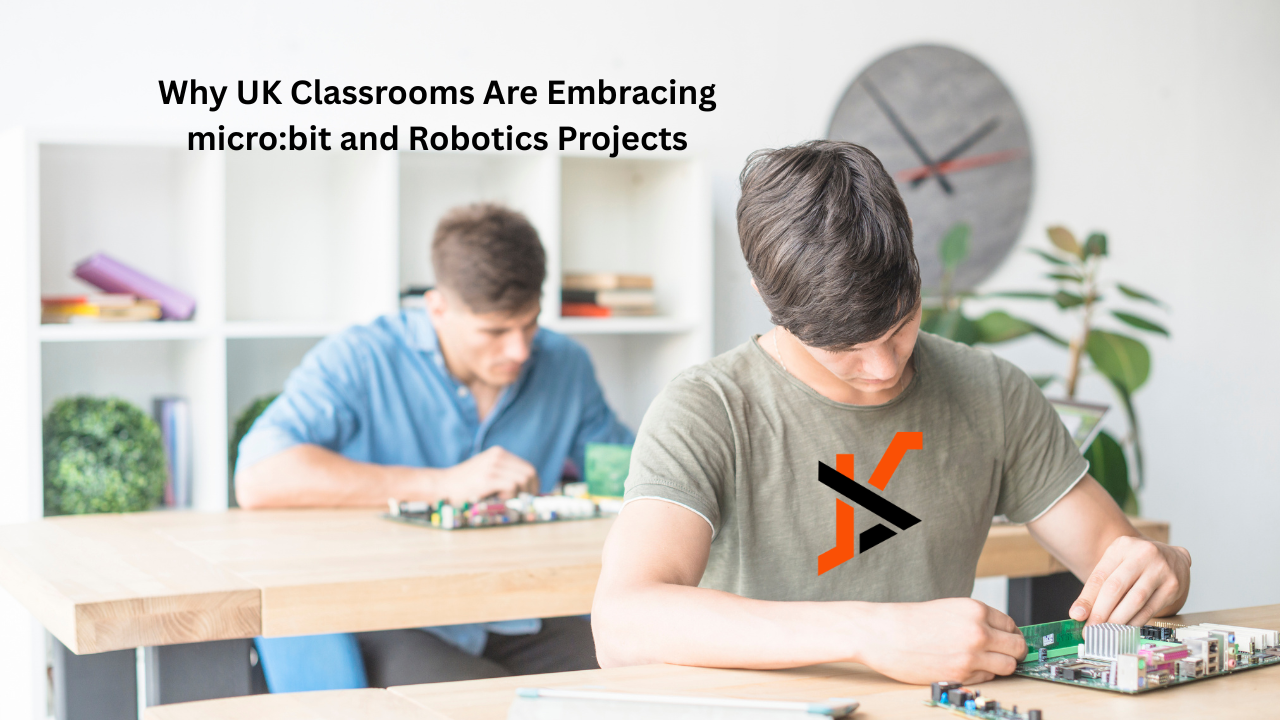
Across the United Kingdom, classrooms are rapidly transforming into interactive learning environments where students don’t just read about technology—they build it, code it, and test it. This shift is largely driven by the rise of micro:bit for schools, hands-on robotics kits, and project-based STEM learning that makes computing more engaging and practical.
At the heart of this movement is the BBC micro:bit, a compact programmable device designed specifically for education. When combined with modern robotics kits such as the ELECFREAKS micro:bit PU Robot Kit, classrooms gain powerful tools that bring coding and engineering concepts to life in a way textbooks never could.
The Rise of STEM Education in UK Schools
Over the past decade, STEM education UK has become a national priority. Schools are focusing more on science, technology, engineering, and mathematics to prepare students for a digital-first economy.
Instead of purely theoretical lessons, students are now encouraged to experiment, build, and solve real-world problems. This hands-on approach helps learners understand not just what technology does, but how it works.
Robotics and microcontroller-based learning are now central to this transformation, offering students a chance to interact directly with sensors, motors, and programmable systems.
Why micro:bit Is a Game-Changer for Classrooms
One of the main reasons micro:bit classroom projects are so widely adopted is accessibility. The micro:bit is affordable, beginner-friendly, and designed specifically for education, making it ideal for both primary and secondary school students.
Teachers across the UK use it because it supports both block-based coding and Python, allowing students to progress as their skills develop.
Common micro:bit classroom projects include:
- Digital dice and simple games
- Step counters and fitness trackers
- Environmental sensors (temperature, light, moisture)
- Smart alarms and motion detectors
- Basic programmable robots
These projects give students immediate visual feedback, which strengthens understanding and keeps engagement high.
Robotics Projects for Schools: Turning Code into Action
Robotics projects for schools take learning a step further by combining programming with mechanical design and electronics. Instead of only writing code on a screen, students see their instructions control real machines.
For example, kits like the ELECFREAKS micro:bit robotics range allow students to build:
- Smart cars that avoid obstacles
- Line-following robots
- Dancing humanoid robots
- AI-inspired robotic pets
- Remote-controlled machines via Bluetooth
These projects teach essential engineering concepts such as motion control, feedback loops, and sensor integration. They also help students understand debugging in a real-world context—if the robot fails, they must figure out whether the issue is code, wiring, or design.
Coding for Kids UK: Building Future Digital Skills Early
The growing emphasis on coding for kids UK is helping students develop computational thinking from an early age. Rather than memorizing syntax, learners focus on problem-solving, logic, and creativity.
The micro:bit ecosystem plays a key role here because it makes coding visual and interactive. Students can instantly see how changing a line of code affects a physical device.
This approach builds:
- Logical thinking
- Problem-solving skills
- Creativity and innovation
- Confidence with technology
By starting early, students gain a strong foundation for future careers in software development, engineering, AI, and data science.
Educational Robotics: Learning Through Creativity
Educational robotics is not just about technical knowledge—it also encourages creativity and collaboration.
In many classrooms, students are given open-ended challenges such as:
- Design a robot that helps in the classroom
- Build a machine that responds to sound or movement
- Create a device that solves an environmental problem
There is no single correct solution, which allows students to experiment and innovate freely.
Robotics also integrates naturally with other subjects:
- Science: understanding sensors and physical systems
- Maths: measuring distance, speed, and timing
- Design & Technology: building and prototyping structures
- Art: creative robot design and storytelling
This interdisciplinary approach makes learning more meaningful and engaging.
Why Teachers Are Fully Supporting This Shift
Educators across the UK are increasingly adopting micro:bit and robotics tools because they align with modern teaching goals.
Key benefits include:
1. Higher student engagement
Students are more excited when lessons involve building and interaction.
2. Easier concept understanding
Abstract coding ideas become visible and practical.
3. Stronger collaboration skills
Group robotics projects encourage teamwork and communication.
4. Real-world relevance
Students see direct connections between classroom learning and future careers.
5. Curriculum alignment
These tools support UK computing and STEM curriculum objectives.
The Role of Robotics Kits Like ELECFREAKS
Robotics kits are becoming essential in modern classrooms because they extend the capabilities of micro:bit. Products like the ELECFREAKS official store offer structured learning paths, tutorials, and ready-to-use components that make implementation easier for teachers.
The ELECFREAKS PU Robot Kit, for example, combines mechanical movement, sensors, and programmable logic, allowing students to explore real robotics concepts in a guided environment.
These kits reduce the barrier to entry, especially for schools that may not have advanced engineering resources.
Challenges in Adoption
Despite rapid growth, there are still challenges:
- Budget constraints for some schools
- Teacher training requirements
- Limited classroom time for project-based learning
- Maintenance of hardware kits
However, many of these challenges are being addressed through free online resources, community support, and scalable kit designs that allow shared usage across classrooms.
The Future of STEM Education in the UK
The future of STEM education UK is becoming increasingly hands-on, interactive, and technology-driven. As tools like micro:bit and robotics kits continue to evolve, students will likely work on even more advanced systems involving AI, automation, and smart devices.
What makes this shift important is not just the technology itself, but the mindset it builds—students learn to think like engineers, designers, and problem-solvers.
Conclusion
The growing adoption of micro:bit for schools, micro:bit classroom projects, and robotics projects for schools reflects a major transformation in UK education. By making learning interactive, creative, and practical, schools are preparing students for a future where digital skills are essential.
Through coding for kids UK initiatives and expanding use of educational robotics, classrooms are no longer just places for learning theory—they are becoming spaces for innovation, experimentation, and discovery.
FAQs
1. What is micro:bit and why is it used in UK schools?
micro:bit is a small programmable device designed for education. It is widely used in UK schools because it helps students learn coding and electronics through simple, hands-on micro:bit for schools activities that are easy to understand and fun to build.
2. What are some common micro:bit classroom projects?
Popular micro:bit classroom projects include digital dice, step counters, temperature sensors, alarm systems, and simple robots. These projects help students connect coding concepts with real-world applications.
3. How do robotics projects improve learning in schools?
Robotics projects for schools allow students to apply coding in physical systems like moving robots. This improves problem-solving, teamwork, and engineering thinking while making lessons more interactive and practical.
4. Why is STEM education important in the UK?
STEM education UK is important because it prepares students for future careers in technology, engineering, and science. It also helps develop critical thinking, creativity, and digital skills needed in a modern economy.
5. What is educational robotics and how does it help students?
Educational robotics combines coding, electronics, and mechanical design to create learning robots. It helps students understand how technology works while encouraging creativity, experimentation, and hands-on learning.
