

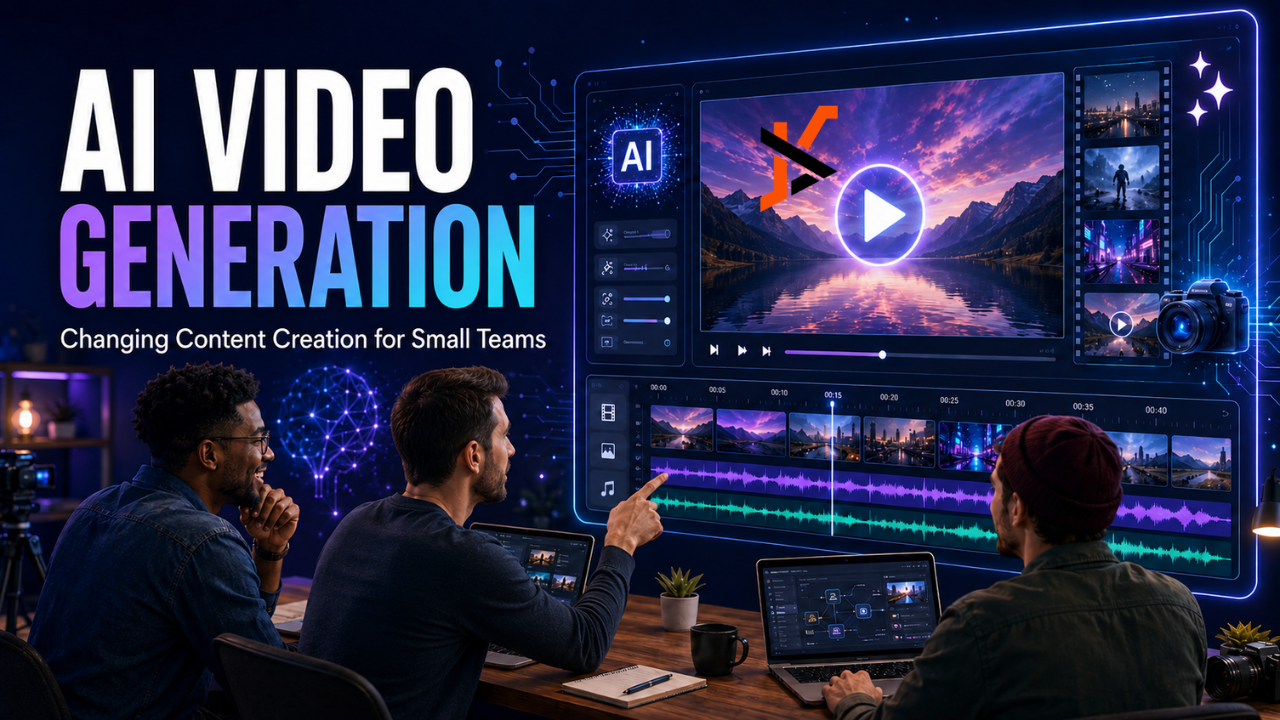
Creating video used to demand a substantial budget, specialist equipment and a team of editors. Even a short promotional clip could involve scripting, filming, lighting, voice recording and several rounds of post-production. For smaller businesses and independent creators, that process was often too expensive or time-consuming.
Generative AI is beginning to change the equation. Instead of building every scene from scratch, creators can now use existing images as the starting point for short videos. A product photograph can gain camera movement, a character illustration can be animated, and a static social post can become a more engaging clip.
This does not make traditional production obsolete. It does, however, give people a faster way to test ideas and produce content when a full shoot would be impractical.
From Static Images to Moving Scenes
Image-to-video generation is one of the most accessible applications of generative AI. The user uploads an image, describes the desired movement and lets a video model generate the surrounding frames.
The instructions can be relatively simple. A creator might ask for a slow camera push towards a product, gentle movement in a character’s hair, drifting clouds in a landscape or realistic motion within an illustrated scene.
The starting image gives the model a visual reference, while the prompt provides direction. This combination can offer more control than generating a scene entirely from text because the composition, subject and visual identity have already been established.
For businesses, it also means that existing assets can be reused. Product photography, campaign artwork, concept designs and social media graphics can all become raw material for new video content.
Why Small Teams Are Paying Attention
Large organisations can distribute video production across creative, marketing and production departments. Smaller teams rarely have that luxury. The same person may be responsible for campaign planning, design, publishing and performance analysis.
AI video generation can reduce some of this workload by making early-stage production more efficient. Instead of commissioning a complete video for every concept, a marketer can generate several short versions, compare them and develop the most promising direction.
Potential uses include:
- Animating product photographs for online adverts
- Creating short clips for TikTok, Instagram Reels and YouTube Shorts
- Turning illustrations into moving website visuals
- Producing alternative creative concepts for campaign testing
- Building simple storyboards before investing in full production
- Refreshing older visual assets for new channels
These workflows are especially useful when speed matters. Social media trends can move quickly, and a concept that takes weeks to produce may no longer feel relevant by the time it is published.
One Platform, Different Video Models
A challenge with generative video is that different models tend to excel at different tasks. One may handle realistic camera movement well, while another is better suited to stylised animation, dramatic motion or cinematic scenes.
Working with separate tools can become inconvenient. Creators may need to manage multiple accounts, learn several interfaces and move their assets between platforms.
Tools such as the Filtrix AI image-to-video generator address this by bringing a selection of video models into one workflow. Users can upload an image, choose a model and adjust elements such as motion, duration and style without building a traditional editing setup.
This flexibility matters because there is no universal model for every creative brief. A subtle product animation requires a different approach from a fantasy sequence or an energetic social video. Giving creators access to multiple options makes experimentation easier.
A Better Way to Test Creative Ideas
Perhaps the most practical benefit of AI video is not the final export but the ability to test ideas quickly.
Imagine that a retailer has one high-quality image of a new product. The marketing team could experiment with several treatments: a slow studio camera move, a lifestyle-inspired scene, a vertical social clip and a more dramatic advertisement. These variations can help the team decide which direction deserves further investment.
The same approach applies to entertainment and media projects. A filmmaker can animate concept art to communicate the atmosphere of a scene. A musician can explore visual ideas for a release. A designer can show how a character might move before committing to a longer animation.
This makes AI generation a useful pre-production tool even when the final project will still involve conventional filming or editing.
Where Human Direction Still Matters
AI video tools can accelerate production, but good results still depend on human judgement. The technology does not automatically understand a brand’s audience, tone or commercial objective.
The quality of the starting image is important. Clear subjects, good lighting and a deliberate composition usually provide a stronger foundation than a cluttered or low-resolution picture. Prompts also benefit from specificity. Describing the subject’s movement, camera behaviour and atmosphere gives the model more useful direction.
Creators should also review each output carefully. Hands, faces, text and complex interactions can remain difficult for generative systems. Brand details may shift between frames, and physical movement may not always look natural.
For commercial work, AI-generated footage should therefore go through the same basic quality checks as any other creative asset. Speed is valuable, but consistency and credibility still matter.
The Role of AI in the Wider Production Process
The most productive way to view AI video is as part of a broader creative toolkit. It can help during brainstorming, prototyping and short-form production, while conventional software remains useful for editing, sound design, colour correction and final assembly.
This hybrid workflow plays to the strengths of both approaches. AI handles rapid visual generation, while people make the strategic and editorial decisions.
Over time, the distinction between AI generation and traditional editing may become less obvious. Creative platforms are already combining generation, animation, effects and post-production within more unified workflows. For users, the underlying technology will matter less than whether the tool helps them produce the intended result.
Final Thoughts
AI video generation is lowering the barrier between having a visual idea and seeing it in motion. It gives small teams a practical way to animate existing assets, explore campaign concepts and create short-form content without organising a full production for every project.
The technology still has limitations, and strong creative direction remains essential. Yet its value is already clear: it helps people move from a static concept to a testable video much faster.
For creators and businesses facing growing demand for video, that faster route from idea to execution may be the most important development of all.
