

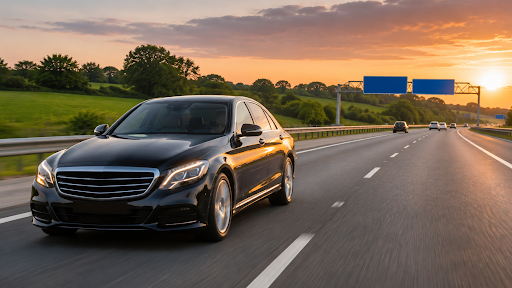
Most people only think about a long journey taxi when the original plan falls apart. A rail strike lands on the day of a wedding. A flight reaches Heathrow at midnight and home is 200 miles away. An elderly parent needs to move from Brighton to Bristol with three suitcases and a walking frame.
A long distance taxi can be a sensible first choice, though, not only a rescue plan. It is a pre-booked car, MPV or minibus that takes you from one address to another on a price agreed before you leave. There are no platform changes, no dragging cases through a busy station and no last bus to catch at the other end.
The headline price can look high until you split it between passengers and compare it with what the alternatives really cost. This guide explains what a UK long distance taxi costs, when it beats the train, when it does not, and what to check before you pay anyone.
What Counts as a Long Distance Taxi?
There is no legal definition. In practice, the phrase covers any private, door-to-door trip that goes well beyond normal local travel. That might mean London to Oxford, Heathrow to Manchester, or Glasgow to a cruise terminal in Southampton.
Search for a taxi long distance UK service and you will also see the terms long haul taxi, intercity taxi and long distance cab service. They all describe much the same thing: one vehicle, one driver and one route, with no need to change at any point.
Taxi, Minicab or Private Hire: Does the Word Matter?
Yes, slightly. In everyday speech, people use taxi and minicab to mean the same thing. Legally, they are different. A licensed taxi, or black cab, can be hailed in the street or picked up at a rank. A private hire vehicle, usually called a minicab, must be booked in advance through a licensed operator.
Long distance journeys are usually private hire bookings, because few people flag down a car on the street and ask for Leeds. That is also why the operator matters so much. In London, a private hire booking involves three separate licences: the operator, the driver and the vehicle.
Why Fixed Fares Matter on Long Trips
A meter works well across town. It works much less well on a motorway with an accident ahead. A long distance taxi service will normally quote a fixed price for the whole route, so a two-hour delay near Birmingham becomes the operator’s problem rather than yours.
That is the single biggest difference between a planned long trip and hailing a cab and hoping for the best.
How Much Does a Long Distance Taxi Cost in the UK?
For a saloon car, expect to pay roughly £1.50 to £1.60 per mile on the main routes out of London. That figure comes from the published guide fares of LTP Cars, a TfL-licensed private hire operator based in Dagenham. Other firms will differ, but it gives you a useful benchmark when you compare quotes.
| Route from Central London | Distance | Typical time | Saloon guide fare |
| Brighton | About 55 miles | About 1h 30m | From £85 |
| Cambridge | About 60 miles | About 1h 30m | From £95 |
| Oxford | About 60 miles | About 1h 30m | From £95 |
| Birmingham | About 120 miles | About 2h 30m | From £185 |
| Bristol | About 120 miles | About 2h 30m | From £185 |
| Leeds | About 195 miles | About 3h 45m | From £300 |
| Manchester | About 200 miles | About 4h | From £320 |
| Edinburgh | About 400 miles | About 7h | From £600 |
These are starting prices, not promises for every address. Your exact long distance taxi quote will depend on the pickup postcode, the destination postcode and the vehicle you choose.
The Per-Person Sum Changes Everything
A private car is priced per vehicle, while a train is priced per seat. That one difference explains most of the value.
Take London to Manchester. A saloon from £320 carrying three people works out at about £107 each. On that operator’s guide pricing, an MPV costs about £20 more, so around £340 shared between six people is about £57 each. Birmingham follows the same pattern: around £205 for an MPV, or about £34 each with six on board.
Solo travellers rarely win this calculation. Families and small groups often do, especially once you add parking, a taxi to the station and a taxi from the station at the far end.
What Moves the Price Up or Down
The distance sets the base fare, but several other things can change what you pay:
- Vehicle size. Estate cars, MPVs, executive cars and minibuses all cost more than a saloon.
- Tolls. The Dartford Crossing currently costs £3.50 for a car during charging hours, and the M6 Toll is the most expensive toll road in the country. Check whether your fare includes them.
- Airport charges. Drop-off and pickup fees can be added on top by some firms and included by others.
- Waiting time. A long stop at a hotel, hospital or relative’s house may be charged separately.
- Time of day. Some operators add a night premium. Others, including LTP Cars, charge the same at 3am as at 3pm.
Finding a Cheap Long Distance Taxi Without Getting Caught Out
People searching for the cheapest long distance taxi usually want the lowest final bill, not the lowest headline number. Those are not always the same thing.
A cheap long distance taxi quote that leaves out tolls, airport fees and waiting time can end up costing more than a higher, all-in fare. Ask for a written price that states what is included. Compare at least two or three quotes on the same vehicle size, and be cautious of any fare far below the going rate per mile. On a 200-mile trip, someone has to pay for the fuel, the driver’s time and usually the empty run home.
Long Distance Taxi or Train: Which Is Better?
The honest answer is that it depends on who is travelling and how much they are carrying. The train is often faster between city centres. London to Manchester takes a little over two hours by rail, while the same trip by road takes about four. London to Edinburgh is around four and a half hours by train and about seven by road.
A train also suits a solo traveller with a cheap advance ticket and a small bag. Nobody should book a 200-mile taxi for that trip unless there is a good reason.
The picture changes once you measure the whole journey rather than the part between two stations.
| Factor | Long distance taxi | Train |
| Pricing | Per vehicle | Per passenger |
| Pickup | Your address | The station |
| Changes | None | Often one or more |
| Luggage | Loaded for you | Carried by you |
| Delays | Road traffic | Cancellations and missed connections |
| Speed on main routes | Usually slower | Usually faster |
| Late-night travel | Available at any hour | Limited by the timetable |
When the Taxi Usually Wins
- You have three or more people sharing the fare.
- Your address is a long way from a mainline station.
- You have heavy luggage, a pushchair or mobility equipment.
- You need to travel overnight or very early in the morning.
- Your route needs two or more rail changes.
- You have a flight or a cruise to catch and cannot afford a missed connection.
When the Train Usually Wins
- You are travelling alone with light luggage.
- You are going from one city centre to another.
- You can book a cheap advance fare.
- You want to work at a table for the whole trip.
It is worth doing the sum both ways. Put in every ticket, the transfers at both ends and any parking. Then ask yourself how much the extra convenience is worth on that particular day.
Who Actually Books Long Distance Taxis?
Long distance taxis are not just for executives with generous expense accounts. Many bookings come from ordinary situations in which public transport is awkward.
Airport Travellers
This is a very common reason to book. A family flying home to Heathrow may land after the last sensible train has gone, with children asleep and four large cases to move. Someone in Birmingham may find a Gatwick flight far cheaper than one from a nearer airport, then discover how hard Gatwick is to reach at 4am.
Airport bookings should include flight monitoring, so that a delay does not leave you without a driver. Ask how much free waiting time is included after landing. An hour is a reasonable allowance for clearing passport control and baggage reclaim.
Families Moving Children and Luggage
A long trip with young children is a real test of any travel plan. You need space, regular stops and the right seats. UK law says children normally need a child car seat until they are 12 years old or 135cm tall, whichever comes first.
There is a limited exception for licensed taxis and private hire vehicles, but it was never designed for a seven-hour motorway run. Ask for the correct seat when you book. Availability varies by vehicle type, and many operators charge for it. LTP Cars, for example, charges £15 per seat and fits them in its MPV range rather than its saloon or estate cars.
Students, Relocations and Hospital Trips
Students moving between university cities such as Oxford and Cambridge often have more belongings than a train can comfortably handle. People relocating for work may need one trip with everything they own for the first few weeks. Older passengers travelling to a specialist hospital may simply need a calm, direct journey with a driver who helps at both ends.
Business Travellers and Teams
A private car gives a business traveller something a busy train cannot always offer: a quiet space for phone calls, with no connection to miss. Teams heading to a conference or roadshow can travel together and arrive at the same time. Companies that make regular trips may prefer an account with monthly invoicing, which keeps the paperwork simple.
How to Choose the Right Vehicle
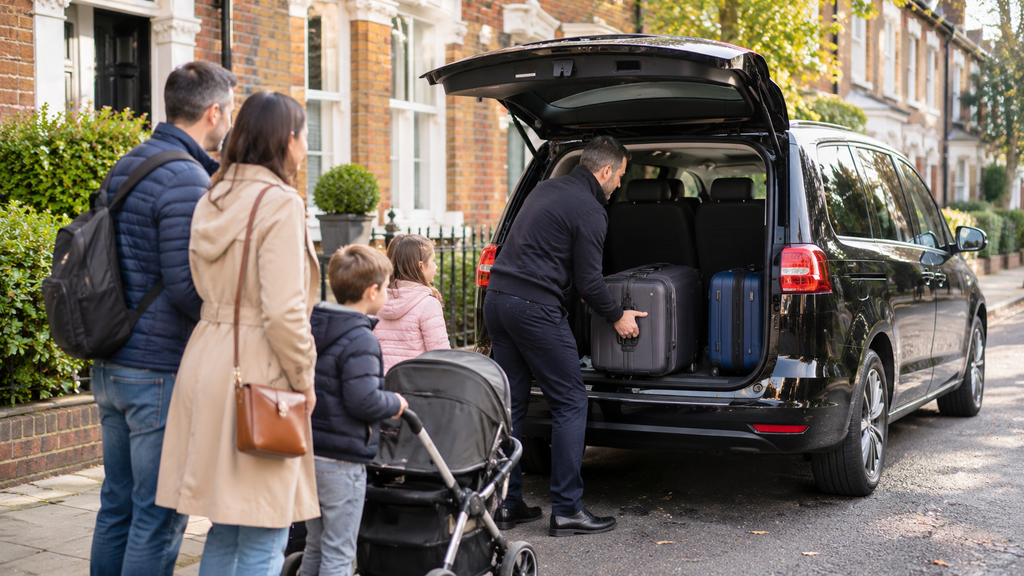
Getting the vehicle right matters more on a long trip than a short one. Three adults can tolerate a tight squeeze for 20 minutes. Nobody wants that for four hours. As a rule, book for the luggage as well as the people.
| Vehicle | Passengers | Best for |
| Saloon | Up to 3 | Everyday intercity trips and airport runs |
| Estate | Up to 3 | Heavier luggage and small moves |
| MPV | Up to 6 | Families, child seats and shared fares |
| Executive car | Up to 3 | Business travel and extra comfort |
| Minibus | 8 to 24 | Wedding parties, sports teams and work groups |
| Coach | Up to 70 | Large events and school trips |
Exact capacities differ between operators, so give your passenger and luggage numbers when you ask for a price. Mention golf bags, pushchairs, wheelchairs, skis and musical instruments too. These items are often what decides the vehicle, not the headcount.
If you are looking for a large taxi in London, an MPV is usually the first step up. Booking one is also how you solve a common problem: four adults with four large cases will not fit comfortably in a standard car. On a long distance route, paying a small amount extra for an MPV is usually far better than discovering the problem on the pavement.
For bigger groups, one minibus normally costs less and is easier to manage than two or three cars. Everyone arrives together, and there is one point of contact if plans change.
How Technology Has Changed the Way We Book Long Journeys
Not long ago, a long distance fare meant ringing round local firms and writing a price on the back of an envelope. Today, most of the process happens on a phone, and the technology has quietly removed many of the old risks.
Instant Online Quotes
Booking systems can now calculate a postcode-to-postcode fare in seconds. You can compare several operators in the time it once took to get through to one. It also means the price is in writing before you commit, which leaves far less room for an argument at the end of the trip.
Live Flight Tracking
Flight data feeds allow an operator to see that your plane is running 90 minutes late and adjust the pickup. This has made long airport transfers far more dependable, because the driver works from your real landing time rather than the one printed on your ticket.
Live Traffic Routing
Navigation apps can spot a motorway closure and suggest a way around it long before a driver reaches the queue. On a four-hour trip, that can save a great deal of time. With a fixed fare, the benefit goes to the passenger and the risk stays with the operator.
Messaging and Driver Details
WhatsApp bookings, automatic confirmations and driver details sent before pickup have all made the service more transparent. You know the driver’s name, the vehicle and the registration before it arrives. That is both a convenience and a basic safety check.
What to Check Before You Book a Long Distance Taxi
A few simple questions will separate a dependable operator from a risky one. Run through these before you pay, whichever firm you choose.
1. Is the Operator Licensed?
This comes first. For a long distance taxi in London, check that the operator is licensed by Transport for London. TfL has a free online licence checker covering operators, drivers and vehicles. Elsewhere in the UK, operators are licensed by the local council.
Drivers licensed by TfL also go through an enhanced DBS check. Never accept a lift from someone who approaches you offering a cheap ride. A private hire journey that has not been pre-booked through an operator is not a legal private hire journey.
2. What Exactly Does the Fare Include?
Get the answer in writing. Ask about tolls, airport charges, waiting time and extra stops. A good quote should tell you what is included without you having to chase the details.
3. How Does the Operator Plan Long Drives?
This is the question most people forget. Unlike bus and lorry drivers, taxi and private hire drivers have no statutory cap on their working hours. So it is fair to ask how a seven-hour trip will be managed. Ask when the breaks will be, whether the driver has already worked that day, and whether comfort stops cost extra.
A professional long distance taxi service will answer without hesitation. Stops should be built into the plan, not treated as a favour.
4. What Is the Cancellation Policy?
Plans change, particularly with flights and hospital appointments. Check how much notice you need to give. Free cancellation up to 24 hours before pickup is a fair standard, though a charge may apply inside that window.
5. Can the Vehicle Take Everything?
Confirm the passenger count, the number of large cases and any child seats. Repeat these details in your booking message, so that there is a written record if the wrong car turns up.
6. How Do You Book a Long Distance Taxi?
The process is usually simple:
- Enter your pickup and drop-off postcodes to get a quote.
- Choose a vehicle that suits your passengers and luggage.
- Add any extras, such as child seats or a stop along the way.
- Confirm your booking and keep the written confirmation.
- Check the driver and vehicle details when they arrive before pickup.
For peak dates, early flights and minibuses, book as far ahead as you reasonably can. A day’s notice is a sensible minimum for an important trip.
Frequently Asked Questions
How Far Will a Taxi Go in the UK?
A pre-booked private hire operator can often cover almost any mainland UK route, provided the journey is agreed in advance. London to Edinburgh is a real example at about 400 miles. Always confirm this directly with the operator, as not every firm takes very long trips.
Is a Long Distance Taxi Cheaper Than the Train?
For one person, usually not. For three or more people, it can be, especially at peak times or when the journey includes station transfers and parking. The fare is shared, while train tickets are multiplied.
Can I Book a Long Distance Taxi One Way?
Yes. One-way bookings are normal, and returns can usually be booked at the same time. Ask for both prices if you know your return date.
Can I Stop During the Journey?
Yes, on longer trips the driver should plan comfort stops. If you want an extra stop to collect someone or make a detour, mention it when booking, as it may change the fare.
How Far in Advance Should I Book?
At least 24 hours is sensible for airport runs and early starts. Many operators accept short-notice bookings, but your preferred vehicle may not be available.
Final Thoughts
A long distance taxi will not suit every trip. If you are alone, travelling light and going between two city centres, the train is hard to beat. But when you have people to share the fare, heavy bags, an awkward address or a flight that leaves no room for error, a pre-booked car can be the simpler and sometimes cheaper option.
The key is to compare the whole journey, not just one headline fare. Check the licence, get the price in writing, choose a vehicle with room to spare and ask how the driver’s breaks will work. Do that, and a long road trip becomes one less thing to worry about.
