

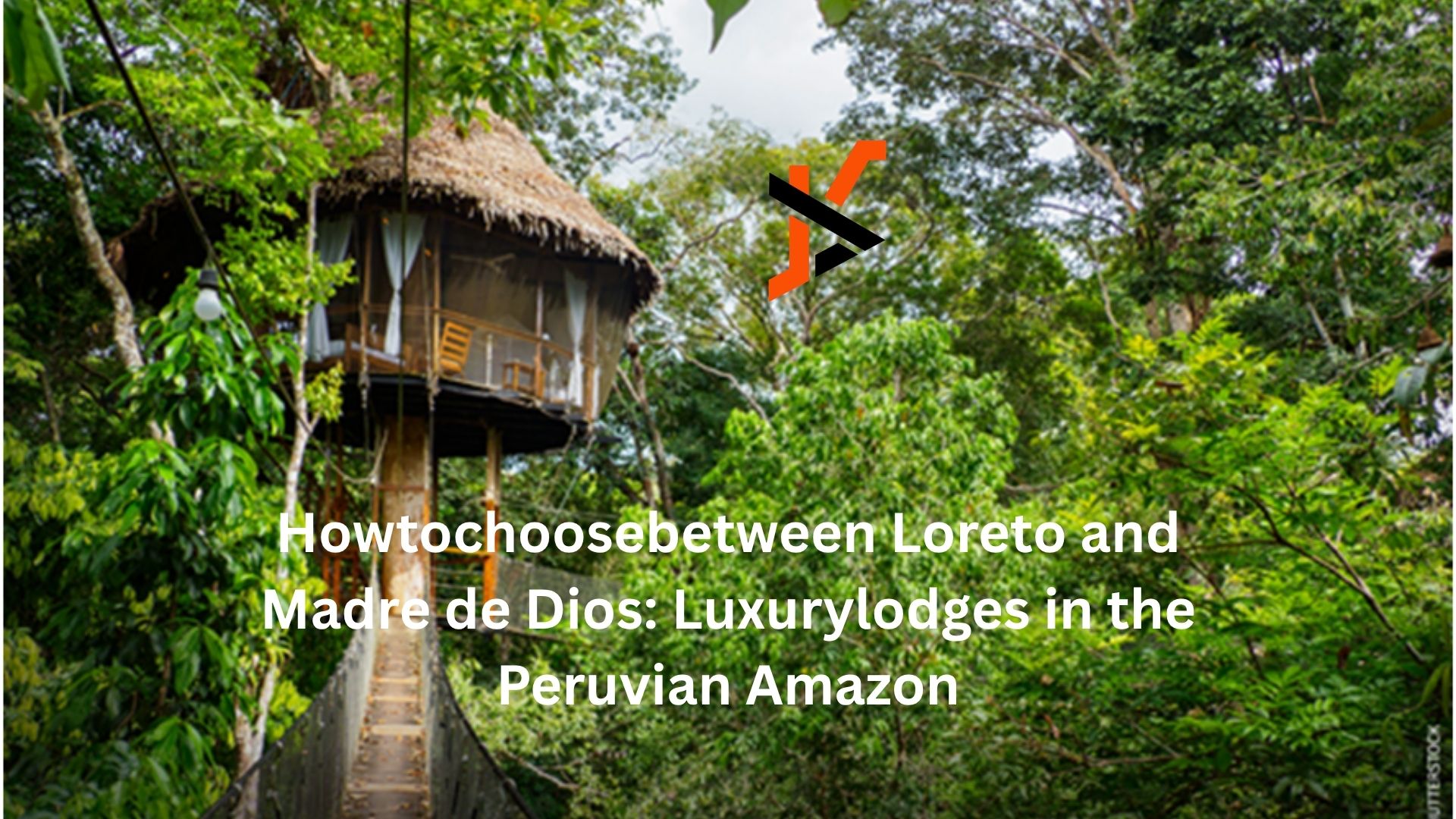
Choosing the right lodge in the Peruvian Amazon begins long before arriving at the room. The difference often lies in the type of experience each region offers and in the way each accommodation connects with the surrounding rainforest. In Loreto, the experience is shaped by the Amazon River, its waterways, and reserves accessible mainly by boat. In Madre de Dios, by contrast, the journey unfolds along Amazon paths, oxbow lakes, lagoons, clay licks, and dense rainforest.
Loreto, a rainforest shaped by the river
In Loreto, the experience is usually centered around the Amazon River, its waterways, and the Allpahuayo Mishana National Reserve. Access already sets the tone from the beginning. While some routes combine road travel to Nauta followed by river navigation, most experiences depart from Bellavista Nanay, north of Iquitos. From there, journeys move along the Nanay and Momon rivers, as well as the Amazon itself, in expeditions that can last one or several days. This constant connection with the river turns the stay into a slower, quieter experience, closely connected to the natural rhythm of the rainforest.
For this reason, Loreto is especially suited for travelers seeking privacy. There are secluded lodges and programs aboard small cruise vessels designed to navigate the Amazon River and its waterways, with itineraries of varying length, as well as more intimate elevated options where each group can have its own guide and a more personalized experience. In this context, it is worth paying attention to transfer times, the number of guests per departure, and the level of isolation each lodge truly offers, as much of its appeal lies in this gradual separation from the urban world.
Design also plays an important role in this part of the Amazon. In Loreto, elevated lodges appear among the trees, with walkways and hanging bridges that bring guests closer to the forest canopy and ensure the surroundings remain the main focus even during the stay. The best choice is usually the one that combines comfort, open views, and warm materials without breaking the sense of being deep in the rainforest. To this are added excursions that are best experienced with an expert guide, along Amazon trails, river navigation, and night outings, where wildlife reveals itself differently depending on the time of day.
Comfort inside the lodge takes on a different meaning here. In this environment, ostentation matters less than how the stay resolves rest, climate, silence, and a sense of flow. It is worth paying attention to ventilation, protection against insects, the spacing between rooms, the presence of terraces or contemplative areas, and how well each daily service is integrated. When everything is well resolved in this way, Loreto offers a slower, more river-based, and more contemplative rainforest experience.
Madre de Dios, a rainforest of observation and movement
Madre de Dios, by contrast, offers a different dynamic. Here, the journey unfolds along Amazon paths, lagoons, oxbow lakes, clay licks, and easily accessible rainforest, with an experience much more closely tied to walking, observing, and listening. From Puerto Maldonado, travel continues by river, and depending on the route, it is combined with hikes, lakes, clay licks, or deeper areas of the forest. This combination of navigation and trails makes the rainforest feel closer, more active, and more varied throughout the day.
The same logic also shapes how the lodge is chosen. The relative proximity to Puerto Maldonado and the variety of areas within Tambopata make it possible to build accommodations with more active itineraries, where the accommodation can feel remote without being completely disconnected. Here, it is worth paying close attention to how close the Amazon paths, clay licks, lakes, or observation towers are, as the quality of the experience depends greatly on how well excursions are balanced with rest time.
Design also supports this way of experiencing the rainforest. In Madre de Dios, the network of eco-lodges coexists with interpretive trails, observation towers, and canopy experiences, as well as routes to places like Lake Sandoval, where elevated walkways and panoramic viewpoints add to the landscape. All of this creates an appealing stay, where the lodge not only provides rest, but also serves as a comfortable base for moving easily between different forest settings.
Guided excursions play a decisive role in this region. Routes can range from lakes near Puerto Maldonado to clay licks and river areas where it is possible to observe river otters, monkeys, birds, caimans, and, with some luck, larger mammals. There are also experiences related to canopy activities and observation towers. Rather than the number of activities, what truly matters is their quality, the size of the group, and how the lodge organizes the flow between departure, pause, and return.
In the end, the best stay in the Peruvian Amazon depends on the alignment between the lodge’s offering and the way you want to experience the rainforest.
