

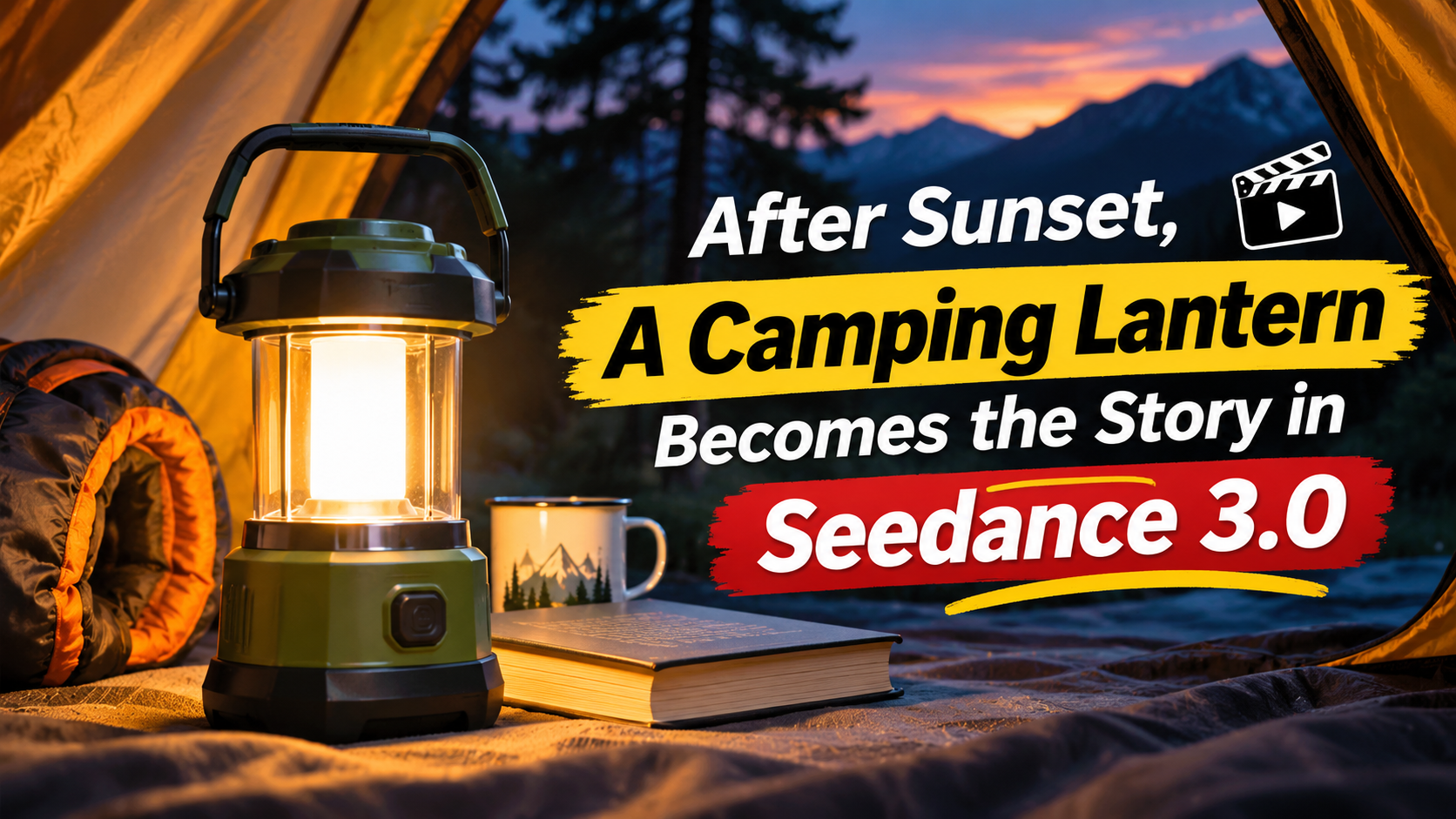
A camping lantern looks ordinary in a catalogue photograph. Its purpose becomes clearer when a tent entrance opens onto darkness and the small pool of light inside feels inviting. That would be my starting point for a short product film: a quiet arrival at camp, followed by the simple act of making a temporary space comfortable. The lantern would remain visible throughout, rather than disappearing behind spectacular scenery.
For this proposed film, I would gather photographs of one real lantern, an authorised image of a tent interior, a brief outdoor camera reference, and a recording of fabric moving in a breeze. The deliverable would be a concise website video with a separate vertical edit.
The first creative question is how much of the campsite to show. A broad mountain panorama might look impressive, but it would make the lantern tiny. I would start closer: a rolled sleeping bag on one side, a tent seam behind the product, and enough dark space to make the light noticeable. The scene should suggest a place to rest without inventing a dramatic expedition around it.
That transition from an isolated product photograph to a moving campsite scene is where seedance 3.0 fits this concept. Its video-generation approach supports text, image, and combined reference material, including video and audio. I would assign each reference a clear job: the lantern photograph establishes appearance, the tent image establishes setting, and the moving reference suggests camera pace. A descriptive prompt connects those ingredients to one specific shot.
Choose a photograph that survives movement
My main product reference would show the handle, base, and light housing clearly. An image with dramatic glare can hide the very details that distinguish the object. I would favour soft, even lighting during reference preparation, then describe the desired evening atmosphere separately. The photograph should explain the lantern before the generated scene asks it to perform any visual storytelling.
I would also collect a second view for comparison, even if it does not belong in the first generation. A handle that appears solid from the front may have a distinctive opening from the side. Keeping both views nearby would help me inspect whether the moving image preserves the shape. Product labels and small controls deserve particular attention; attractive motion does not make altered details acceptable.
The tent reference would be deliberately uncluttered. A cup, a sleeping bag, and one folded jacket provide enough context. Several backpacks, hanging utensils, and overlapping ropes would create competing edges around the lantern. I would place the object slightly off centre, leaving a darker area for a short caption added later in the edit. Generating the caption inside the scene would introduce an unnecessary source of errors.
Let the light reveal the setting
My opening shot would hold near the lantern while the camera makes a very small forward move. The intended effect is discovery: the viewer notices the object, then the surrounding fabric and sleeping bag. In Seedance 3.0, I would describe a steady camera and a restrained glow rather than asking for simultaneous orbiting, rising, and zooming. One controlled motion gives the scene a readable centre.
My Seedance 3.0 shot brief might read: a compact camping lantern resting securely on a flat tent floor, warm light illuminating nearby fabric, dark blue evening beyond the open entrance, slow forward camera movement, unchanged product shape, quiet atmosphere. I would keep the entrance in the background instead of placing the lantern against a busy horizon. That contrast makes the warm interior easier to understand.
If the first version makes the light pulse or turns the tent walls into moving waves, my revision would simplify the action. I would reduce camera movement, specify steady illumination, and choose a clearer setting reference. If the lantern itself changes shape, I would prioritise a shorter shot or return to genuine product footage. The story does not require every frame to be generated.
A real action gives the middle section purpose
The next shot would show the practical moment: someone places a book beside the lamp and settles into the space. I would film the hand and book directly if their interaction needs precise control. The generated establishing shot could then lead into that genuine action through a straightforward cut. Matching the direction of light matters more here than inventing an elaborate transition.
This is also where I would avoid turning mood into a performance claim. A bright-looking scene does not demonstrate battery life, weather resistance, or measured output. Any factual product information would come from verified specifications and appear separately. Seedance 3.0 would support the atmosphere of the film, while real footage and accurate copy would carry the details a customer might rely on.
To connect the two shots, I would compare the lantern’s position and the colour of the tent fabric. If the opening places it near the left seam, the next shot should not move it to the opposite corner without explanation. A small adjustment to the crop may solve the mismatch. Otherwise, I would revise the establishing shot around the genuine action rather than forcing the action to match an unreliable frame.
Build a soundtrack around small sounds
The soundtrack could begin with the soft movement of the tent opening, then settle into a low outdoor ambience. I would use recordings I own or have permission to use. An audio reference can suggest the pace of the scene, but the final mix still needs a deliberate balance. Loud wind would contradict the feeling of shelter, even if it initially seems more cinematic.
With Seedance 3.0, I would explore how the reference rhythm informs a short visual passage, then judge the result in the edit. Exact sound cues would be placed manually where necessary. The book touching the ground could mark the cut to the wider view; a short silence could make the final product frame feel settled. Music would remain optional rather than covering every quiet moment.
Make the vertical edit feel intentional
The Seedance 3.0 phone version needs its own framing. I would keep the lantern and tent opening on a shared vertical line, with the book entering from the lower edge. A simple crop might lose the entrance and leave an unexplained orange background. Planning both compositions early would save a later attempt to rescue missing visual information.
Before exporting, I would review the chosen Seedance 3.0 scenes at normal speed and compare them with the product photographs. The handle, base, brightness transitions, and contact with the ground all need to remain believable. I would also watch without sound: the film should still communicate arrival, comfort, and a clear view of the lantern. Any essential message would be added as readable text in the edit.
The ending would return to a still, simple composition: lantern in the foreground, book beside it, and the tent opening beyond. A brief product name could appear in the dark area reserved earlier. The finished video would offer one coherent picture of the object’s place in an evening outdoors. That modest story gives the product room to be seen, while careful reference selection and revision keep the moving images connected to the real thing.
