

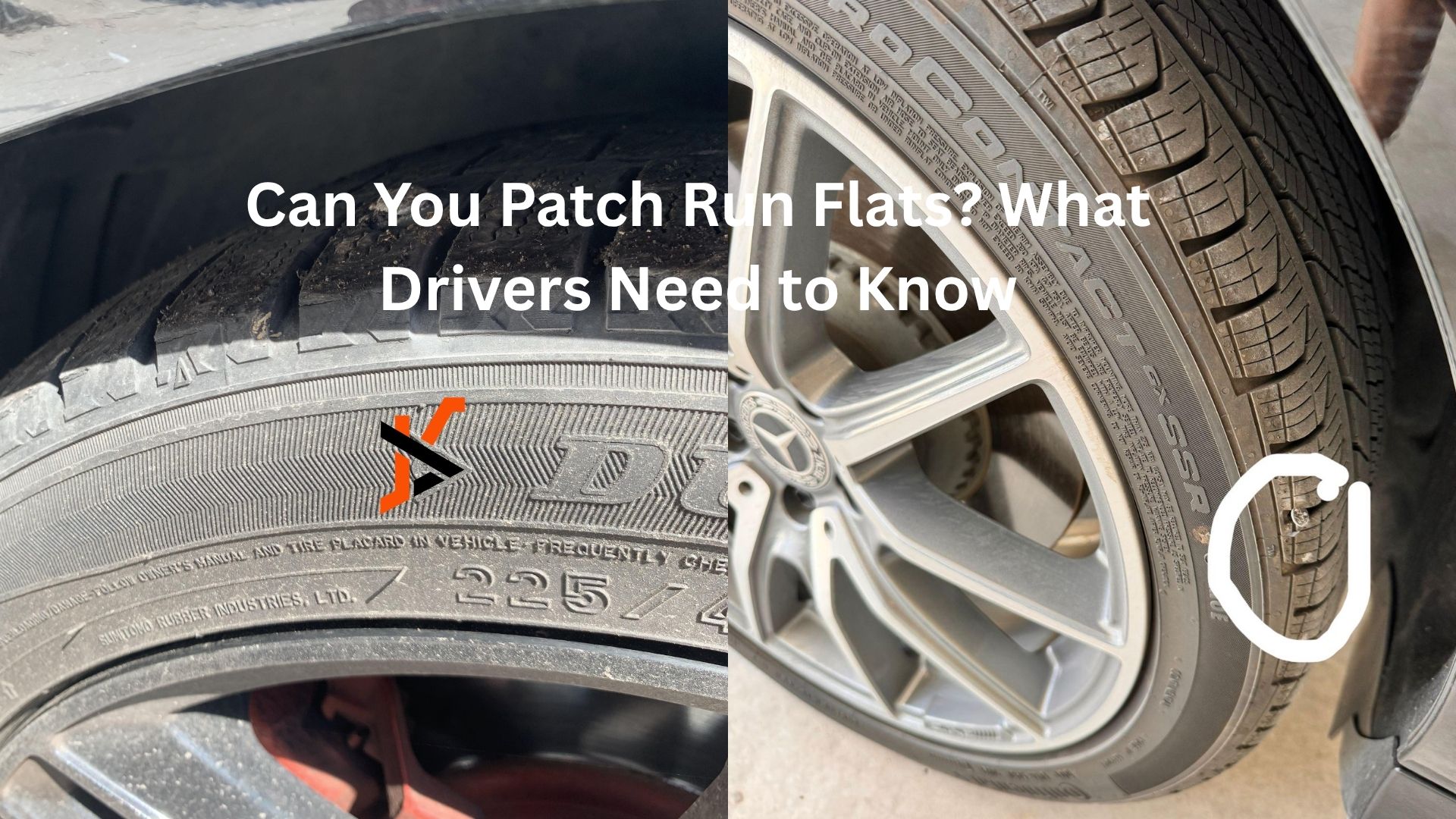
Few tire questions create more confusion than this one: can you patch run flats?
You get a warning light on the dashboard, pull over, inspect the tire, and find a small nail stuck in the tread. At first glance, it doesn’t look serious. A regular tire would often be patched and back on the road within an hour.
Run-flat tires, however, play by slightly different rules.
Some drivers hear that run flats can never be repaired. Others are told they’re repairable just like any normal tire. The truth sits somewhere in the middle, and understanding that difference could save you money while also keeping you safe.
If you’ve recently picked up a puncture or you’re simply trying to understand how run-flat tires work, it’s worth looking beyond the common myths. The answer depends on where the damage occurred, how far the tire was driven after losing air, and what the tire manufacturer recommends.
Table of Contents
- What Are Run-Flat Tires?
- Can You Patch Run Flats?
- Why Driving Distance Matters
- When a Run-Flat Tire Can Be Repaired
- Situations Where Repair Is Not Safe
- How Tire Shops Inspect Run Flats
- Patch vs Plug: What’s the Difference?
- What Major Tire Manufacturers Say
- Is Repairing a Run Flat Worth It?
- How to Prevent Future Run-Flat Damage
- Final Thoughts
What Are Run-Flat Tires?
Run-flat tires are designed to keep supporting the vehicle even after a loss of air pressure.
Unlike standard tires that quickly become unsafe when punctured, run flats have reinforced sidewalls. These stronger sidewalls help carry the vehicle’s weight for a limited distance after a puncture.
Most run-flat systems allow drivers to continue traveling somewhere between 50 and 100 miles at reduced speeds, usually around 50 mph.
Picture driving home from work and suddenly seeing a tire pressure warning. With a conventional tire, you might be stuck on the roadside waiting for assistance. A run-flat tire often lets you reach a repair shop safely without changing a tire on the shoulder of a busy highway.
That’s the major advantage.
The downside is that the internal structure of the tire may suffer damage while operating without air.
And that’s exactly why the repair question becomes complicated.
Can You Patch Run Flats?
Yes, some run-flat tires can be patched, but only under specific conditions.
The key word is “some.”
A puncture located in the center tread area may be repairable if the tire wasn’t driven too far while deflated and if internal inspection shows no structural damage.
Many people assume that every run-flat tire must be replaced after a puncture. That’s not always true. On the other hand, treating every run flat like a standard tire isn’t correct either.
Professional inspection matters.
A tire technician needs to remove the tire from the wheel and examine the inside carefully. If heat buildup or sidewall damage is present, repair usually isn’t recommended.
Here’s the thing: the exterior may look perfectly fine while hidden internal damage tells a completely different story.
Why Driving Distance Matters
One factor matters more than most drivers realize.
How far did you drive after losing air pressure?
Run-flat tires are engineered to function temporarily without air, but they’re not invincible. The longer they’re driven while deflated, the more stress builds inside the tire.
Imagine carrying a heavy backpack for five minutes versus carrying it all day. The strain adds up.
The same principle applies to a run-flat tire.
Driving several miles after a puncture may still leave the tire repairable. Driving fifty miles at highway speeds could create excessive heat and weaken internal components.
Unfortunately, many drivers don’t notice exactly when the puncture occurred. Sometimes a nail enters the tire in the morning, and the warning light doesn’t appear until much later.
That’s why inspection becomes critical.
A technician can’t simply look at the puncture and make a decision. The tire’s internal condition tells the real story.
When a Run-Flat Tire Can Be Repaired
There are situations where repair is considered acceptable.
Generally, a run-flat tire may qualify for repair when:
- The puncture is located in the tread area.
- The hole is relatively small.
- Sidewalls remain undamaged.
- Internal inspection shows no structural issues.
- The tire wasn’t driven excessively while flat.
Many repairable punctures come from nails, screws, or similar road debris.
For example, let’s say you leave a shopping center and notice the tire pressure warning within a few minutes. You drive directly to a tire shop nearby. The technician removes the tire and finds a small nail in the center tread with no internal damage.
In that case, repair may be possible.
A quality patch-plug repair performed from the inside often restores safe operation when all conditions are met.
Not every situation ends with buying a new tire.
Situations Where Repair Is Not Safe
Now let’s look at the other side.
Some run-flat tires should absolutely be replaced.
Damage near the shoulder area is one common reason. This section of the tire experiences significant stress, making repairs less reliable.
Sidewall punctures are another major issue.
Because run-flat sidewalls carry the vehicle’s weight after air loss, even minor sidewall damage can compromise safety.
Internal deterioration also causes problems. When a run-flat operates without sufficient air pressure, heat builds rapidly. Excessive heat may damage internal reinforcement materials that aren’t visible from the outside.
A repair can’t reverse that kind of structural damage.
Let’s be honest. Saving money on a repair isn’t worth risking a tire failure at highway speed.
When technicians recommend replacement after a thorough inspection, they’re usually responding to conditions that can’t be safely fixed with a patch.
How Tire Shops Inspect Run Flats
Many drivers are surprised by how involved the inspection process can be.
The tire must be removed from the wheel.
This isn’t just a quick glance with a flashlight.
Technicians inspect the inner liner, look for signs of overheating, search for cracking, and evaluate whether the tire’s structure remains intact.
Certain warning signs immediately raise concerns:
Heat Damage
Discoloration, melted areas, or visible degradation inside the tire often indicate the tire has been driven too long while underinflated.
Sidewall Distortion
Wrinkles, creases, or unusual wear patterns may suggest structural weakening.
Internal Debris
Rubber dust or loose internal material can signal significant damage.
Without removing the tire, these issues can easily remain hidden.
That’s why reputable shops won’t decide based solely on an external inspection.
Patch vs Plug: What’s the Difference?
People often use the words interchangeably, but they’re not exactly the same.
A simple plug is inserted through the puncture from outside the tire. While it may temporarily stop air loss, many tire manufacturers don’t consider it the preferred permanent repair.
A patch is applied from inside the tire.
Many professional repairs use a combination patch-plug unit that seals the puncture path while reinforcing the damaged area internally.
For run-flat tires, professional internal repair methods are generally favored whenever repair is approved.
The cheap parking-lot plug kit you keep in the trunk might help in an emergency, but it shouldn’t replace a proper inspection and repair process.
What Major Tire Manufacturers Say
Manufacturer guidance varies.
Some brands permit repair under strict conditions. Others are more conservative.
Bridgestone, Michelin, Continental, Pirelli, and Goodyear have all published recommendations over the years regarding run-flat repair procedures, but the exact rules can differ depending on tire model and design.
That’s important because two run-flat tires may not have identical repair standards.
A technician should always consult current manufacturer guidelines before approving repairs.
If you’re unsure about your specific tire, checking the manufacturer’s documentation is the safest approach.
Blindly relying on advice from online forums can lead to confusion because people may be talking about completely different tire models.
Is Repairing a Run Flat Worth It?
For many drivers, this comes down to cost.
Run-flat tires are often more expensive than conventional tires. Replacing one can feel frustrating when the puncture appears small.
If inspection confirms the tire is safe to repair, patching it can provide excellent value.
However, there are situations where replacement makes more sense.
Suppose a tire has already accumulated substantial wear and is nearing the end of its lifespan. Spending money on repair may not be the smartest long-term choice.
Vehicle type matters too.
Luxury vehicles and performance cars often place significant demands on their tires. In some cases, maintaining optimal performance and safety may justify replacement rather than repair.
Every situation deserves individual evaluation.
There’s no universal answer that fits every vehicle, tire model, and puncture scenario.
How to Prevent Future Run-Flat Damage
Run-flat technology helps when punctures happen, but prevention remains the best strategy.
Check tire pressure regularly even if your vehicle has a monitoring system.
Pressure monitoring systems are helpful, yet they aren’t a substitute for routine checks.
Avoid potholes whenever possible. Sharp impacts can damage both standard and run-flat tires.
Inspect tires periodically for nails, screws, or unusual wear.
Many drivers discover punctures before major air loss occurs simply because they noticed something embedded in the tread during a quick visual check.
Good tire maintenance often prevents small issues from becoming expensive problems.
Final Thoughts
So, can you patch run flats?
The answer is yes—sometimes.
A run-flat tire with a small tread-area puncture and no internal damage may be safely repaired after professional inspection. At the same time, sidewall damage, excessive driving while deflated, or signs of structural deterioration usually mean replacement is the better option.
What matters most isn’t the puncture itself. It’s the condition of the tire after the puncture occurred.
Whenever a run-flat loses pressure, have it inspected by a qualified technician as soon as possible. A careful assessment can reveal whether a repair is safe or whether replacement is necessary.
That extra step may save money, prevent unnecessary risk, and help you get the most life from your tires without compromising safety.
