

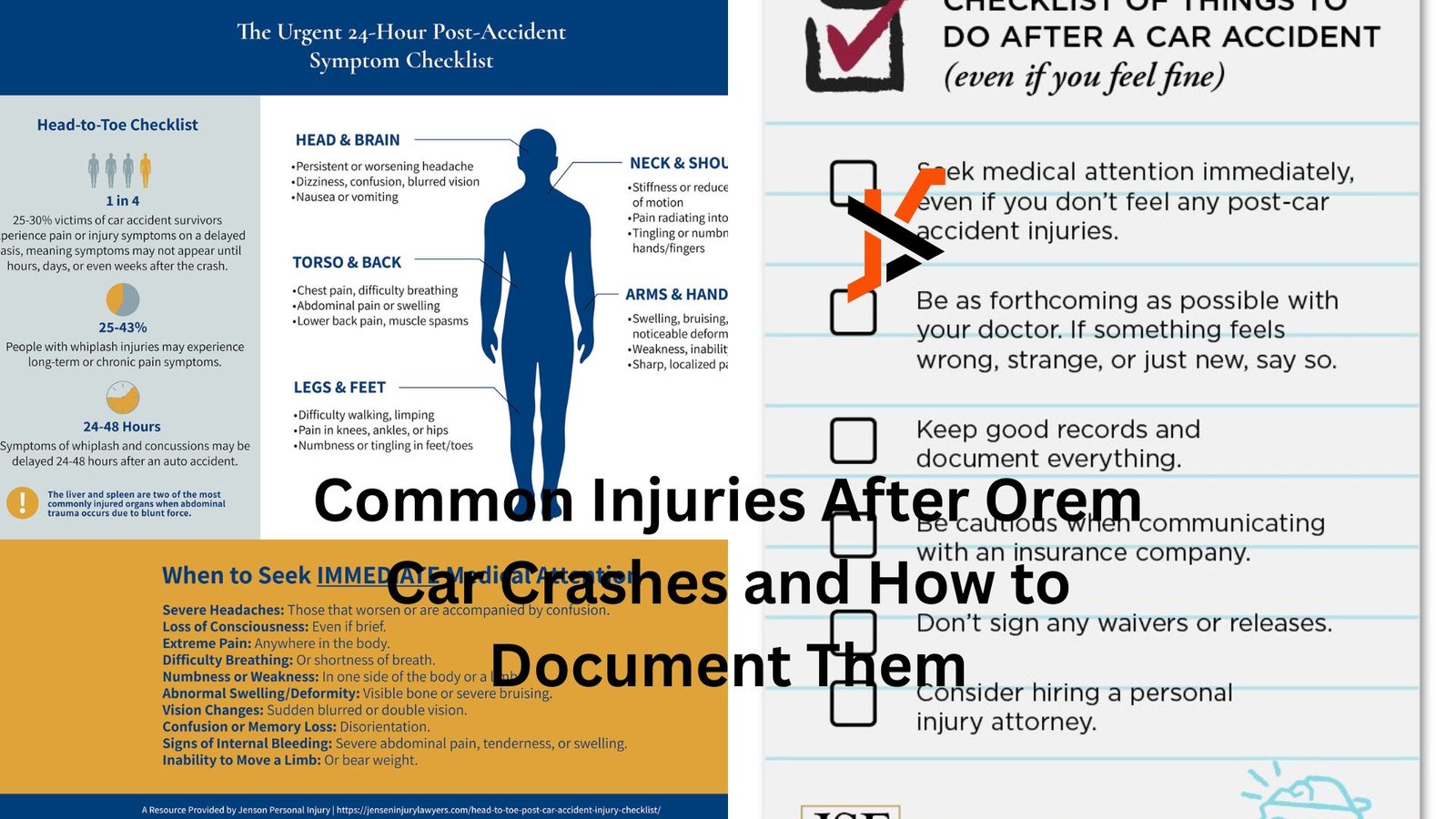
Car crashes in Orem happen fast and leave you stunned. Your body absorbs the force. Your mind scrambles to make sense of it. In that chaos, you may ignore pain or skip photos and records. That choice can cost you care and money later. This guide explains common crash injuries and shows you how to document every detail. You learn what to look for in your body, what to write down, and what to save. You also see how doctors, photos, and witness notes work together as proof. This record protects you with insurance companies and in court. It also helps Orem car accident lawyers understand what you went through. You deserve clear steps and calm direction after a crash. You get both here so you can protect your health, your story, and your future.
Step One: Check Yourself And Others
First, look for danger from traffic or fire. Then look at your body from head to toe.
- Notice pain in your neck, back, or head.
- Look for bleeding, swelling, or bruises.
- Pay attention to dizziness, confusion, or trouble breathing.
If anything feels wrong, call 911. The call and the paramedic report become early proof of what happened. The National Highway Traffic Safety Administration explains that early medical care cuts the risk of hidden injury getting worse.
Common Injuries After A Crash
Crash injuries often show up in patterns. You may have more than one at the same time.
- Whiplash. Neck pain, stiffness, or headaches hours or days later.
- Back strains. Pain when you bend, lift, or twist.
- Concussion. Headache, nausea, memory gaps, or light sensitivity.
- Bruises and cuts. Marks from the seat belt, airbag, or glass.
- Broken bones. Strong pain, swelling, or a limb that looks out of line.
- Chest pain. From the seat belt or airbag impact.
Sometimes symptoms start small. Then they grow stronger over days. That is why early notes and photos matter.
Table: Injury Types And Key Documentation Steps
| Injury type | Common signs | What to document |
|---|---|---|
| Whiplash / neck strain | Neck pain, stiffness, headaches | Doctor visit notes, pain diary, photos if swelling appears |
| Back strain | Back pain, trouble standing or sitting | Imaging records, work notes on missed days, daily limits on movement |
| Concussion | Headache, nausea, confusion, memory gaps | ER records, neuro tests, notes from family on behavior changes |
| Bruises and cuts | Discoloration, swelling, open wounds | Clear dated photos over several days, treatment records, scar photos |
| Broken bones | Strong pain, swelling, deformed limb | X-rays, surgery reports, cast photos, physical therapy notes |
| Emotional trauma | Fear, sleep trouble, flashbacks | Counseling records, journal of mood and sleep, medication list |
How To Document The Crash Scene
If you are safe and able, start recording proof at the scene.
- Use your phone to take wide shots of all cars from many angles.
- Take close photos of damage, skid marks, and road signs.
- Photograph weather, traffic lights, and any debris.
- Exchange names, phone numbers, and insurance with all drivers.
- Ask witnesses for contact details. Take short notes on what they saw.
Also request that police respond. Then ask how to get the report number. Utah public crash reports help show what happened and who was involved. The Utah Department of Health and Human Services tracks crash harm and shows how strong records support safety work.
How To Document Your Medical Care
Next, protect your health and your proof through medical visits.
- See a doctor, urgent care, or ER as soon as you can.
- Tell the provider every symptom, even mild ones.
- Say that the crash caused the pain or change.
Then keep copies of:
- Visit summaries.
- Imaging results such as X-rays or CT scans.
- Prescriptions.
- Physical therapy plans.
Store these in a folder at home. Also keep digital copies if you can. Consistent records show that your injuries link to the crash, not to some later event.
How To Track Pain And Daily Limits
A simple notebook can show how the crash changed your life.
Each day, write:
- Where you hurt and how strong the pain feels on a scale from 1 to 10.
- What tasks you could not do, such as lifting a child or driving.
- Missed work, school, or family events.
- Sleep problems or mood changes.
These short notes may seem small. Yet they show a clear story when read together. They help your doctor adjust treatment. They also help others see the full weight of the crash on your life.
How To Save Financial Records
Money losses also need proof.
- Keep all medical bills and pharmacy receipts.
- Save repair estimates and receipts for your car.
- Track rideshare or rental car costs.
- Ask your employer for a letter that shows missed days and lost wages.
Place dates on every document. Then store them in order. Clear money records support claims with insurance companies and through Orem car accident lawyers if needed.
When To Seek Legal Help
Consider talking with a lawyer if:
- Your injuries keep you from work or school.
- The other driver denies fault.
- Insurance calls feel rushed or unfair.
A lawyer reviews your photos, medical records, notes, and bills. Strong documentation gives that lawyer tools to stand up for you. Careful steps now protect your body, your rights, and your peace of mind after an Orem crash.
