

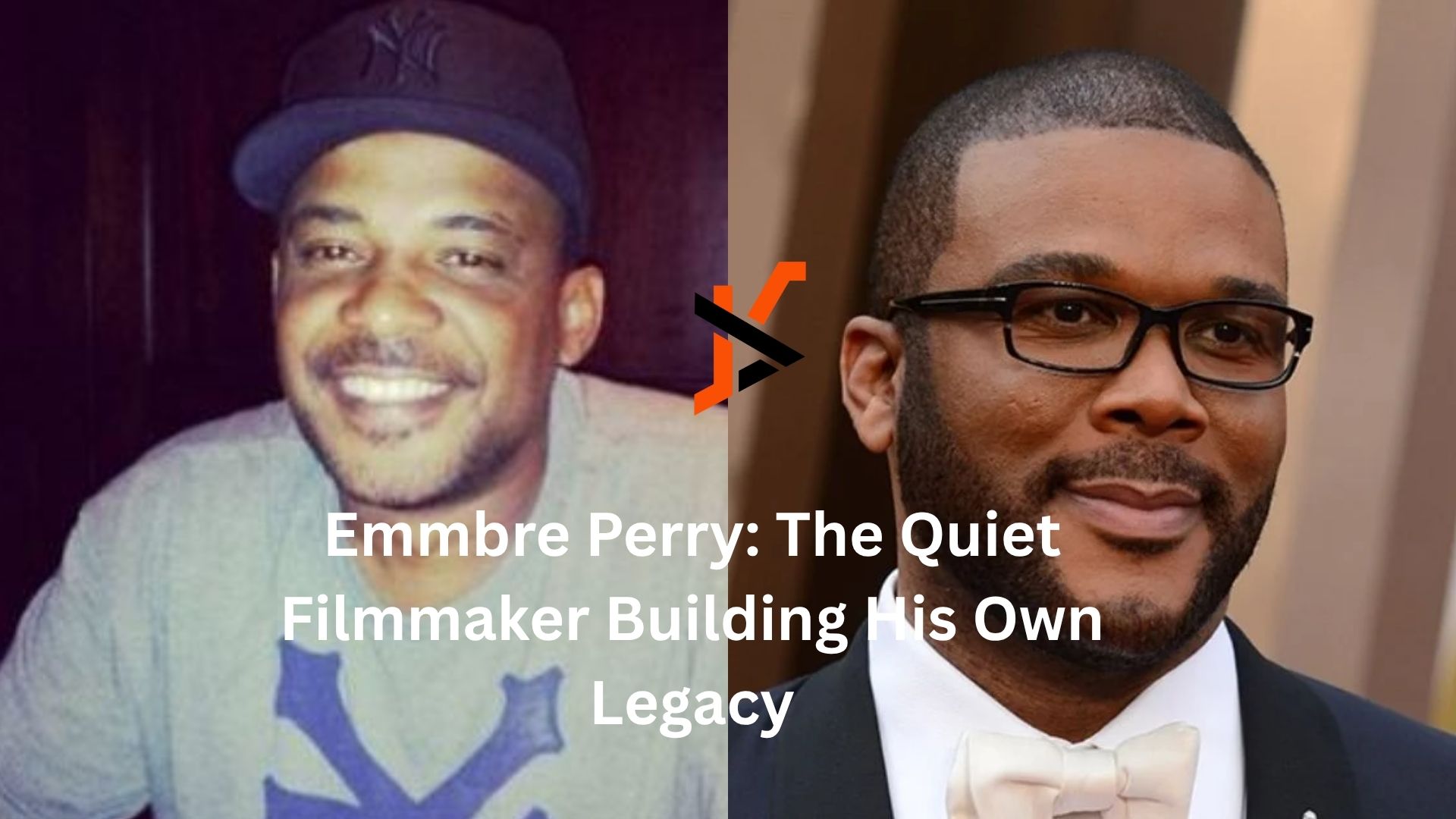
Some people spend their whole lives trying to get out from under a famous family name. Others lean into it so hard that it becomes their entire identity. Emmbre Perry seems to have chosen a different route entirely.
That’s probably why people get curious about him.
Most casual audiences first hear his name because of his connection to Tyler Perry. But once you look a little closer, Emmbre Perry starts to feel less like “Tyler Perry’s brother” and more like one of those independent creatives who quietly build a career brick by brick without making a huge spectacle of it.
And honestly, there’s something refreshing about that.
In an entertainment world where everyone’s trying to go viral before they’ve actually made anything meaningful, Emmbre Perry’s path feels old-school. He writes. Directs. Produces. Acts. Keeps working. Keeps creating.
No giant media circus attached.
Emmbre Perry didn’t chase the spotlight
A lot of independent filmmakers talk about “authentic storytelling.” Very few actually mean it. With Emmbre Perry, the work itself gives it away.
His films tend to revolve around family tension, forgiveness, faith, and everyday struggles. Not in a polished Hollywood way either. More like conversations people actually have at kitchen tables after an argument nobody fully recovered from.
That tone probably comes from his own background.
Emmbre Perry grew up in New Orleans alongside his siblings, including Tyler Perry. Reports about the family’s difficult upbringing have surfaced over the years, especially regarding abuse inside the home and the emotional impact it had on the Perry children.
You can feel traces of that experience in the stories he chooses to tell. His projects often carry this underlying idea that damaged people are still worth understanding.
Not perfect people. Not glamorous people.
Just human beings trying to figure life out.
That’s a harder thing to write convincingly than most people realize.
His career grew through stage plays and smaller productions
Before streaming platforms made independent filmmaking feel accessible, many creators had to learn through theater circuits, community productions, and low-budget touring shows. That’s where Emmbre Perry sharpened his skills.
He eventually moved to Atlanta, where Tyler Perry’s stage productions were gaining momentum. According to multiple profiles, Emmbre spent time learning the mechanics of live productions and storytelling during those years.
And here’s the thing about theater: it exposes weak storytelling immediately.
A movie can hide behind editing, music, camera tricks, or flashy visuals. A stage play can’t. If the audience stops caring, you feel it in real time.
That kind of environment either toughens a creative person or pushes them out entirely.
For Emmbre Perry, it clearly became training ground.
You can see the theatrical influence in his later films too. His dialogue tends to be direct and emotional. Characters explain themselves openly. Family confrontations take center stage. There’s usually humor mixed into heavier moments, which honestly mirrors real life better than many prestige dramas do.
Because let’s be honest, families rarely stay emotionally consistent for more than five minutes.
Someone cries. Somebody cracks a joke. Then another argument starts.
That rhythm shows up in his work.
“No More Games” helped define his style
If there’s one project that gets mentioned most often when people discuss Emmbre Perry, it’s No More Games from 2012. No More Games
The film gave audiences a clearer picture of what kind of storyteller he wanted to become.
Not flashy. Not overly polished.
Personal.
The movie blended relationship drama, emotional conflict, and comedy in a way that felt rooted in stage-play storytelling traditions. It also featured recognizable names like Tommy Ford and Persia White.
What stands out isn’t necessarily the production scale. It’s the sincerity.
Independent films sometimes overcompensate by trying to imitate big-budget Hollywood movies. Emmbre Perry’s projects usually don’t do that. They stay grounded in conversations, family dynamics, church culture, and emotional realism.
That gives them a certain warmth.
Even viewers who don’t normally watch faith-centered dramas often say his films feel relatable because the characters come across like actual people instead of moral lessons wearing human costumes.
That’s an underrated skill.
Faith matters in his storytelling, but it rarely feels preachy
Faith-based entertainment can be tricky.
When it’s handled badly, it turns into two hours of lectures disguised as dialogue. Audiences can sense that immediately.
Emmbre Perry’s films tend to approach faith differently. Religion exists in the background because it naturally exists in the lives of the characters.
That distinction matters.
Movies like God Send Me a Man and Let God Be the Judge leaned heavily into themes of redemption, relationships, and accountability. But the stronger moments usually come from emotional honesty rather than sermons.
There’s a scene pattern you see often in his projects: somebody reaches a breaking point emotionally before they finally become vulnerable enough to change.
Not because they suddenly become saints.
Because life backed them into a corner.
That’s relatable storytelling.
Most people don’t change during motivational speeches. They change after exhaustion, heartbreak, embarrassment, failure, or loss.
His movies understand that.
The “Papa Willie” character gave him a recognizable identity
One smart move Emmbre Perry made was creating the character Papa Willie.
Independent creators often need one memorable signature that audiences connect with instantly. Tyler Perry had Madea. Emmbre Perry developed Papa Willie, a character built around humor, family wisdom, and old-school perspective.
The comparisons to Madea were inevitable, of course.
But Papa Willie feels different in tone. Softer. Less explosive. More grounded in warmth than chaos.
And honestly, that difference probably helped.
Trying to directly compete with a cultural phenomenon like Madea would’ve been impossible anyway. Instead, Emmbre Perry carved out a smaller lane that suited his personality and storytelling style.
That takes self-awareness.
A lot of creatives fail because they chase someone else’s formula instead of understanding their own strengths.
He’s stayed surprisingly private
For someone connected to a globally recognizable entertainment family, Emmbre Perry maintains a remarkably low public profile.
That’s increasingly rare.
Modern entertainment culture rewards constant exposure. Daily opinions. Endless interviews. Personal drama packaged as content.
He doesn’t seem particularly interested in any of that.
Most of the public information available about him centers on his work rather than his private life. His social media presence is relatively restrained compared to many entertainment figures.
And honestly, there’s something smart about that approach.
Mystique still works.
When audiences don’t know every detail about someone’s life, they focus more on the work itself. Older generations of actors and directors understood this naturally. Now it almost feels unusual.
Emmbre Perry appears to operate more like a craftsman than an influencer.
Create the project. Release it. Move on to the next thing.
His independent route may actually be the point
People often frame independent careers as smaller versions of mainstream success. But that’s not always accurate.
Sometimes independence is the goal.
That seems true with Emmbre Perry.
He’s worked across directing, writing, producing, and acting while building projects through his own production efforts. His films found audiences through DVD releases, streaming platforms, touring productions, and niche faith-based entertainment circles.
That kind of career probably doesn’t generate constant headlines, but it creates something else: longevity.
There are thousands of entertainers who became briefly famous and disappeared just as fast. Independent creators who understand their audience can quietly work for decades.
That’s a different kind of success.
And frankly, maybe a healthier one.
Hollywood fame looks glamorous from the outside, but the constant pressure to stay culturally relevant seems exhausting. Emmbre Perry’s career feels more sustainable, almost like he built it around actually liking the work itself.
Not just the attention attached to it.
His work connects with audiences who rarely see themselves honestly represented
One reason Emmbre Perry continues to maintain an audience is simple: many viewers see pieces of their own families in his stories.
Not idealized versions.
Complicated versions.
People who grew up around church communities, strained family dynamics, stubborn parents, emotional secrets, or difficult forgiveness conversations often recognize the emotional texture immediately.
That familiarity matters more than critics sometimes acknowledge.
Entertainment doesn’t always need massive budgets or groundbreaking cinematography to resonate deeply. Sometimes people just want stories that feel emotionally true.
A son trying to repair a relationship with his father.
A family gathering that slowly turns tense.
Someone pretending everything’s fine when clearly it isn’t.
Those moments land because they’re recognizable.
And Emmbre Perry tends to build his storytelling around those recognizable human pressures.
Emmbre Perry’s career says something bigger about creative success
There’s a strange assumption in entertainment culture that success only counts if everybody on Earth knows your name.
That mindset ignores how many meaningful careers exist outside the spotlight.
Emmbre Perry may never dominate celebrity headlines the way Tyler Perry does. But measuring every creative life against billionaire-level fame misses the point entirely.
He built films.
Created characters.
Developed stories.
Maintained creative independence.
Found audiences that genuinely connect with his work.
That’s a real career.
And honestly, for aspiring filmmakers watching from the outside, his path may be more realistic and useful than the myth of overnight fame.
Most successful creatives aren’t living inside blockbuster franchises or trending online every week. They’re steadily building catalogs, relationships, skills, and audiences over time.
That slower process rarely gets celebrated enough.
Final thoughts
Emmbre Perry’s story isn’t built around spectacle. That’s probably why it sticks with people.
He represents a quieter kind of creative life. One centered on storytelling, consistency, and emotional honesty rather than nonstop visibility.
His films may not dominate mainstream pop culture conversations, but they clearly matter to the audiences who find them. And in a media world flooded with noise, there’s real value in creators who still seem interested in human connection more than hype.
Maybe that’s the biggest takeaway from his career.
You don’t have to become the loudest person in the room to leave an impression.
