

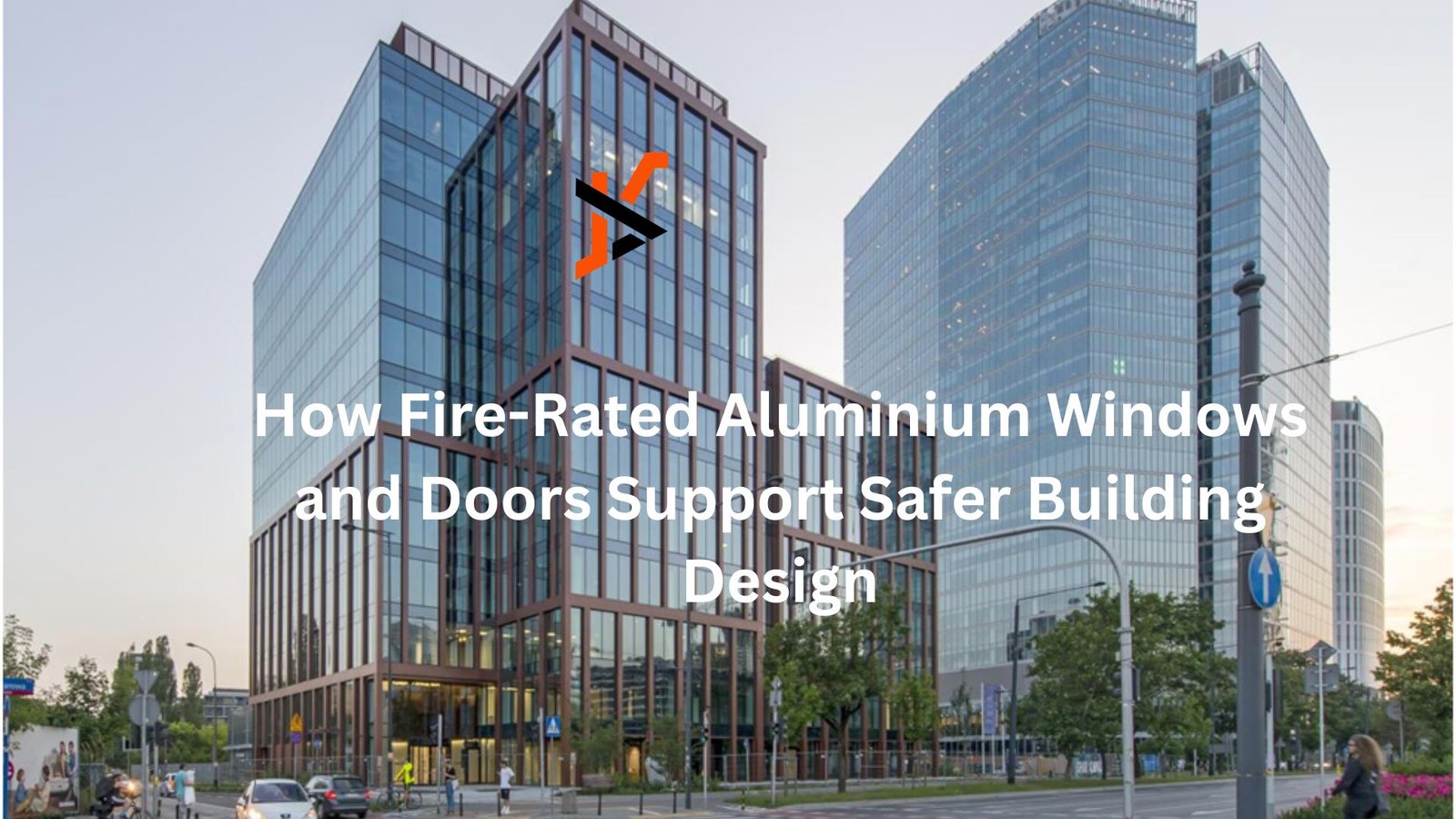
Modern buildings are expected to deliver more than ever. Developers, architects, and specifiers are balancing energy performance, aesthetics, occupant safety, and long-term value within the same project scope. As a result, fire-rated aluminium systems are becoming a more important part of building design across offices, public buildings, residential developments, and mixed-use schemes. Fire safety is no longer treated as a final-stage requirement but as an integrated element of performance-led design.
Why Fire Safety Has Influenced the Design of Projects Earlier than Ever Before
Fire safety is providing an increasingly important influence on intent at the outset of projects. What previously would be a consideration at the project’s end is now featured in the way that teams are approaching the design and specification of doors, glazing, partitioning, and systems at the building envelope. And for those in the B2B sector, the greater priority that’s being shown here is reflective of a broader movement within the sector to link safety strategy with layout, system coordination, and long-term performance as an operational structure, too.
Where Fire Door Thinking Fits into Aluminium Window and Door Systems
In this context, the concept of a fire door is being understood as one among building safety measures that must be considered as part of the wider system. Instead of simply selecting individual products, buyers are seeking to understand how fire-rated doors, windows, and glazing products work together to facilitate compartmentation and regulate movement throughout the building. This broader product matrix is in part why the approach of a producer such as Aluprof is of interest to many in the industry, given its ability to draw on a range of fire-rated aluminium profiles that span doors and windows in a range of resistance classes.
Why Aluminium Is Well Suited to Modern Fire-Rated Systems
Aluminium aligns well with modern construction demands because it combines structural reliability with design flexibility. It supports contemporary architectural styles, integrates effectively with glazing systems, and performs consistently in high-use environments. When properly engineered, aluminium can also contribute to performance-led specifications that prioritise durability alongside visual consistency. As a systems manufacturer, Aluprof positions aluminium not just as a material choice but as part of a wider building solution.
What B2B Buyers Usually Prioritise
Buyers and specifiers are focused on fire-resistance rating, system compatibility across the fusible package and integration across the build. Thermal and acoustic ratings are other considerations, particularly on projects where the performance requirement goes beyond just meeting safety standards. And of course, specifiers will review the reliability of the technical data and the ease of specifying and delivering the system in quantity.
Why a Fire-Rated System is More than Just Compliance
Fire-rated systems are no longer simply about compliance. As more architects, specifiers and contractors choose integrated systems to eliminate the need for trade-offs in suitable and compliant solutions versus aesthetics and function, fire-rated solutions must meet safety standards without inhibiting design scope.
Where These Systems Are Most Relevant
Fire-rated aluminium systems are common in office and commercial design, where coordinated safety and design strategies are essential. They are also a sensible specification choice in education and health settings, where maintenance and reliable performance support the delivery of patient care and the safe learning environment. In the hospitality and retail sectors, these integrated systems support the flow of foot traffic and ensure that the building maintains its cleanliness and contemporary look.
Residential apartment blocks and mixed-use buildings benefit from an integrated approach that manages shared spaces effectively, while the rise in renovation projects also drives greater demand for comprehensive rating solutions to meet new safety performance requirements.
Why Manufacturer Depth Matters
Not all fire-rated aluminium systems offer the same level of certification, flexibility, or technical support. For B2B buyers, this makes manufacturer capability an important factor. Established providers such as Aluprof offer tested systems, broader design options, and the technical backing required for more complex specifications. That depth helps ensure that safety performance is supported by reliable documentation and consistent system integration.
Conclusion
Fire-rated aluminium windows and doors are gaining importance because they bring together safety, performance, and design flexibility within a single coordinated approach. For B2B projects, the most effective specifications treat fire-rated systems as part of a wider building strategy rather than standalone components. This shift is what continues to drive their adoption across modern construction.
