

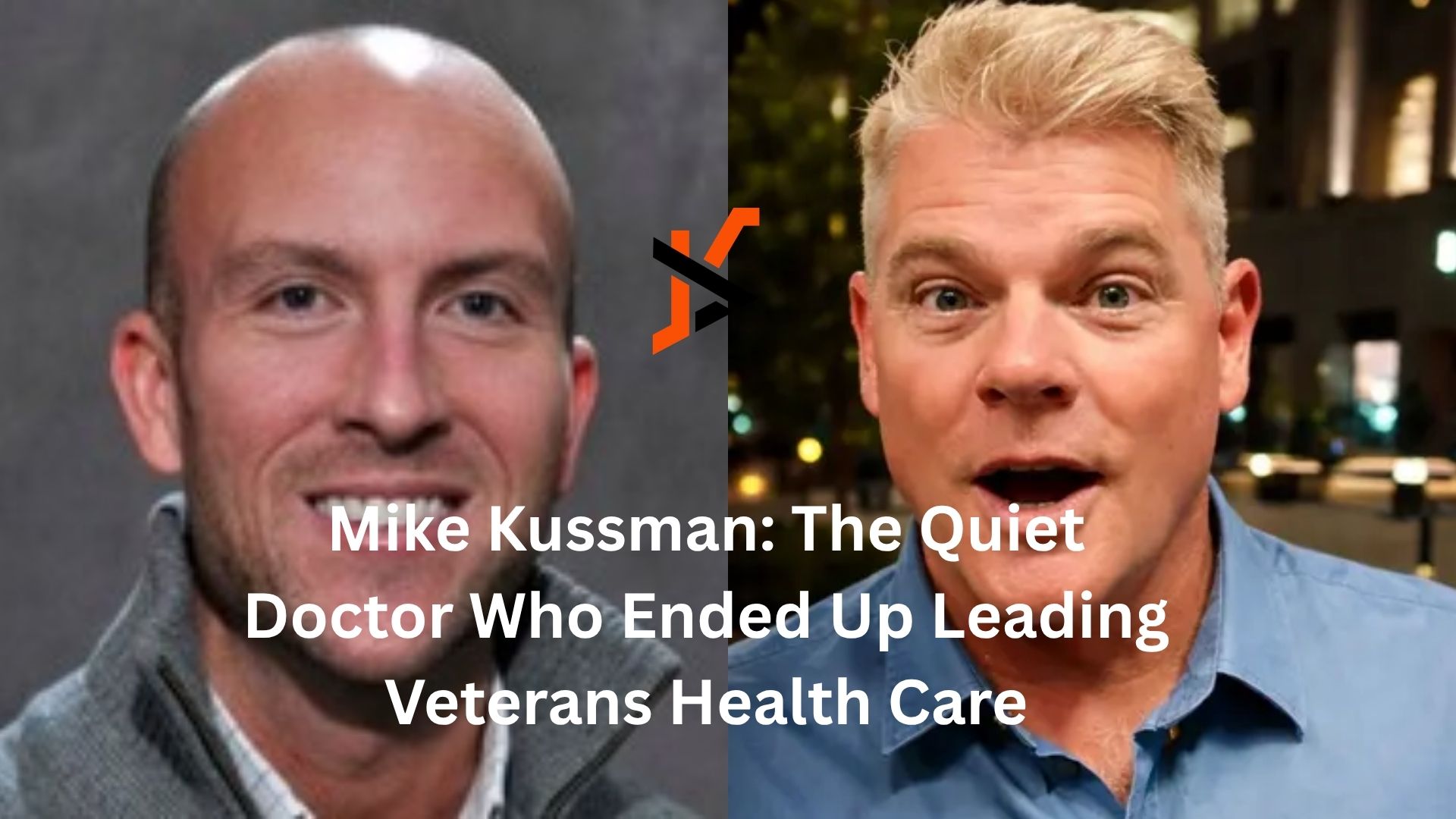
Some public figures become famous because they chase attention. Mike Kussman never really fit that category.
He built his career in medicine, military service, and veterans health care at a time when most Americans couldn’t name the people running those systems. Yet for millions of veterans, the decisions he helped make had real effects on doctor visits, prescriptions, hospital care, and long-term treatment.
That’s what makes his story interesting. Not flashy. Not dramatic in the celebrity sense. But important in the way steady leadership often is.
Mike Kussman spent decades inside the military and the Department of Veterans Affairs, eventually becoming the Under Secretary for Health at the VA. That role put him in charge of one of the largest health care systems in the world. And honestly, that’s the kind of job most people don’t think about until something goes wrong.
But when you look at his path, you see something more layered than a typical government résumé. You see a physician trying to balance medicine, administration, military culture, and the realities of a giant federal system that never stops moving.
From Army Medicine to National Leadership
Kussman’s background was deeply tied to military medicine from the beginning.
He served in the United States Army and worked as a physician before climbing into leadership roles. That matters because people who start in clinical work often see health care differently from career administrators. They’ve dealt with patients face-to-face. They’ve seen crowded clinics. They know what happens when staffing falls short or paperwork slows treatment.
That kind of firsthand experience tends to shape decision-making later.
A lot of military doctors describe the environment as intense but practical. You learn quickly. You adapt. And you don’t always have the luxury of perfect conditions. Those lessons usually stick.
By the time Kussman moved into larger management roles, he already understood the culture of military and veteran care from the inside. That gave him credibility with many people working in the system. Veterans can often tell when someone actually understands their world versus someone who learned it from briefing documents.
And veterans, let’s be honest, are not always easy audiences.
Trust matters there.
Taking Charge of the VA Health System
Mike Kussman eventually became the Under Secretary for Health for the Department of Veterans Affairs in 2007.
That title sounds bureaucratic, but the responsibility behind it was massive. He oversaw the Veterans Health Administration, commonly called the VHA. The system includes hospitals, outpatient clinics, nursing homes, rehabilitation centers, and specialized treatment programs spread across the country.
We’re talking about millions of patients and hundreds of thousands of employees.
Running a health system that size is complicated even in calm times. But the late 2000s weren’t exactly calm.
The wars in Iraq and Afghanistan had created a growing population of veterans with unique medical and psychological needs. PTSD treatment was becoming a larger national conversation. Traumatic brain injuries were getting more attention. Demand for services kept increasing.
At the same time, public expectations around veteran care were rising.
That combination creates pressure from every direction.
Doctors want resources. Patients want faster access. Politicians want accountability. Administrators want budgets to stretch further. None of those goals are simple when combined.
Kussman stepped into leadership during that environment.
The Challenge of Veterans Health Care
People outside the system sometimes assume veterans health care works like a normal hospital network. It doesn’t.
The VA deals with issues many private hospitals rarely see at the same scale. Combat injuries. Long-term trauma. Exposure-related illnesses. Aging veteran populations with complex chronic conditions.
And then there’s geography.
A veteran living in a major city may have access to a full VA hospital nearby. Someone in a rural town might drive hours for specialized treatment. That gap has always been difficult for the VA to solve completely.
Kussman’s years in leadership involved ongoing attempts to improve coordination, modernize services, and handle growing demand.
Now, was every problem solved? Of course not.
No leader of a giant public health system escapes criticism. It’s impossible. The VA has faced complaints for decades over wait times, bureaucracy, staffing shortages, and inconsistent care between locations.
But one thing many observers noted during Kussman’s tenure was his focus on practical management rather than political theater. He wasn’t known for dramatic public speeches or headline-chasing appearances.
He came across more like the experienced hospital executive who wanted systems to function properly.
Sometimes that style gets overlooked because it’s quieter. But large organizations often depend on people like that more than people realize.
Why Veterans Care Is Different Emotionally
Here’s something that often gets missed in discussions about the VA.
Veterans health care carries emotional weight beyond normal medicine.
A veteran walking into a VA facility isn’t just another patient checking blood pressure numbers. There’s often a deeper expectation involved. Many veterans feel the country owes them competent, respectful care because of their service.
Whether people agree politically on military issues or not, that emotional contract exists.
And when the system works poorly, frustration becomes personal very fast.
Imagine a former service member waiting months for an appointment while dealing with chronic pain or severe anxiety. The anger isn’t only about scheduling. It’s about feeling forgotten.
Leaders like Mike Kussman operated inside that reality every day.
That’s part of why VA leadership jobs can become incredibly difficult. The stakes are human, political, financial, and symbolic all at once.
Leadership During a Changing Era
Health care itself was also changing rapidly during Kussman’s years at the VA.
Electronic medical records were becoming more central. Mental health services were expanding. Public awareness around PTSD and suicide prevention was increasing. Coordination between military and veteran systems became more urgent.
The VA had actually been ahead of many private systems in certain health technology areas. That surprises some people today, but it’s true.
The challenge wasn’t only innovation. It was scale.
Rolling out improvements across a massive nationwide network is very different from implementing changes at a single hospital. One clinic may adapt quickly while another struggles because of staffing, training, or infrastructure problems.
That unevenness has always complicated VA reform efforts.
Kussman spent much of his leadership period dealing with those realities while trying to maintain consistency across the organization.
It’s a bit like steering a cargo ship through rough water. Even small directional changes take time before anyone notices movement.
The Public Scrutiny Never Stops
One thing about high-level government health positions: criticism comes with the territory.
The VA has long been one of the most scrutinized federal agencies in America. Every failure becomes national news. Every delay can turn into a political fight.
Some criticism is deserved. Some becomes exaggerated during election cycles. Usually it’s a mix of both.
Mike Kussman faced scrutiny over issues tied to veteran treatment access and administrative performance, especially as public pressure around VA accountability increased. Leadership in these roles often means absorbing criticism for problems that developed over many years, sometimes decades.
That doesn’t erase responsibility, but it does explain why the job can feel almost impossible from the outside.
A private hospital CEO answers mainly to boards and investors. A VA leader answers to Congress, the White House, veterans groups, medical professionals, journalists, and the public simultaneously.
Those groups rarely want the same thing.
The Human Side of Administrative Work
It’s easy to reduce public officials to titles and policies, but careers like Kussman’s are usually more personal than they appear.
Most physicians don’t enter medicine dreaming about federal administration. They want to treat patients. Help people directly. Solve medical problems.
Then careers evolve.
Someone becomes department chief, then hospital director, then regional leader, and eventually they’re managing systems instead of individual cases. The work changes from treating one patient at a time to trying to improve care for millions.
That transition isn’t always emotionally simple.
Doctors who move into administration sometimes miss clinical practice deeply. Others become frustrated by bureaucracy but stay because they believe they can improve the system from inside.
Kussman’s long career suggests a person committed to institutional service more than public recognition. That’s increasingly rare in modern leadership culture, where visibility often matters as much as substance.
How People Remember Mike Kussman
Ask different groups about Mike Kussman and you’ll probably hear different perspectives.
Some remember him primarily as a military physician who rose through the ranks steadily and professionally. Others associate him with broader debates about VA performance during a demanding era for veteran care.
That’s usually how leadership legacies work in government systems.
Rarely simple. Rarely universally praised or condemned.
But there’s another point worth mentioning. People who spend decades in public health systems often influence outcomes in ways the public never fully sees. Hiring priorities. Clinic expansion decisions. Mental health initiatives. Technology investments. Emergency planning.
Those choices ripple outward for years.
A veteran receiving better coordinated treatment today may never know which administrator pushed for the system improvement years earlier. That invisibility is part of public-sector leadership.
You don’t always get direct credit. Sometimes you mainly inherit blame.
The Bigger Conversation Around the VA
Mike Kussman’s career also reflects a larger American issue: how the country cares for veterans after military service ends.
That conversation keeps evolving.
Some people argue the VA should remain a fully government-run system because veterans need specialized care designed around military experience. Others believe more private-sector options improve flexibility and access.
There’s no perfect answer. Both sides raise legitimate concerns.
What’s clear is that managing veterans health care requires leaders who understand medicine, military culture, and large-scale administration simultaneously. That combination isn’t common.
Kussman came from that world directly.
And while his name may not be widely recognized outside policy circles, his work touched the lives of countless veterans navigating surgeries, rehabilitation, counseling, prescriptions, and long-term treatment.
That’s not a small thing.
A Career Built More on Duty Than Spotlight
Mike Kussman never became a household name. In some ways, that fits his career perfectly.
He represented a type of leadership that often operates quietly behind institutional walls. No celebrity branding. No constant media presence. Just years spent inside systems that affect real people every day.
Some readers may see that as unremarkable. Others may see it as admirable.
Probably both are fair.
But when you look at the scope of what he managed, it becomes harder to dismiss the significance of the role. Running veterans health care isn’t abstract paperwork. It affects aging soldiers, injured service members, struggling families, and people trying to rebuild their lives after war.
That responsibility carries weight whether the public notices or not.
And that’s really the story of Mike Kussman. Not fame. Not controversy alone. A long career shaped by military medicine, public service, and the difficult work of trying to keep a massive health care system functioning for the people who depended on it most.
