

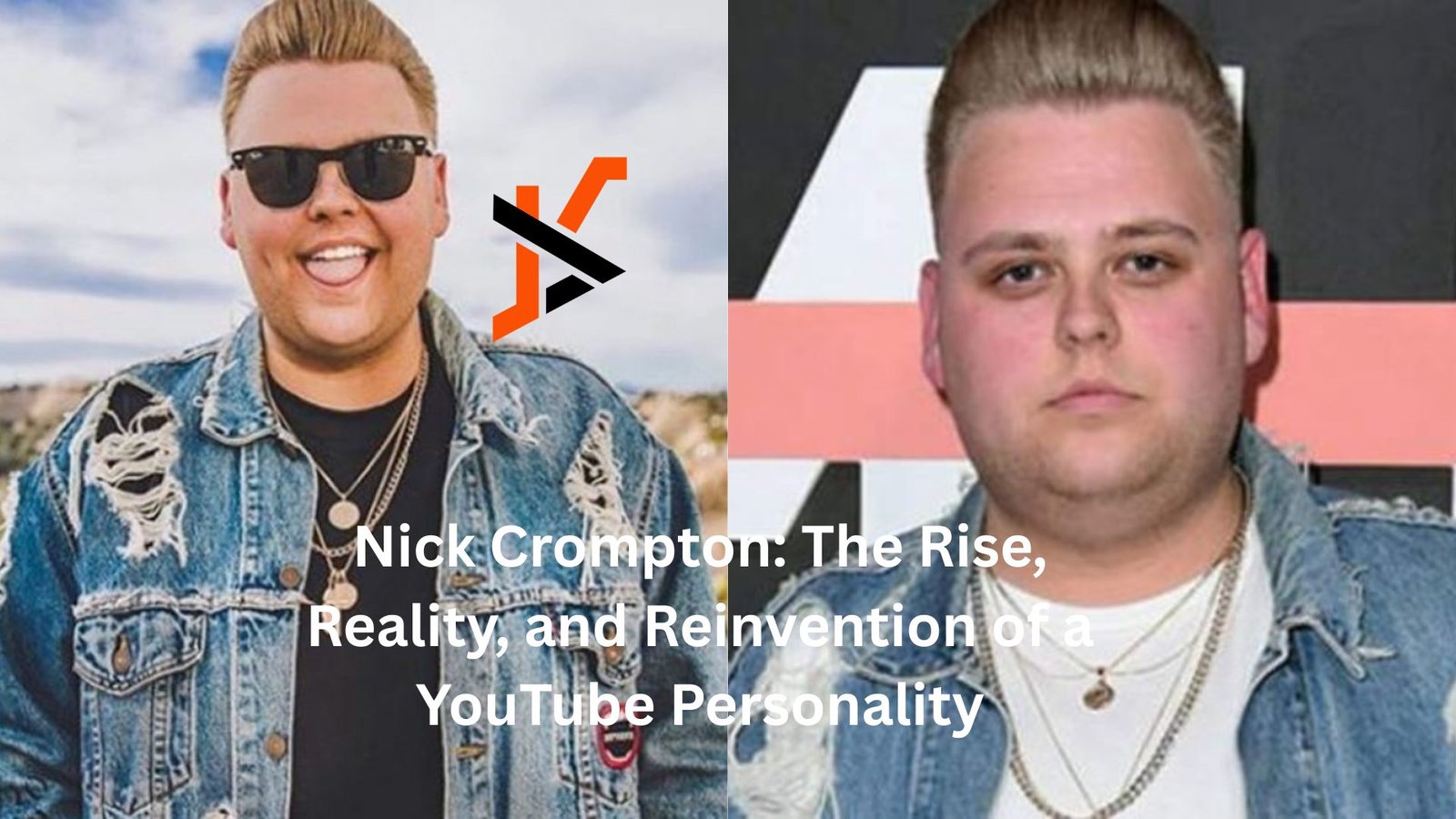
If you were anywhere near YouTube culture in the late 2010s, you probably heard the name Nick Crompton—or at least heard his voice.
Not in a deep, philosophical way. More like… “England is my city.”
That one line stuck. It became a meme, a punchline, and for a while, a strange kind of digital legacy. But reducing Nick Crompton to that moment misses the bigger story. And it’s actually a pretty interesting one.
Because his career isn’t just about viral fame. It’s about timing, internet culture, and what happens after the spotlight fades.
From Behind the Scenes to the Front of the Camera
Here’s the thing people often get wrong: Nick Crompton didn’t start out chasing attention.
Before most people knew his name, he was working behind the scenes in social media marketing. He understood platforms, audience behavior, and how content spreads. That matters more than it sounds. A lot of creators stumble into success. Crompton was more calculated.
He got involved early with influencer networks and management. That eventually led him to become a key figure in Team 10, the content house founded by Jake Paul.
Now, whether you liked Team 10 or not—and let’s be honest, it wasn’t exactly subtle content—it was effective. Loud, chaotic, and built for attention. And Crompton played a big role in shaping that machine.
The Team 10 Era and Viral Fame
This is where things took off publicly.
Nick Crompton became known as the “business guy” of Team 10. He wasn’t just another creator jumping in front of the camera. He was organizing, managing, and helping scale a brand that thrived on controversy and visibility.
Then came the song.
“It’s Everyday Bro” dropped in 2017, and it exploded. Millions of views in days. And buried in the chaos of the track was that now-famous line about England being his city.
Was it ridiculous? Yes.
Was it effective? Also yes.
People shared it, mocked it, remixed it. It became internet shorthand for something unintentionally funny. And in a strange way, that moment made Crompton more recognizable than his actual work behind the scenes.
That’s how the internet works sometimes. One line outweighs years of effort.
The Reality Behind the Persona
It’s easy to laugh at viral moments. But if you step back, Crompton’s role in Team 10 shows something deeper about early influencer culture.
He understood monetization before many creators did.
While others focused on views and followers, he was thinking about structure. Sponsorships. Brand deals. Scaling personalities into businesses. That’s not flashy work, but it’s what turns temporary attention into income.
Imagine two creators with the same audience size. One just posts videos. The other builds a system—merch, partnerships, content strategy. The second one lasts longer. That’s the mindset Crompton brought.
Still, being tied to a group like Team 10 came with downsides. Controversy wasn’t just part of the brand. It was constant. And over time, that kind of environment wears thin.
Leaving Team 10 and Stepping Back
Eventually, Crompton stepped away.
There wasn’t one dramatic exit moment that defined everything. It was more gradual. He distanced himself from the chaos and started focusing on other ventures.
And honestly, that move makes sense.
Internet fame can be loud, but it’s also unstable. Trends shift fast. Audiences move on. What feels huge one year can feel irrelevant the next.
Stepping back isn’t always a failure. Sometimes it’s just awareness.
Think about it like someone leaving a high-pressure startup job. On paper, it looks exciting. Behind the scenes, it can be exhausting. Not everyone wants to stay in that environment forever.
The Shift Toward Business and Private Life
After Team 10, Nick Crompton didn’t disappear. He just became less visible.
That’s an important distinction.
He continued working in digital marketing and influencer-related business spaces. Less public content, more strategy. Less noise, more control.
It’s actually a path a lot of early YouTubers ended up taking. Once you understand how the system works, you don’t always need to be the face of it.
Let’s be honest—being “on” all the time isn’t sustainable for most people.
Some creators love the spotlight. Others realize they prefer building things behind the curtain. Crompton seems to fall into that second category.
Internet Fame Isn’t What It Used to Be
Nick Crompton’s story also highlights how much the internet has changed.
Back in 2017, YouTube culture was different. Content houses were new. Influencer marketing was still figuring itself out. There was more room for messy, experimental growth.
Now? It’s more polished. More strategic. More competitive.
If someone tried to recreate Team 10 today in the same way, it probably wouldn’t hit the same. Audiences are more aware now. They can spot manufactured hype a mile away.
Crompton was part of that earlier wave—the one that helped define what influencer culture would become.
That matters, even if his name isn’t trending anymore.
The “England Is My City” Effect
It’s worth circling back to that one line.
Because it says something about internet memory.
People don’t always remember what you worked hardest on. They remember what made them feel something—usually humor, surprise, or confusion.
That lyric wasn’t meant to be a career-defining moment. But it stuck.
And here’s the interesting part: instead of fighting it, Crompton leaned into it at times. He acknowledged the meme rather than trying to erase it.
That’s a smart move.
Trying to control how the internet sees you rarely works. Adapting to it? That’s more effective.
Lessons From His Career
There’s a practical angle here if you’re paying attention.
Nick Crompton’s path shows that visibility and influence aren’t the same thing.
You can be highly visible and still not be in control. And you can step out of the spotlight while still shaping things behind the scenes.
It also shows the value of understanding systems.
A creator who knows how platforms work—algorithms, audience behavior, monetization—has an edge. That knowledge doesn’t disappear when the camera turns off.
And maybe the biggest takeaway?
Timing matters.
Crompton was in the right place during a key moment in YouTube’s evolution. That doesn’t guarantee long-term fame, but it can open doors that stay relevant in other ways.
Where He Stands Now
Nick Crompton today isn’t the loud internet figure people remember from clips and memes.
He’s quieter. More private. More business-focused.
And depending on how you look at it, that might be a better position.
There’s less pressure to perform. Less need to chase trends. More room to build something sustainable.
Not everyone who steps out of the spotlight is fading away. Sometimes they’re just choosing a different kind of success.
Final Thoughts
Nick Crompton’s story isn’t clean or perfectly structured. It’s a mix of strategy, viral chaos, and quiet reinvention.
He helped build one of the most talked-about influencer groups of its time. He became a meme without trying. Then he stepped back and shifted direction.
That arc feels very… internet-era.
Fast rise. Unexpected fame. Gradual reset.
If there’s one thing worth taking from it, it’s this: being known isn’t the same as being effective. And sometimes the smartest move isn’t to stay visible—it’s to step back and use what you’ve learned in a different way.
